Computed Tomography (CT) Scan
A CT scan produces clear pictures of bones, muscles, tissue, organs, blood vessels and the brain that a regular X-ray cannot show.


Our focus is making you comfortable while getting the very best images
Radiographs, scans and images are important pieces of information that help doctors diagnose medical problems ranging from a broken finger to cancer.
Doctors called radiologists use advanced technology to take pictures of what’s going on inside your body and share this information with your other doctors to complete the picture of your medical condition.
IU Health is focused on two things when it comes to radiology and imaging:
Imaging procedures sometimes require you to lie still inside a scanner for a while. Our technologists are trained to put you at ease and help you through to provide you with a good experience.
Imaging technology is constantly changing. The information doctors get from your images looks nothing like it did five years ago. Our radiologists consult closely with researchers and doctors at Indiana University School of Medicine to stay on the cusp of advancing technology.
Through this collaboration, we can use the most up-to-date methods to gather information about your condition. The most accurate diagnoses mean treatment can be tailored to you.
IU Health is focused on two things when it comes to radiology and imaging:
Imaging procedures sometimes require you to lie still inside a scanner for a while. Our technologists are trained to put you at ease and help you through to provide you with a good experience.
Imaging technology is constantly changing. The information doctors get from your images looks nothing like it did five years ago. Our radiologists consult closely with researchers and doctors at Indiana University School of Medicine to stay on the cusp of advancing technology.
Through this collaboration, we can use the most up-to-date methods to gather information about your condition. The most accurate diagnoses mean treatment can be tailored to you.
IU Health provides all types of imaging you might need to help diagnose or treat your condition. We assign a radiologist who is experienced in the specific part of your body being scanned to read your images. For example, if you have a head and neck CT scan, an expert in head and neck radiology reviews your images.
Some types of imaging use radiation to get pictures of inside your body:
Types of imaging that don’t use radiation include:
Radiologists also use radiology and imaging to treat medical conditions – not just diagnose problems. This is called interventional radiology.
IU Health provides radiology and imaging services for all ages, including children. Children from all over Indiana come to Riley Hospital for Children for testing, including specialized services such as neurodiagnostic imaging tests for seizure disorders.
We also participate in a national mammogram research project as part of our focus on breast cancer research.
IU Health provides all types of imaging you might need to help diagnose or treat your condition. We assign a radiologist who is experienced in the specific part of your body being scanned to read your images. For example, if you have a head and neck CT scan, an expert in head and neck radiology reviews your images.
Some types of imaging use radiation to get pictures of inside your body:
Types of imaging that don’t use radiation include:
Radiologists also use radiology and imaging to treat medical conditions – not just diagnose problems. This is called interventional radiology.
IU Health provides radiology and imaging services for all ages, including children. Children from all over Indiana come to Riley Hospital for Children for testing, including specialized services such as neurodiagnostic imaging tests for seizure disorders.
We also participate in a national mammogram research project as part of our focus on breast cancer research.
Oct 14
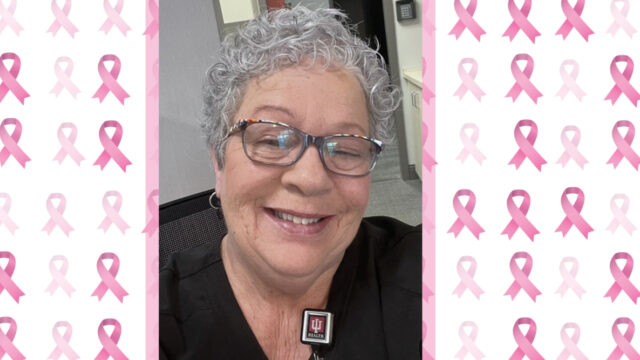
Denise Elliott uses her experience as a breast cancer survivor to support patients at IU Health Radiology – Bloomington.
Oct 14
Denise Elliott uses her experience as a breast cancer survivor to support patients at IU Health Radiology – Bloomington.
Your opinion about this website is important to us. Would you be willing to answer a few questions to help us evaluate and improve our website?