Living Beyond Breast Cancer
Living Beyond Breast Cancer is a national nonprofit that connects people with trusted information and a community of support.


Focused removal of cancerous tissue—while protecting healthy breast around it
If you have been diagnosed with breast cancer, your doctor may recommend a lumpectomy. This is surgery for some forms of early breast cancer and cancer that has not spread. In this procedure, your surgeon removes the cancerous area of the breast and some surrounding breast tissue.
The first goal of breast cancer surgery is to treat your cancer. The second goal is to ensure you have cosmetically acceptable results. Based on those goals, your doctor will talk to you about whether a mastectomy (full breast removal) or lumpectomy (partial mastectomy) is a good choice for you. A lumpectomy is usually followed by radiation therapy to further reduce the risk of breast cancer returning.
A lumpectomy is a treatment option that allows patients with breast cancer to retain most of their breast tissue. You may be a candidate for a lumpectomy if:
Your doctor will talk with you about whether you should undergo another procedure at the same time as a lumpectomy. This may include a lymph node procedure to treat your cancer. It may also include breast reconstruction surgery, if you choose to have your breast reconstructed. Your breast surgeon will often work with a plastic surgeon to do both the lumpectomy and breast reconstruction at the same time. This is called an oncoplastic procedure.
After surgery, your doctor will send the tissue for lab testing. A pathologist will check the edges of the tissue to see if there is any cancer or precancer. If the margins are “clear,” no more surgery is needed. If there is cancer at the edge of the tissue, you may need additional surgery. Repeat lumpectomy surgery is called “re-excision.” Regardless of how much tissue your surgeon removes, lumpectomies have a 15 to 20% rate of re-excision.
The first goal of breast cancer surgery is to treat your cancer. The second goal is to ensure you have cosmetically acceptable results. Based on those goals, your doctor will talk to you about whether a mastectomy (full breast removal) or lumpectomy (partial mastectomy) is a good choice for you. A lumpectomy is usually followed by radiation therapy to further reduce the risk of breast cancer returning.
A lumpectomy is a treatment option that allows patients with breast cancer to retain most of their breast tissue. You may be a candidate for a lumpectomy if:
Your doctor will talk with you about whether you should undergo another procedure at the same time as a lumpectomy. This may include a lymph node procedure to treat your cancer. It may also include breast reconstruction surgery, if you choose to have your breast reconstructed. Your breast surgeon will often work with a plastic surgeon to do both the lumpectomy and breast reconstruction at the same time. This is called an oncoplastic procedure.
After surgery, your doctor will send the tissue for lab testing. A pathologist will check the edges of the tissue to see if there is any cancer or precancer. If the margins are “clear,” no more surgery is needed. If there is cancer at the edge of the tissue, you may need additional surgery. Repeat lumpectomy surgery is called “re-excision.” Regardless of how much tissue your surgeon removes, lumpectomies have a 15 to 20% rate of re-excision.
Before surgery, your doctor will talk with you about your treatment options and what to expect. Each person’s lumpectomy can be very different, based on the cancer and the amount of tissue removed. Your experience may be different from someone else who has the same procedure. The changes in your breast after a lumpectomy can affect your body image or sexual health. Talk to your doctor about any concerns you have prior to surgery.
Before surgery, your doctor will talk with you about your treatment options and what to expect. Each person’s lumpectomy can be very different, based on the cancer and the amount of tissue removed. Your experience may be different from someone else who has the same procedure. The changes in your breast after a lumpectomy can affect your body image or sexual health. Talk to your doctor about any concerns you have prior to surgery.
Your recovery depends on how much breast tissue is removed and any other procedures you had at the same time. After a typical lumpectomy, you will return home the same day as surgery. Pain is usually managed using over-the-counter medications. Patients typically return to work within a few days of a lumpectomy, unless the job is very physical.
After breast tissue is removed in a lumpectomy, it does not grow back. The procedure may leave a dent or scar on the breast. Talk with your doctor about any concerns you have about the appearance of your breast.
Your recovery depends on how much breast tissue is removed and any other procedures you had at the same time. After a typical lumpectomy, you will return home the same day as surgery. Pain is usually managed using over-the-counter medications. Patients typically return to work within a few days of a lumpectomy, unless the job is very physical.
After breast tissue is removed in a lumpectomy, it does not grow back. The procedure may leave a dent or scar on the breast. Talk with your doctor about any concerns you have about the appearance of your breast.
Oct 01
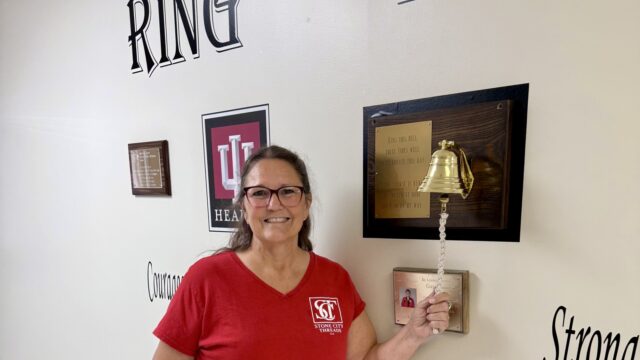
IU Health Bedford oncologist Rajesh Shah, MD, and the Bedford care teams helped make Tina Taylor's breast cancer journey a positive experience.
Oct 01
IU Health Bedford oncologist Rajesh Shah, MD, and the Bedford care teams helped make Tina Taylor's breast cancer journey a positive experience.
Your opinion about this website is important to us. Would you be willing to answer a few questions to help us evaluate and improve our website?