


September 04, 2025
Celebrating IU Health Bloomington Clinical Nurse Specialists
IU Health Bloomington Hospital
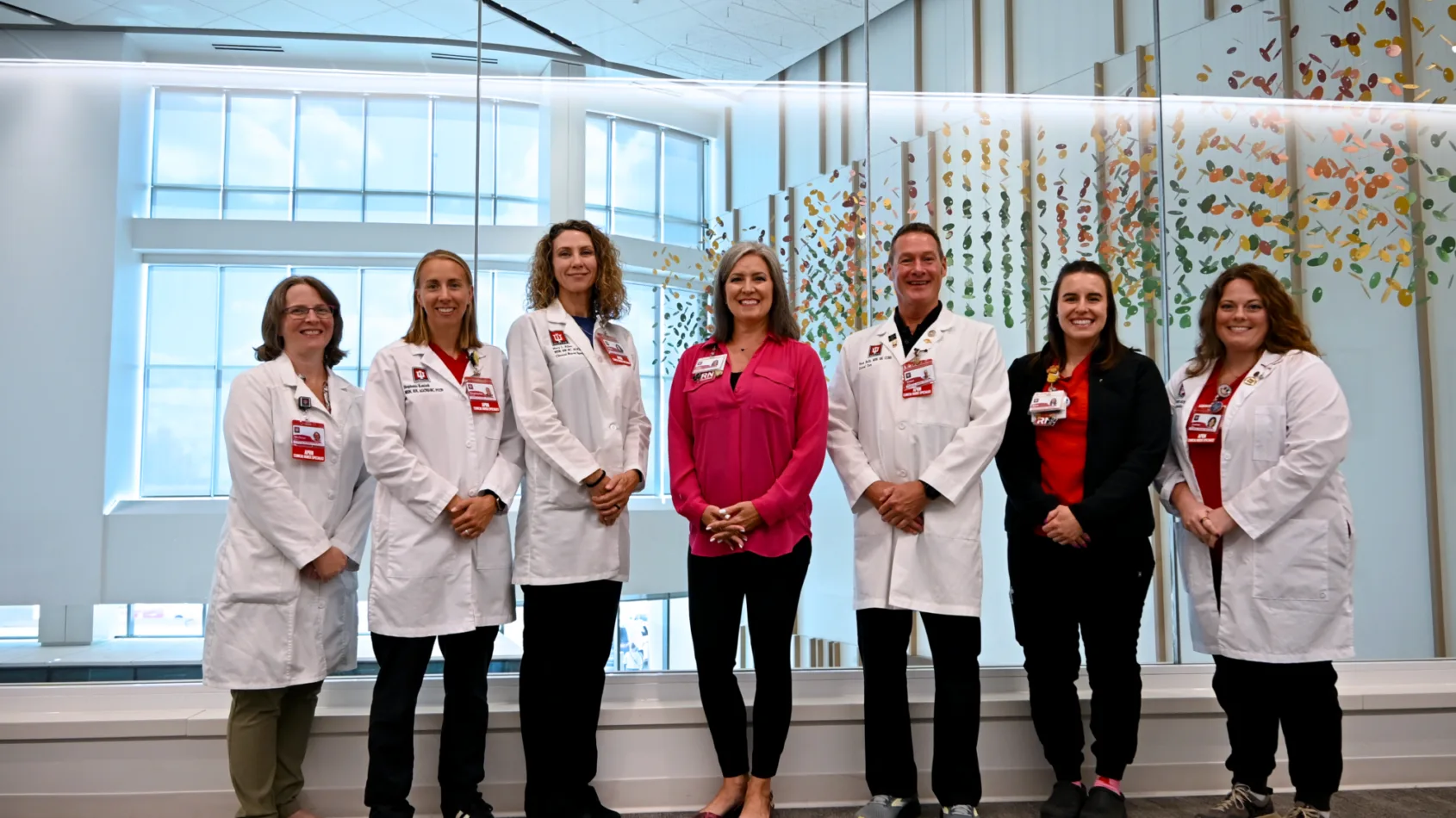
Clinical Nurse Specialist (CNS) Week is celebrated September 1 – 7 to recognize and honor these highly-skilled caregivers. See what the Bloomington CNS team has to say about their work, as well as some well-wishes from two of their leaders.
Bloomington Chief Nursing Officer Cindy Herrington, DNP, FNP, says, “This week, we celebrate our exceptional CNSs. Your expertise and dedication are the cornerstones of our clinical excellence. You are the innovators who drive evidence-based practice, the mentors who empower our teams, and the advocates who ensure the highest quality of patient care. Thank you for your tireless efforts to elevate nursing practice and for the profound impact you have on our patients, team and entire organization.”
South Region Director of Nursing Practice Julie Ruschhaupt, DNP, RN, says, “I am honored to lead and collaborate with this incredible group of talent. During my clinical career, I sought the expertise of my unit CNS and knew they were a trusted resource to support the care I delivered to my patients. The Bloomington CNS team is the epitome of the ‘Nurses Nurse,’ working hard day in and day out to support their colleagues as expert partners to deliver safe and evidence-based care.”
See below to learn more about this team from the IU Health Bloomington CNSs themselves.
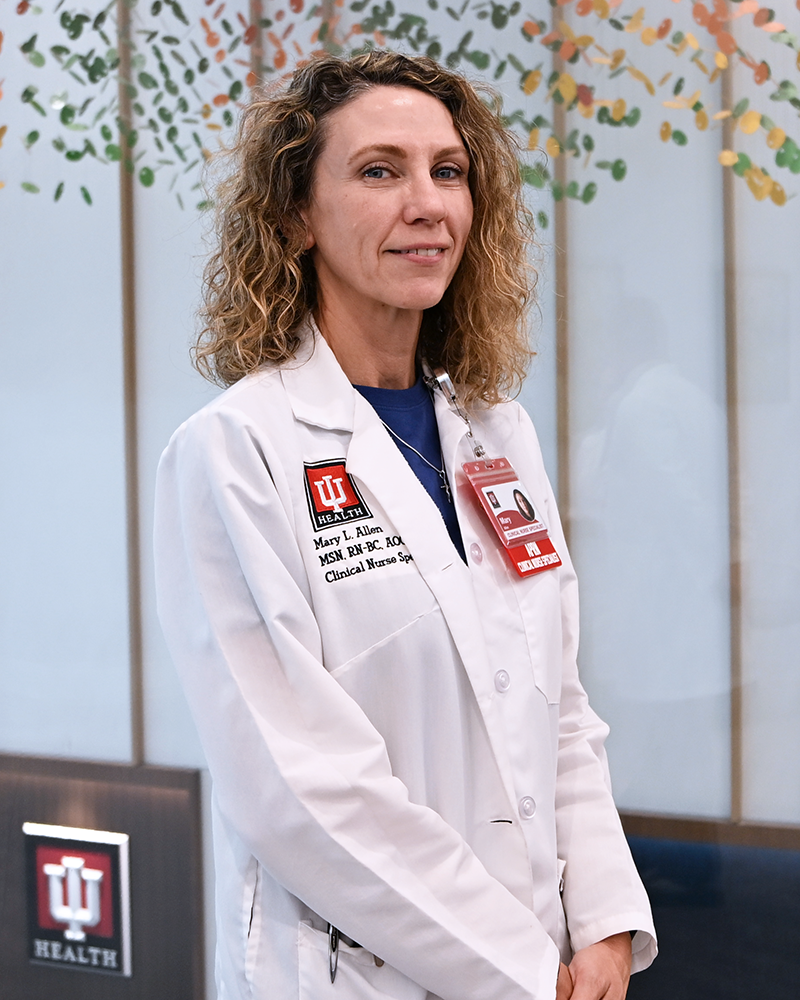
Mary Allen, RN | Oncology and Pain Management team.
“I have been a nurse for 28 years. I have been CNS for 22 years. My focus is oncology and pain management. I also focus on ethics, central lines and all things related to pharmacy, medication safety, Alaris, and chemotherapy safety.
“Clinical Nurse Specialists are advanced practice registered nurses and we focus on a specialty area of nursing managing the care of complex and vulnerable populations, educating and supporting interdisciplinary staff, and facilitating change and innovation within the healthcare system. The CNSs have unique and advanced level competencies that meet the increased needs of improving quality and reducing costs in our health care system.
“We provide direct patient care, including assessment, diagnosis and management of patient health care issues. The essence of CNS practice is advanced clinical expertise in diagnosis and intervention to prevent, remediate or alleviate illness and promote health with a defined specialty population.
“CNS practice is the translation of advanced clinical expertise, expert knowledge, complex decision-making skills and clinical competencies necessary for expanded practice to directly provide and influence care and outcomes of individuals, categories of patients and/or communities. CNS practice also transforms systems (such as health care institutions and systems, political systems and public and professional organizations) to mobilize and change these systems through expertly designed and implemented nursing interventions.”
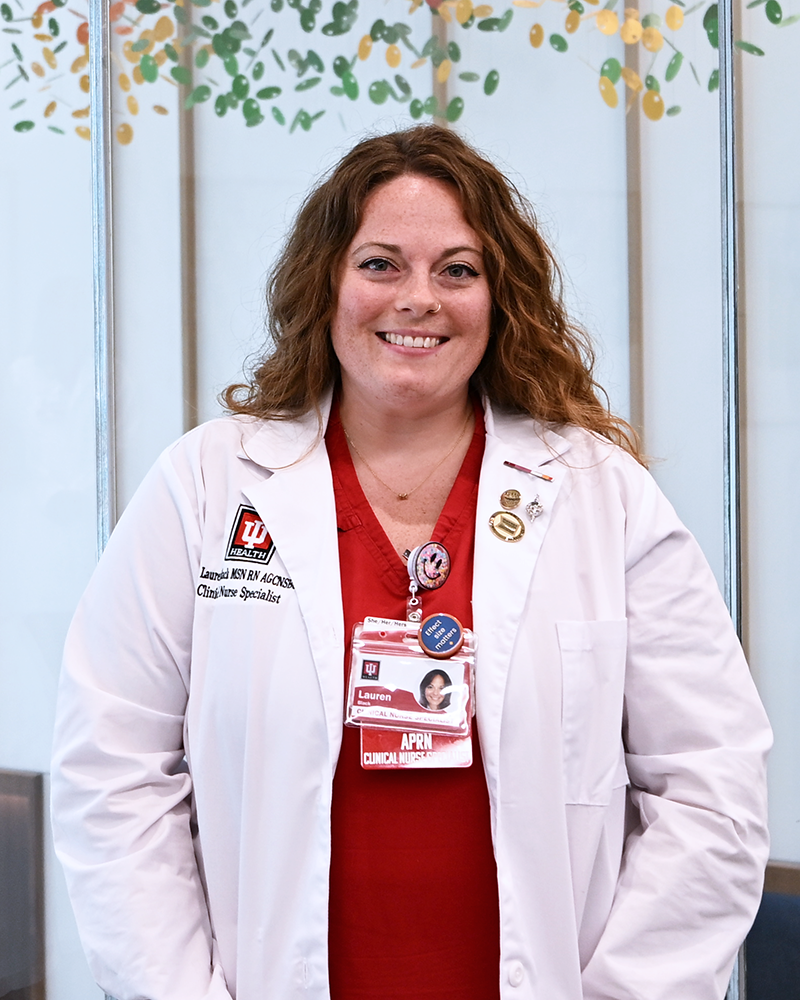
Lauren Black, MSN, RN, AGCNS-BC | Perinatal and Pediatric Services
“I have been a nurse for 10 years and a CNS for four years
“Perhaps unsurprising to those who know me, I have always asked a lot of questions and challenged the status quo. My curious nature and desire to positively impact the world initially led me to nursing. During the first six years of my career, I worked as a labor and delivery nurse.
“As I learned more about evidence-based practice, I realized that I wanted to be the one to help develop and implement that practice. While I loved supporting birthing patients one-on-one, I wanted to be able to impact more people on a larger scale. I wanted to improve the quality of care and outcomes for perinatal patients throughout our community, the state, and beyond. The interest in EBP led me to collaborate with CNSs. Once I understood the role, I realized that the nursing niche that I had been looking for did exist.
“The most important part of my work as a CNS is to translate the latest evidence in a way that makes it easy for nurses and other healthcare professionals to incorporate it into practice so we can all improve patient outcomes.
“CNSs are one of 4 types of advanced practice registered nurses (APRNs): clinical nurse specialists, nurse practitioners, certified nurse midwives, and certified registered nurse anesthetists. CNSs are primarily focused on evidence-based practice, harm prevention, and improving patient outcomes. By our very nature we end up being focused on cost-avoidance initiatives. Investing in clinical nurse specialists is an investment in organizational, nursing, and patient outcomes.
“I love being a CNS!”
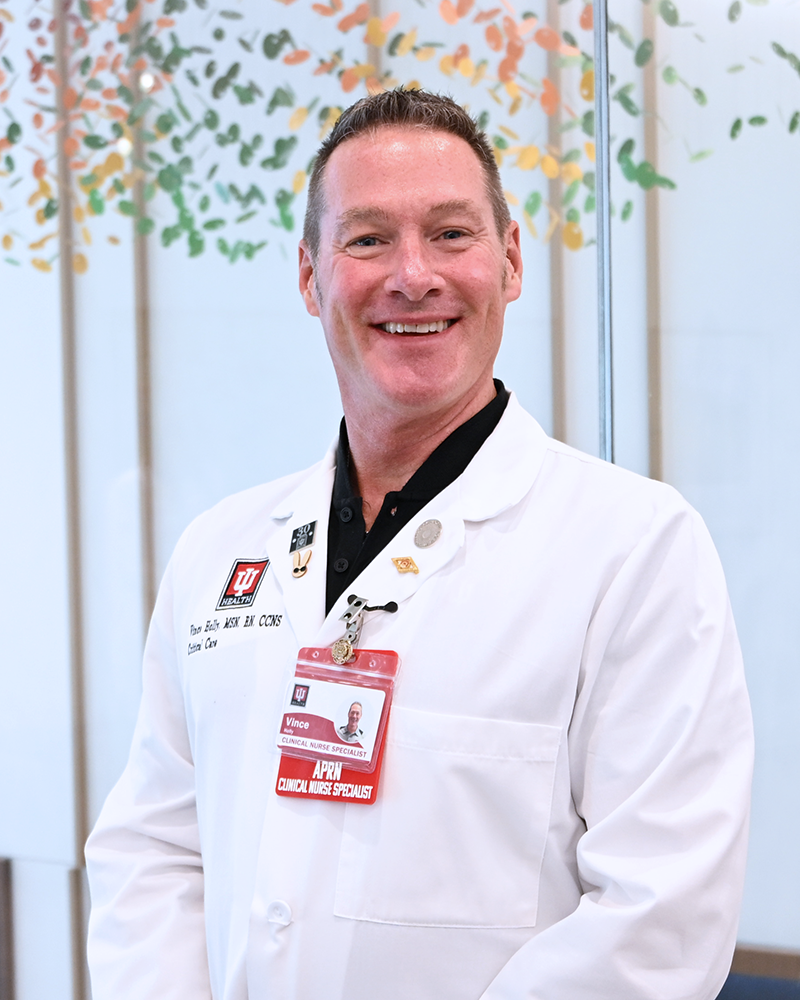
Vince Holly, MSN, RN, CCNS, ACNS-BC, CCRN, FCNS | Critical and Progressive Care Services
“I have been an RN for 29 years and a CNS for 20 years. Prior to becoming an RN I worked as a psych tech, orderly, and PCA. I have been with IU Health Bloomington for 34 years.
“I was inspired to become a CNS by the examples set by two of my mentors. Dr. Deanna Reising is a CNS and was my professor at the IU School of Nursing. As she spoke of the role, it sounded like the Advanced Practice Nursing role that I wanted to pursue. Mary Jane Fleener was my educator as I started my career in Critical Care. She became the first CNS at Bloomington Hospital. I was so impressed with the changes she was making, which had dramatic impact on our patient outcomes.
“The most important part of my work as a CNS is the impact I have on patient outcomes and advancing nursing practice. It is exciting to implement evidence-base practice, coach the nurses through the change and see improvements in patient outcomes.
“CNSs work in three spheres of impact: direct patient care, nurses and nursing practice, and system/organization. Each day my time fluctuates among the three spheres. Every day is different and every decision has the patient in mind.
“It is a privilege to work for an organization that values CNSs. IU Health has an incredible team of CNSs throughout the state. Because of our demonstrated value, we have the full support of Jason Gilbert. On a local level, nursing leadership has always supported our role. Cindy Herrington, Angela Tritle and Julie Ruschhaupt work diligently to ensure CNS coverage for all areas of IU Health Bloomington. We have an amazing CNS Team and I am honored to be a part of it.”
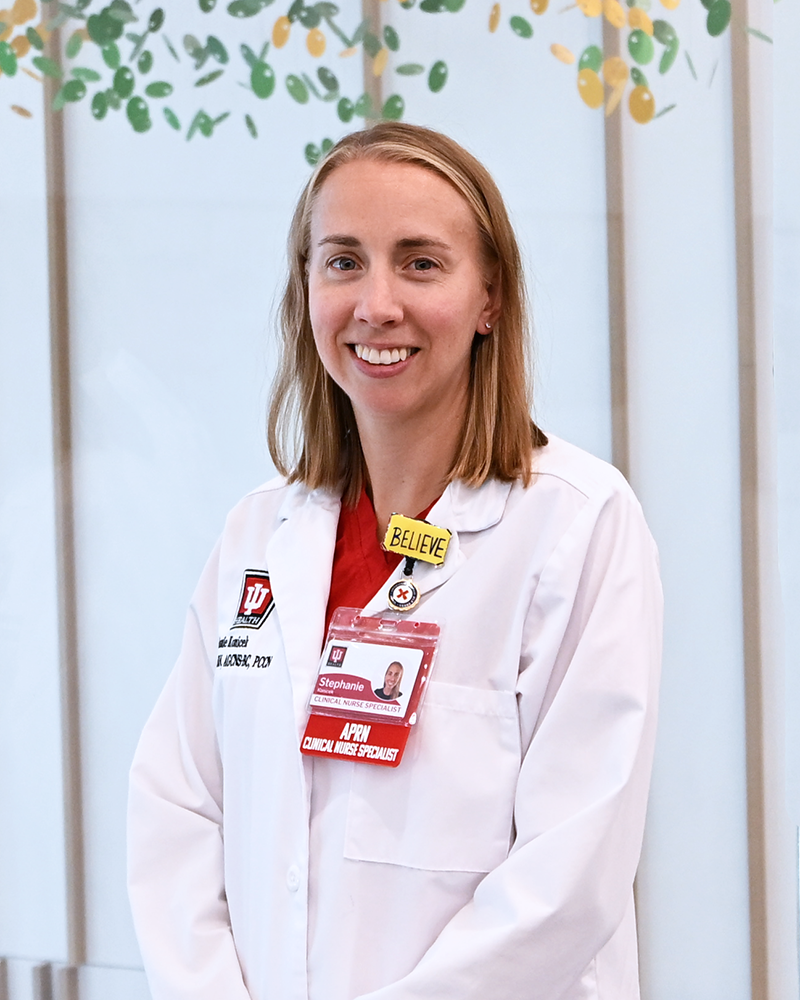
Stephanie Konicek, MSN, RN, AGCNS-BC, PCCN, MEDSURG-BC | 5E Acuity Adaptable
Stephanie has been a nurse for 13 years and a CNS for one year.
When asked what inspired her to become a CNS, she says, “Working with CNSs while completing a Johnloz research fellowship and collaborating during our evidence-based practice council. I was inspired watching CNSs leading evidence-based practice changes and impacting healthcare delivery for many patients. I love that we are able to identify and fix problems within healthcare systems.”
“CNSs are Advanced Practice Registered Nurses that work in three spheres to improve patient outcomes—we work directly with patients, to advance nursing practice within nursing teams, and in organizational systems—we are one of the only roles the flexes from the bedside to executive leadership.”
When asked what’s the most important part of her CNS work, she shares, “Reducing harm - we often don't consider the harms that can accompany hospitalization. My work centers around reducing unintended negative consequences of hospital interventions and protecting our patients from harm.”
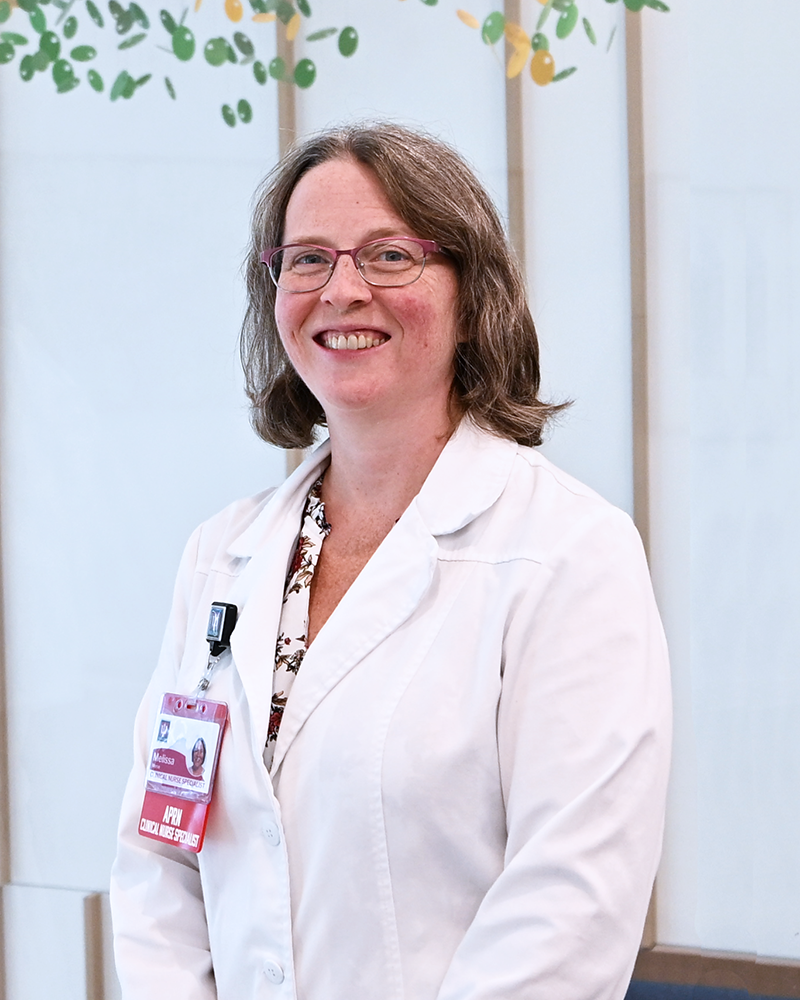
Melissa Morse, MSN, RN, CNS | Education
Melissa has been a nurse for 23 years and a CNS for 16 years.
When asked what inspired her to become a CNS, she says, “I worked on a team with the neuro CNS when thrombolytic therapy for stroke was new. She was building the first stroke program at our hospital. I was inspired by her work and the opportunity to improve care and outcomes for an entire population of patients.”
When asked what is the most important part of her work as a CNS, she says, “Making our patients safer and elevating the practice of our nurses.”
“We advocate for bedside nurses any time we are involved with practice/process changes.
"The 'right' intervention isn’t the right intervention if it can’t reasonably be incorporated into their practice and workflow.”
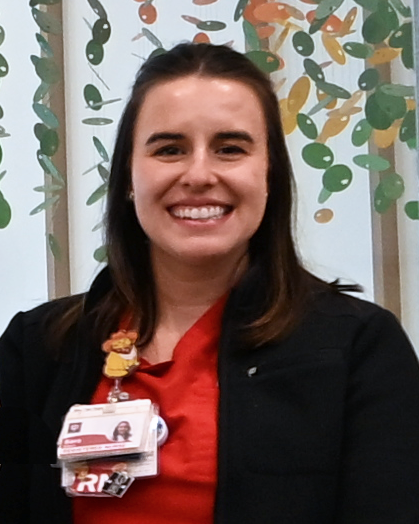
Sara Gilbert, RN | Emergency Department
"As an Outcomes Specialist, I’ve had the incredible opportunity to begin training as a Clinical Nurse Specialist Intern while completing my education.
"This experience has brought my classroom learning to life in the real world and provided the flexibility I need to stay focused on school and clinicals.
"I’m truly excited to be part of this team and look forward to continuing to learn and grow as I support the emergency department now and beyond my graduation in May of 2026.”
