October 02, 2025
Pediatric and adolescent gynecologist is advocate for women’s health
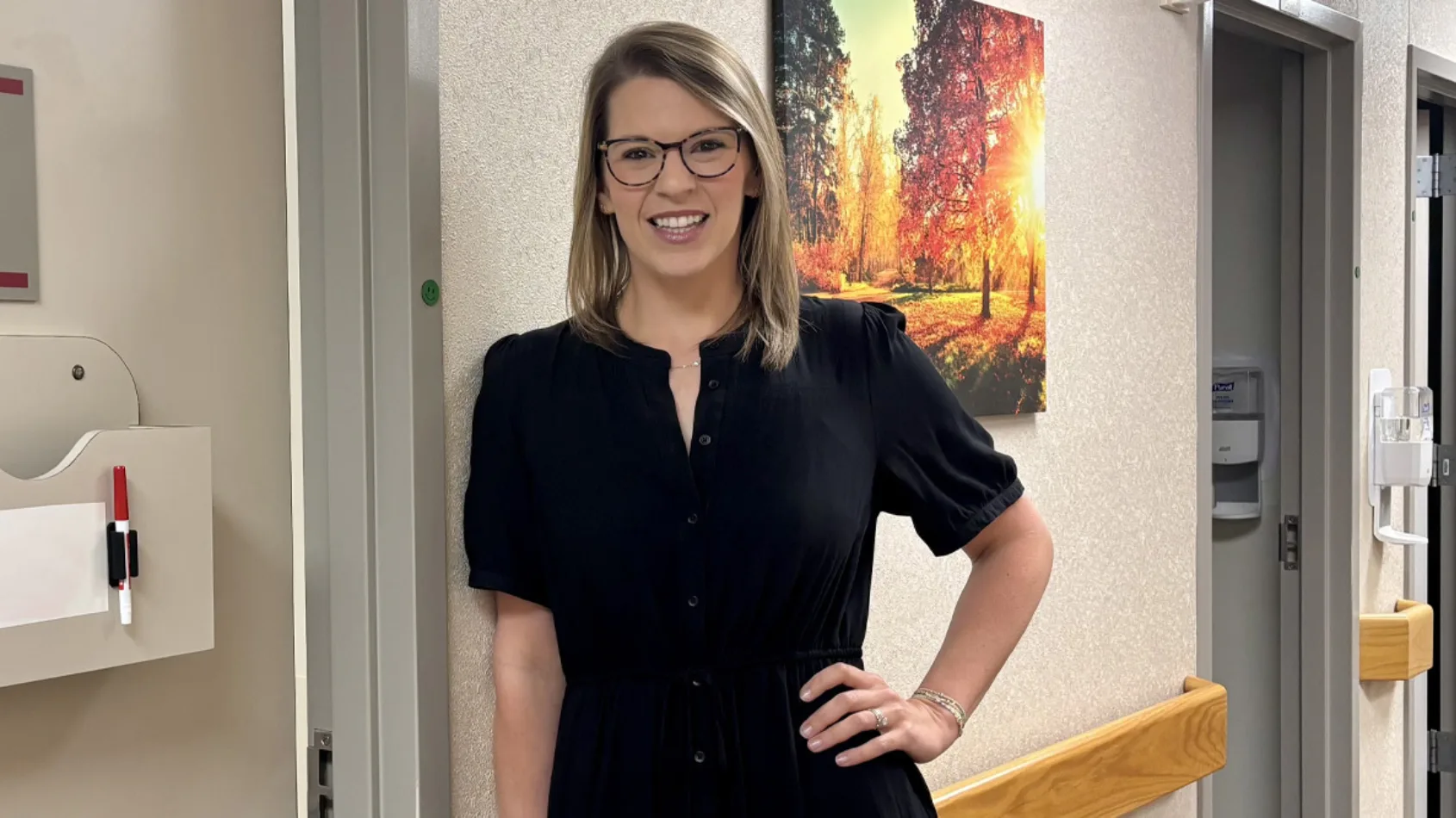
Dr. Amy Boone’s mother spent years as a labor and delivery nurse. When Dr. Boone began exploring careers in medicine her interests gravitated toward obstetrics and gynecology.
By TJ Banes, IU Health Senior Journalist, tfender1@iuhealth.org
There is a long list of common gynecological conditions that may be unfamiliar to a first-time patient. The list including “adnexal torsion,” “hirsutism,” and “vulvovaginitis.”
Dr. Amy Boone, the only fellowship trained pediatric and adolescent gynecologist in the state, sees her job at IU Health, as someone who educates and relates to young women.
Dr. Boone received her undergraduate degree in kinesiology from Louisiana State University before returning home to Mobile, Al. where she completed medical school and obstetrics and gynecology residency at the University of South Alabama. She went on to complete a fellowship in Pediatric and Adolescent Gynecology (PAG) at the University of Alabama at Birmingham.
She joined IU Health Coleman Women’s Center in August, with half of her practice devoted to general ob-gyn care and the other half Pediatric and Adolescent Gynecology (PAG). This unique subspecialty within obstetrics and gynecology focuses on early reproductive health in children and adolescents.
Many people wonder what to expect in a pediatric gynecology visit. “My first goal is to make the patient feel comfortable. I take a casual approach using familiar terms and tell them they can speak to me as they would a friend,” said Dr. Boone.
“First and foremost is to make the patient comfortable. I speak their language and tell them they can speak to me as they would someone familiar,” said Dr. Boone.
Here’s a little insight into her personality: She almost always wears some sort of “sparkle” – usually on her shoes. She rarely wears her white coat, and in her office, she keeps handwritten notes and a paper calendar close by family pictures There’s also a spare pair of scrubs in her desk drawer in case a young patient has an unexpected accident.
“I’m left-handed – a very visual person,” said Dr. Boone, who, at a young age was fascinated by the way the body works. “I love working with my hands. My father and I spend a lot of time building things build – fences, piers, you name it.” That part of her upbringing established a firm foundation for her future as a surgeon.
Here’s more about Dr. Boone:
Why did you choose gynecology?
During medical school I went on a mission trip to Honduras. The patients we served lined up in a tent after walking for miles to see us. Out of all the people there, I found myself frequently getting to work with patients with women’s health concerns. I felt there was a reason this was happening. This personal relationship individuals often have with their gynecologist was a good fit for me. The opportunity for patient advocacy, medical management, along with surgery was the best of both worlds. I can’t tell you how many times I’ve heard: ‘I’ve never told anyone this . . .’”
What is the difference between a pediatric and adolescent gynecologist and a pediatrician?
Pediatricians have so much to cover and so little time to cover it. They are capable of handling so many things but aren’t always afforded the time they need. What I do overlaps a lot with many different specialties such as pediatric endocrinology (the study of hormones and the endocrine system); gastroenterology (the study of organs such as the esophagus, stomach, intestines, liver, and pancreas), hematology/oncology, urology, and more. There are very few specialties I don’t overlap with. For instance, what appears to be a urinary tract infection, may be an inflammation of the vulva and vagina known as “vulvovaginitis.” Pediatric and adolescent gynecologists provide routine care for concerns like irregular periods, heavy menstrual bleeding, ovarian cysts and vaginal discharge. We also provide consultation for more rare and unique situations involving abnormal reproductive anatomy and disorders of sexual development.
What is one of the most common questions you get from parents?
A common question is ‘when does a kid need to see a gynecologist.’ The American College of Obstetricians and Gynecologists (ACOG) recommend the first routine gynecological visit for a teen should ideally occur between the ages of 13 and 15. However we are always happy to see anyone with concerns about their reproductive health.
What is a frequent question from patients?
“Do I have to get naked? “and “Do I have to sit in that chair (the stirrup chair)?” I always make a point to say ‘rarely does first visit require them to get undressed.’ It’s about building a relationship.
Describe some of the most common gynecological conditions unknown to many parents
PAG providers are particularly adept at trauma informed gynecological care. There are adolescents who need extra support managing menstruation due to mobility limitation or complex medical conditions. It can also be stressful for patients and families to process and navigate through the diagnosis of a congenital anomaly of the reproductive tract. Our clinic structure allows more time for each patient so we can meet them where they are.
Personal
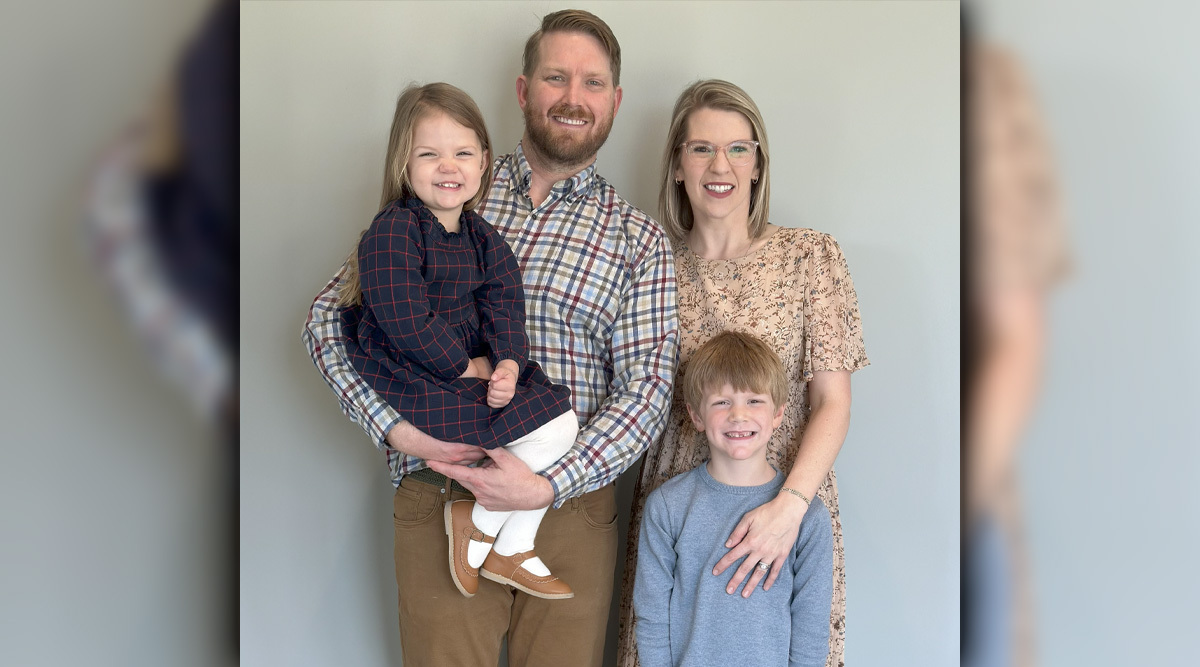
Dr. Boone and her husband, an Indiana native, are the parents of a son, 7 and a daughter, 4. They enjoy cooking, traveling to the beach, and attending sporting events.