


May 29, 2026
Addressing radiation injury in Bloomington: One patient’s experience with hyperbaric oxygen therapy
IU Health Bloomington Hospital
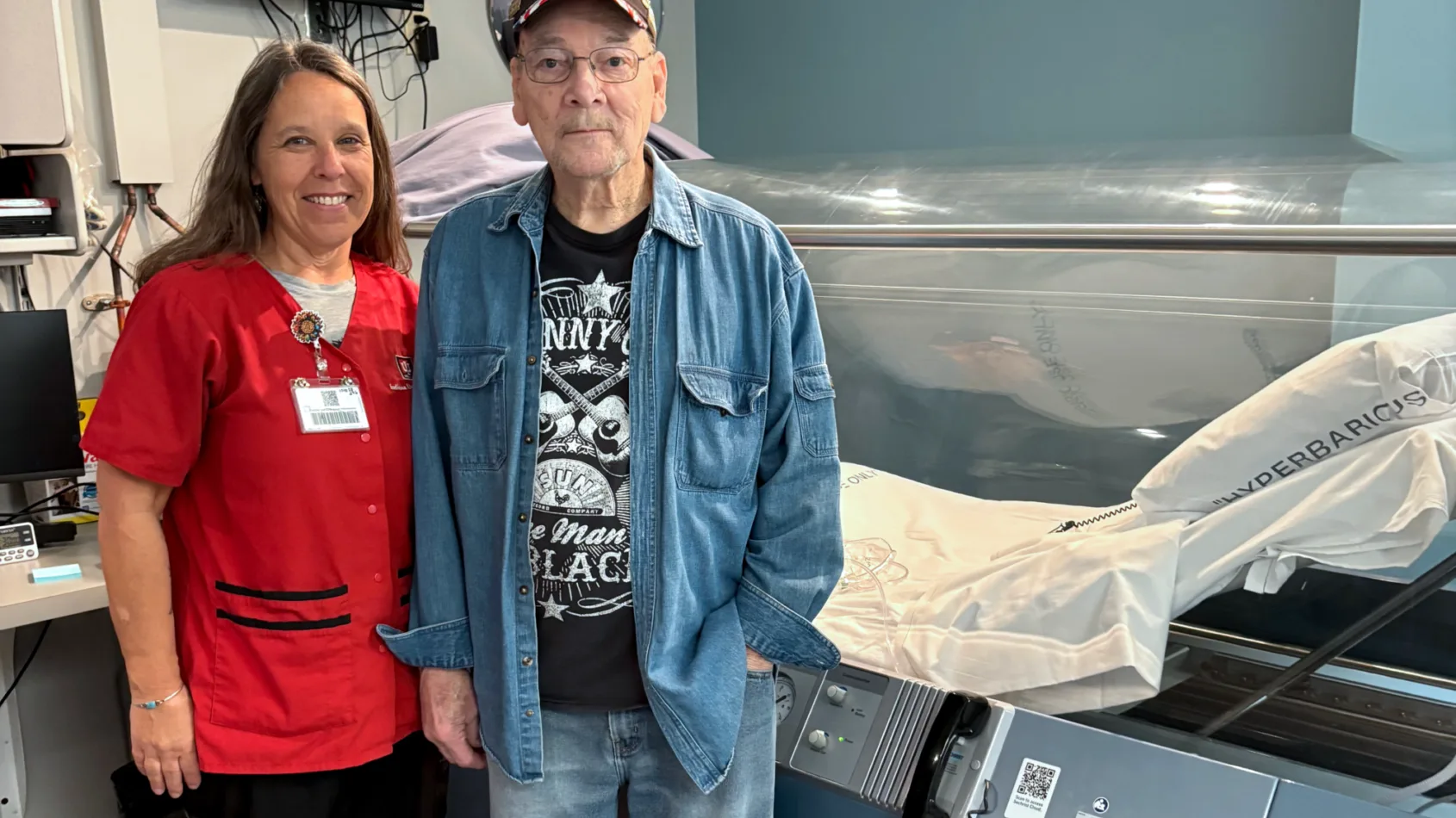
Phillip Jerrell, a coal miner from Washington, Indiana, underwent radiation treatments and multiple blood transfusions after being diagnosed with prostate cancer. Over time, the radiation damaged tissue in his bladder, causing hematuria — the presence of blood in the urine.
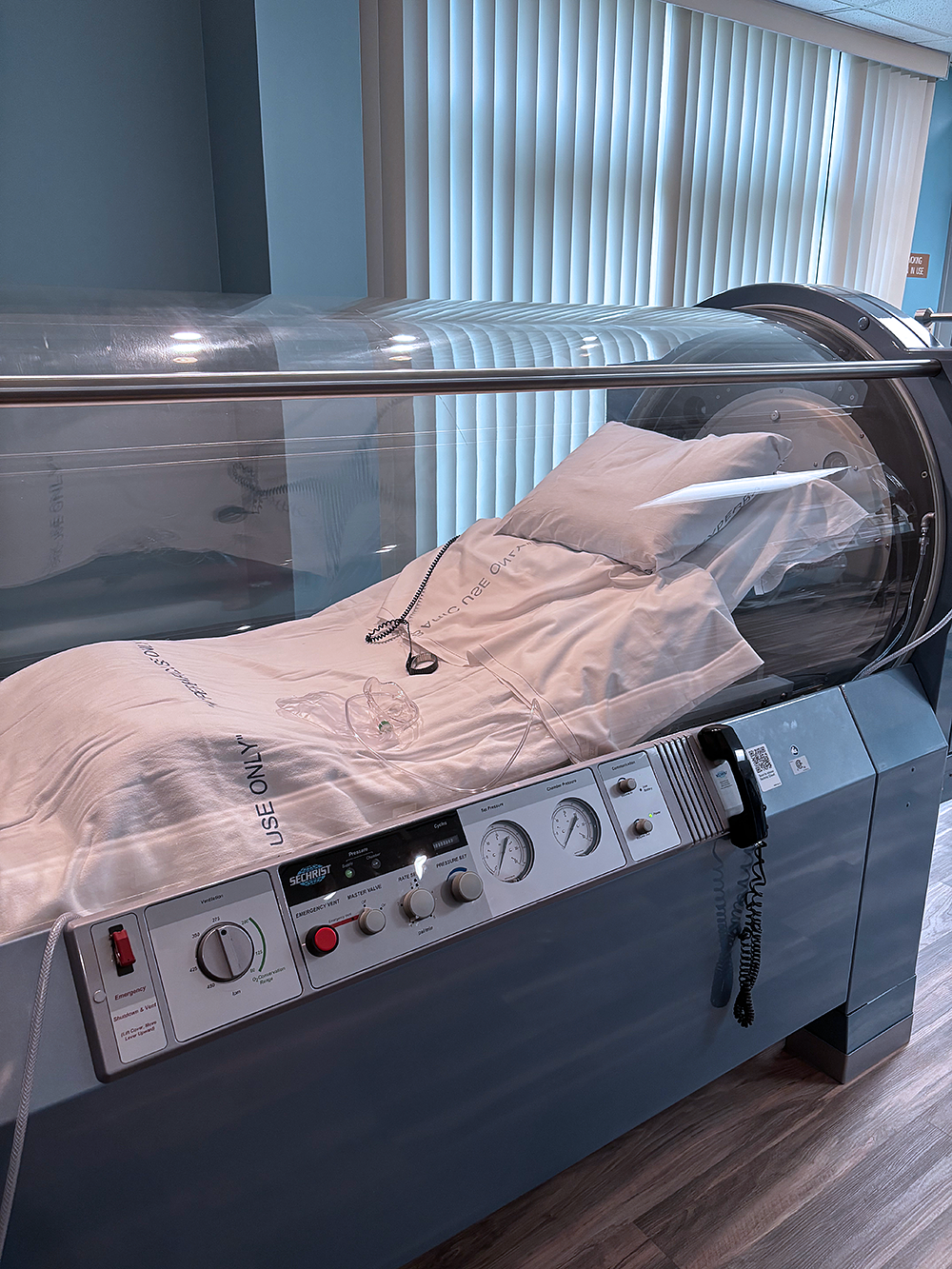
As his blood loss increased and his anemia worsened, Jerrell’s urologist referred him to the IU Health Wound Center in Bloomington for hyperbaric oxygen (HBO) therapy.
“When you’re in the chamber, it starts exchanging oxygen for air,” says HBO nurse Tammy Baker, RN. “It fills the chamber with 100% oxygen and as that’s happening, it’s pushing oxygen into every cell in your body and you're being hyper saturated with it. That’s the healing property.”
Jerrell says the therapy came at a critical moment.
“When I started [hyperbaric oxygen therapy] I was at a low point and within five weeks of treatment my bleeding had completely stopped,” he says. “It didn’t slow down, it completely stopped and it hasn’t started up again. Each day when I came out of treatment I could tell I was just a little bit stronger.”
As his bleeding subsided, Jerrell also noticed unexpected improvements: more stamina for walking and daily tasks, new feeling in a finger that had been reattached years ago, relief from tinnitus and a quieting of the ringing in his ears. Most life‑changing, he says, was the positive shift in his mental health.
“I was really getting depressed because I had nowhere to go. And I could feel the improvement in my body after I started getting my treatments. I went back to yard work and raking and I even got yelled at by my wife for it, but I had the energy to do it,” says Jerrell. “I didn’t only change physically, but I think I mentally changed, that was probably as much healing for me as anything else and these people did it.”
He credits not just the therapy, but the people who guided him through it.
“Their warmth was half my healing,” Jerrell says. “They were like my angels.”
