October 12, 2026
Breast cancer diagnosis: Fly fishing, healing, and sharing – two strangers become friends
IU Health Simon Cancer Center
By TJ Banes, IU Health Senior Journalist, tfender1@iuhealth.org
These two women have a few things in common – they were both diagnosed with breast cancer; they are both mothers, and they are both advocates for breast cancer awareness.
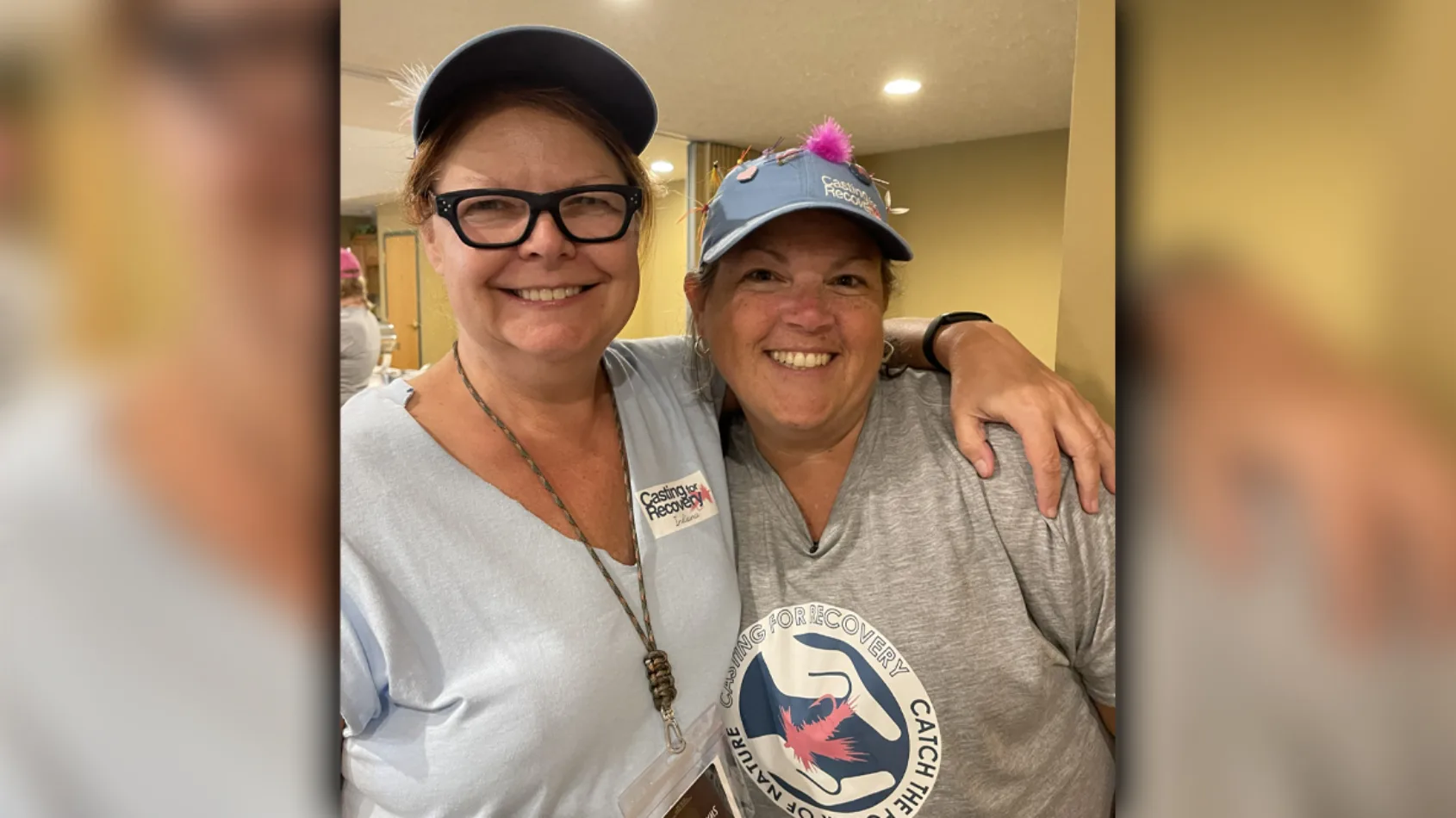
Annette Roy and Niki Donaldson met at a fly-fishing retreat for survivors of breast cancer. “Casting for Recovery” organizes wellness getaways to connect women and provide therapeutic support through fly fishing.
Attendees are in all phases of diagnosis and various stages of recovery. Not only have the women maintained a friendship since their first meeting, but they are also active volunteers supporting others diagnosed with breast cancer.
Roy’s first diagnosis came after she found a lump on Christmas Day. She was the same age as her eldest son at the time – 27. She has a second son, 23.
“It was quite a shock discovering at the age of 27 you have breast cancer,” said Roy, who is now 61. She lived in Fort Wayne at the time and went through lymph node removal, chemotherapy, and radiation.
“Then, there was a long period of time that I was actually able to forget about cancer which was amazing,” said Roy, who now live in Fishers, Ind. Twenty-three years after her first diagnosis, the cancer returned. She opted for a double mastectomy and was in the care of IU Health’s Dr. Kandice Ludwig. Roy continues preventative medication and is in the care of oncologist Dr. Hillary Wu.
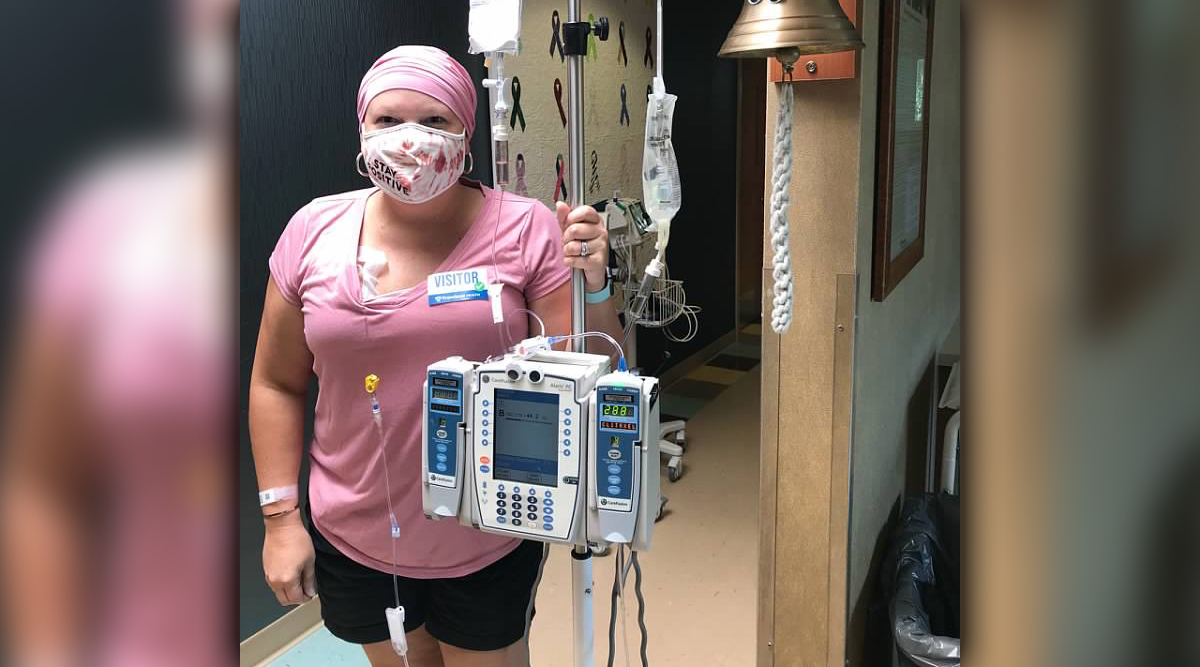
Donaldson, of Camby, Ind. was first diagnosed in March of 2020 following a routine mammogram. The initial finding was in her left breast. She advocated for a double mastectomy even though it was considered an elective procedure at the time due to COVID restrictions.
“I’m glad I did because they found a cancerous tumor in my right breast and 13 cancerous lymph nodes,” said Donaldson, who was in the surgical care of Dr. Aladdin H. Hassanein. She celebrated her 50th birthday in June with a trip to Key West, Fla. and said she has had no reoccurrences. She enjoys attending concerts and hanging out with friends.
Both Roy and Donaldson have spent the time since their diagnosis and treatment advocating and educating others. Neither woman carried a hereditary gene for breast cancer, and both maintained healthy lifestyles.
“One of the things I think people should know is just because you don’t have a family history, doesn’t mean you can’t have breast cancer. Sometimes, that gives a false sense of security,” said Roy who was Estrogen receptor-positive (ER-positive) the second time she was diagnosed. ER-positive breast cancer accounts for about 80 percent of breast cancer diagnoses.
“Now we know so much more about genetic makeup and there’s so much more detail around specific tumors that can really prolong your life,” said Roy. “Diagnosis and treatment are so much more personal.”
As part of her community involvement, she volunteers with four breast cancer charities and provides peer-to-peer counseling. She also has campaigned for more federal funding for research.
Donaldson volunteers for the “Pink Ribbon Connection Fashion Show,” and “Casting for Recovery” where she and Roy first met.
Roy enjoys her retirement traveling and spreading the message to patients and survivors:
“There are so many lingering psychological and emotional effects from treatment – bone loss, joint pain, dental issues. It’s important for women to continue taking care of themselves even when they are in remission.”