


March 18, 2026
Clinic Nurse Navigators change South Region access to spine care
IU Health Bloomington Hospital

As the first IU Health spine program to have dedicated spine nurse navigators and the only system program to have them in the clinic setting, the South Region Spine Program is a leader in patient support. In fact, the navigators have been a source of much-needed support for over 2,700 patients.
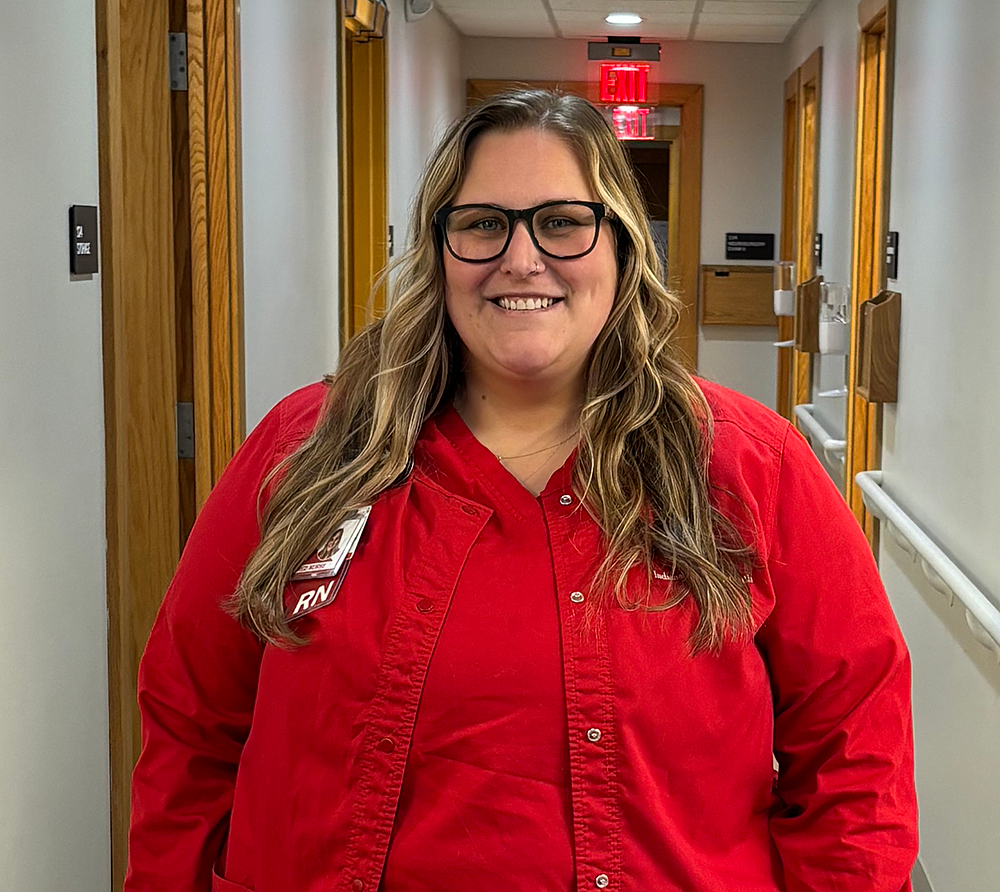
“I think there is an essential need for navigators in the clinic setting,” says Jessica Wellman, RN, spine program nurse navigator. “Surgery can be a part of someone’s treatment for their spine care, but most of the journey likely involves care in the outpatient setting.
Jessica has been part of the IU Health team for over 9 years. She worked as a patient care tech in neurosurgery and orthopedics while she was in nursing school and enjoyed the complexity of the patient population so much that she found her way back to neurosurgery as a nurse. Her and Lindsay McClung, RN, whose background is in pain management, make up the south region nurse navigator team alongside an additional PRN spine triage nurse.
Established in January of 2024, this team works to triage patients through the program, which involves a multi-disciplinary team consisting of physical therapy, pain management and neurosurgery.
“Nurse Navigators are responsible for triaging every referral that comes in and working with patients to guide them through the various treatment options for acute or chronic back and neck pain—both conservative treatment and surgical options, if appropriate,” says Jessica. “We are a central and consistent contact for the patient during treatment within those disciplines, checking on their progress, helping them through roadblocks and hopefully finding the right treatment for them based on their needs.”
With something as complex as spine care and no one-size-fits-all treatment plan, the spine referral pathway guides a patient’s journey to the care they need, providing clear next steps, a central point of contact, and in some cases faster appointments into busier offices.
“We consistently follow up with patients, so they don’t feel forgotten,” says Jessica. “With being the one central contact for all disciplines despite where they are in their treatment, we have been able to educate patients on what to expect and shorten wait times for appointments, which is essential when patients are dealing with daily pain.”
