


February 23, 2026
Lactation After Loss program offers support to grieving families statewide
Note: This piece includes the topic of infant loss, including personal experiences and sensitive details that may be emotionally difficult for some readers.
Through IU Health’s South Region Fetal Infant Mortality Review (FIMR) program, Emily Bock, Community Outreach Consultant, kept hearing a challenging trend in her one-on-one maternal interviews with mothers who were facing unimaginable loss. Grieving parents were experiencing a gap in education, support and resources for breastmilk pumping, suppression and donation.
“Mothers were sharing that they had either not received any education about their milk supply coming in after a loss or were only being given information on how to suppress milk supply, but never that they had the option to donate.” says Bock.
For the mothers that did want to pump and donate, there were often financial barriers to obtaining the pumps and supplies.
“The Women, Infants and Children (WIC) nutrition program and insurance policies often do not cover the cost of pumps depending on the baby’s gestational age at the time of the loss. And, prescription pumps through insurance often aren’t covered when a mother does not take home a living child,” says Bock.
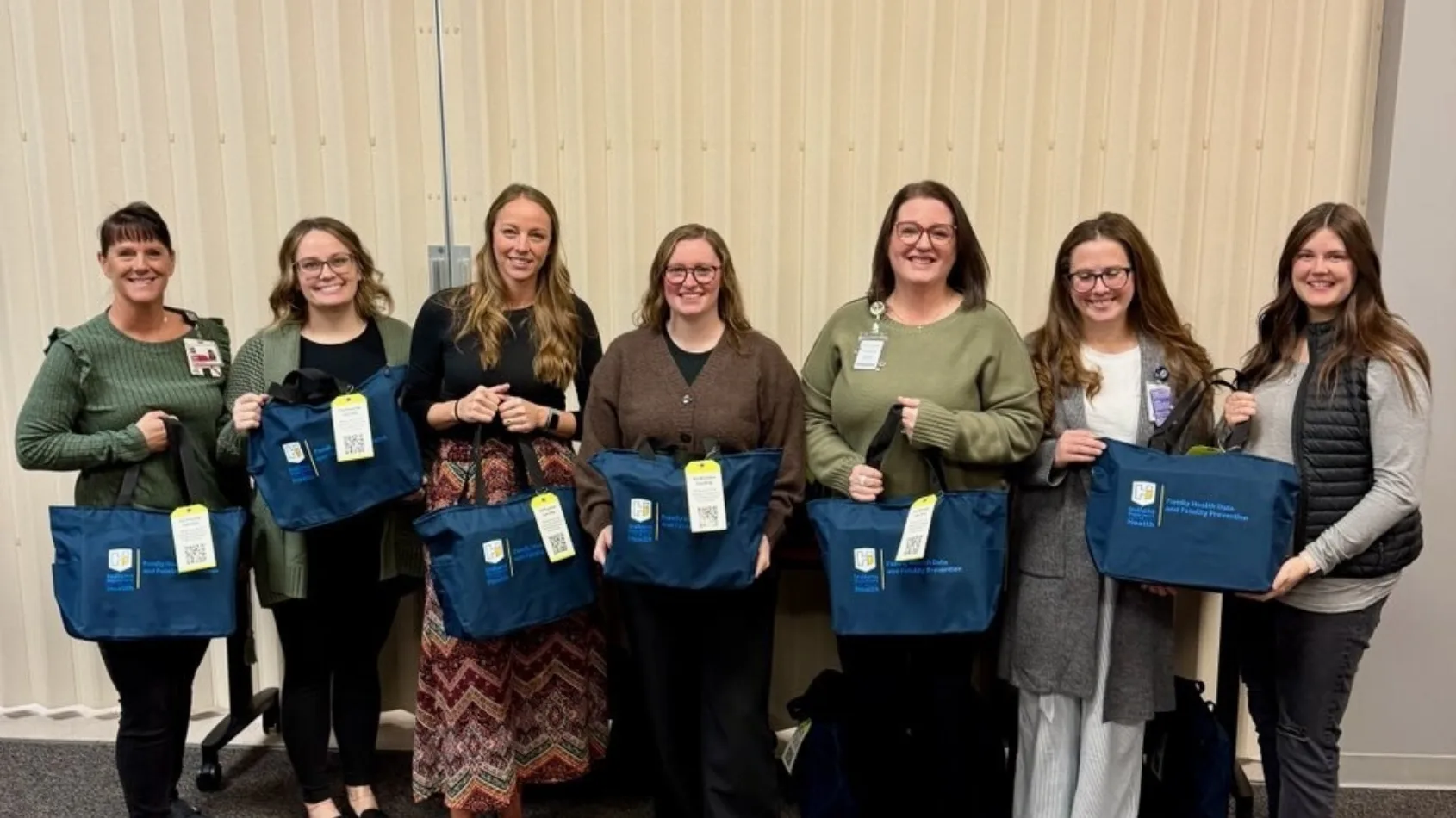
These consistent themes sprung Bock into action. She created the Lactation After Loss (LAL) initiative – a program that provides support and resources for families experiencing loss due to miscarriage, stillbirth or infant death, helping them navigate lactation options during their grieving process.
“Women have a four times increased risk of dying within the first year after experiencing a fetal or infant loss,” says Bock. “Being able to offer meaningful, supportive resources to these mothers is vital.”
The South Region FIMR program had planned to utilize existing grant funds to purchase pumps to give out for free to applicable mothers and educate South region medical providers about the program. Bock reached out to the Indiana Department of Health (IDOH) for support, and from there the initiative grew. IDOH was eager to expand the program statewide and took the lead to make it possible. As of Jan. 5, in partnership with The Milk Bank, Indiana WIC, Indiana Breastfeeding Coalition and Ardo, all Indiana mothers who experience the loss of a child will have access to free breast pumps, bereavement kits and education through the LAL program.
“Through this program, grieving mothers are educated on all their options and empowered to make the best decision for them and their families regardless of financial barriers,” says Bock. “When speaking with mothers who have made the decision to pump and donate, they have shared it was significant to their bereavement and healing journey—instrumental in ensuring they were taking care of themselves physically and mentally, eating well and staying hydrated so they could successfully produce milk and donate as a way to continue to honor their baby and their journey.”
The South Region was the first group to receive and distribute pumps from IDOH across the state on Jan. 5. Bock works with the LAL steering committee and has played a key role in program development since the idea began with her.
“The most rewarding part of the work thus far has been reassuring mothers who have experienced a loss that their voice matters and is being heard,” says Bock.
Annabelle Poindexter was one of the mothers who shared her story with Bock during their FIMR maternal interview together and played a role in creating the program.
“Following the tragic loss of their daughter, the Poindexter family was fearless in their journey of honoring her while walking alongside us to create this program – a program that will now support every mother facing the unimaginable grief that Annabelle and her family know all too well,” says Bock. “Annabelle showed up at all the meetings, answered all the phone calls and texts, packed her family up on numerous occasions and more to join us at conferences across the state and share their story. It was a safe space for them to grieve out loud as a family while guiding us in creating an initiative that is truly rooted in meaningful action. For that, we are forever grateful to the Poindexter family.
Bock is thankful that through LAL and other FIMR initiatives, they can lift voices and take lived experiences to improve services, education and resources for all.
“This program only exists because of the brave mothers who were willing to share their stories,” says Bock. “It is an honor to be in a role where I get to bear witness and be the storyteller of women caring for, protecting and empowering other women, even during their time of unimaginable grief.”