February 12, 2026
Liver recipient to donor: ‘You are so young; you could be my son’
IU Health University Hospital
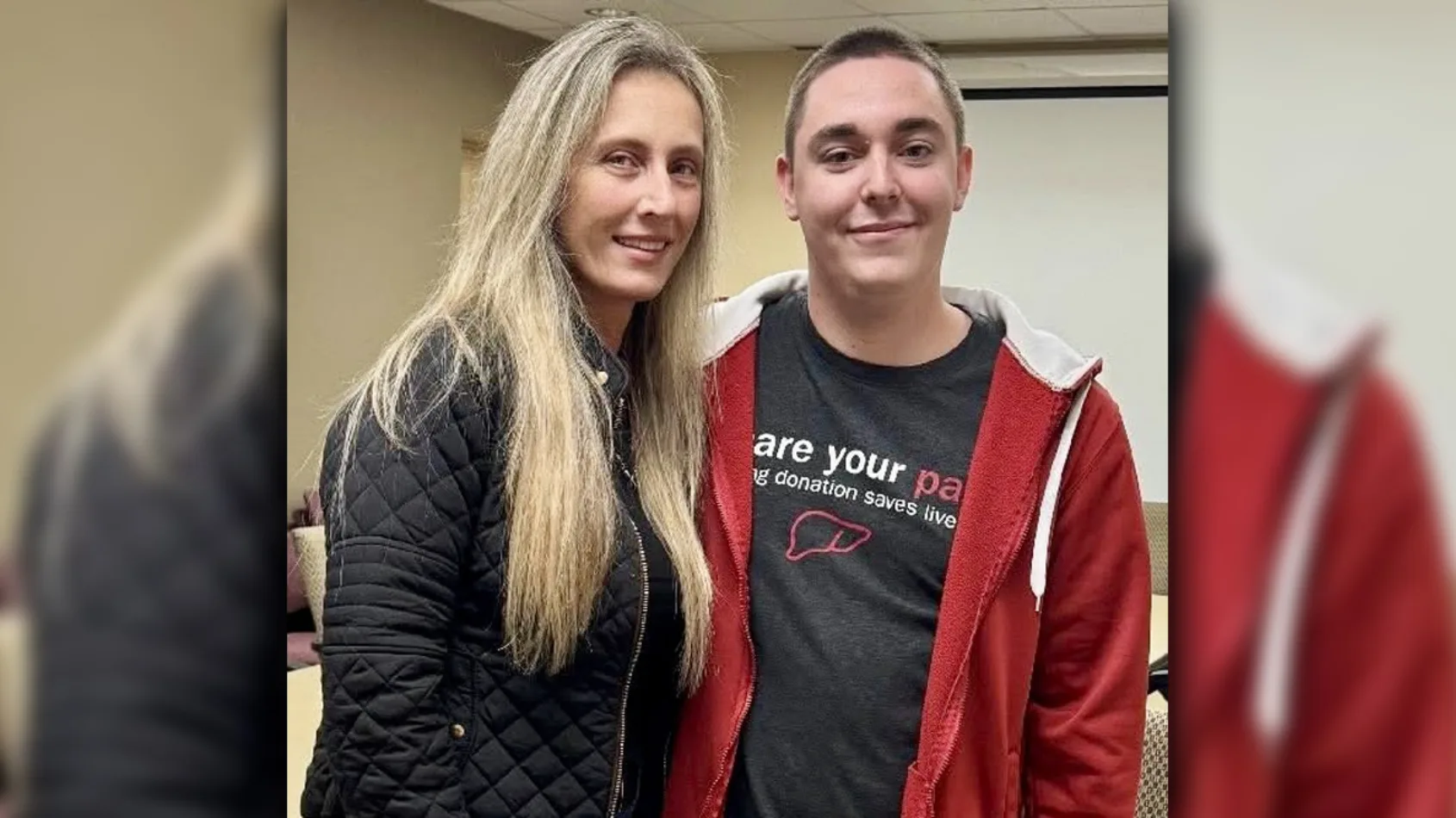
When Joshua “Josh” Wilson, 23, decided to donate his liver to a stranger, he had no idea that stranger would have a son the same age.
By TJ Banes, IU. Health Senior Journalist, tfender1@iuhealth.org
He grew up on a farm in Wayne County, Ind. An only child, Joshua “Josh” Wilson said his mother and his uncle had a profound influence on his life.
“I’ve always like helping people. That’s the way I was brought up,” said Wilson, 23. He describes volunteering in high school – serving at a soup kitchen and joining a church youth group on a week-long service project in Louisville, Ky.
When he got his driver’s license, Wilson registered to be an organ donor without a second thought. He went to Indiana University with his sights set on becoming an English teacher, but when he took a job at a hospital, he had a change of heart. As he interacted with people, he became interested in mental health.
“I found my calling,” said Wilson, who works as a case manager for Meridian Health. At the age of 22, Wilson learned about living liver donation and a whole new side of giving to others.
February 14 is National Donor Day, a time to raise awareness for saving lives through organ, eye, tissue, blood platelet, and marrow donation. More than 100,000 people in the United States are on the national waiting list, with a new name added every eight minutes. A single donor can save up to eight lives. Persons interested in becoming a donor may register through the Department of Motor Vehicles or online at RegisterMe.org.
At IU Health many people in need of kidney or liver transplants receive those organs from living donors. Living donors help give renewed health to people experiencing kidney or liver failure. A living donor isn’t necessarily related to the recipient. Compatibility is based on many factors. Both the donor and recipient undergo extensive testing and screenings and meet with a team of transplant experts including surgeons, donor coordinators, social workers, dietitians, pharmacists, and financial coordinators.
“I didn’t even realize you could be a living liver donor until I started reading about it,” said Wilson, who worked with IU Health living donor coordinator Tabatha Garing. Wilson was 22 when he contacted IU Health and began the process. “I tell people my mind set is, ‘we can’t take anything with us, but we can leave behind an impact on how we help others,’’ said Wilson. “I’m young, healthy, and able so I couldn’t think of a reason not to become a liver donor.”
On Aug. 11, 2025, Wilson, then 23, became a non-directed altruistic donor. He knew his liver was going to someone, but he didn’t know who. He was in the surgical care of Dr. Chandrashekhar Kubal.
The transplant involved removing a portion of Wilson’s liver and then using it to replace the diseased liver in the recipient. The liver regenerates and returns to full function within a month. While Wilson was in surgery, his husband, Trey Wilson, and an aunt and uncle passed time in the waiting room.
What they didn’t know at the time, is that the family of his recipient was also waiting.
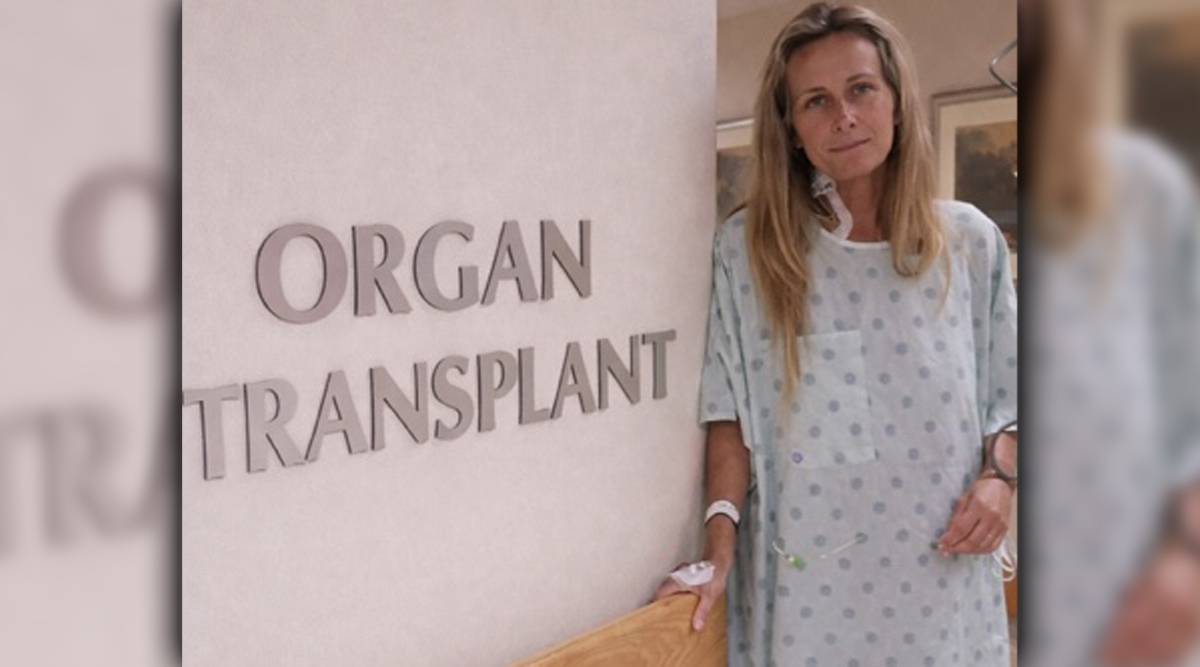
Stephanie Marshall, of Noblesville, Ind. was also in the surgical care of Dr. Chandrashekhar Kubal. Marshall believes her liver problems began following a COVID diagnosis where she spent eight days in ICU at another hospital.
“My liver enzymes never recovered. When I got into the IU Health network, they realized it was PBC and I was also diagnosed with hepatitis C,” said Marshall, 50. Various medications were prescribed and Marshall was eventually listed for transplant.
Primary biliary cholangitis (PBC), formerly known as primary biliary cirrhosis, is a chronic liver disease resulting from progressive destruction of the bile ducts in the liver. Bile travels through the ducts to the small intestine to aid in digestion. When the ducts are destroyed, the bile builds up, resulting in inflammation and eventually cirrhosis.
“I was on medication and steroids, but the liver enzymes kept climbing. I was jaundiced, and itching. I couldn’t rest and had zero energy,” said Marshall, the mother of two children, a daughter, 30 and a son, 23. When Marshall reached a point of needing a transplant, both of her children were tested as donors but were not a match.
After the August 11th transplant, Marshall remained hospitalized for a week. Wilson was also in the hospital for a week. They later learned that they were on the same floor but never met.
“One thing that stood out to me was that right after our surgery Josh asked all the nurses how I was doing and wanted to make sure that I was okay. That says so much about this young man,” said Marshall.
When he was discharged, Wilson said he took things slowly and eventually went from extended walks to driving. “I said I’d do it all again if I could give someone a chance at life. It was a piece of cake,” said Wilson.
Marshall was eager to meet her donor and when she learned Wilson was interested, they arranged a time in January.
“The first thing I said, is ‘you are so young. You could be my son,’” said Marshall, who gifted Wilson with a blanket and a necklace engraved with the transplant date. What Marshall didn’t know at the time, is Wilson had lost his mother unexpectedly when he was 10. She died of a ruptured aorta.
Since their first meeting, Marshall and Wilson continue to keep in touch. Marshall remains in the care of IU Health’s Dr. Ahmed A. Elkafrawy, who specializes gastroenterology and hepatology, and post-transplant coordinator Trish Harris.
She looks forward to working out and hiking with her dog.
“It’s truly amazing someone could be so young and so selfless,” said Marshall. “It’s so surreal to meet someone who saved your life. I just want everyone to know he is a hero.”