Cancer Care
Cancer care includes a variety of treatments, systematic therapies, surgery and clinical trials.


By Charlotte Stefanski, Writer for IU Health’s Metro Region
To help more patients receive earlier diagnoses, better care and better outcomes—all while staying close to home—IU Health Fishers has recently launched a lung nodule screening program.
Lung cancer is the leading cause of cancer death in the United States for both men and women.
According to the Centers for Disease Control (CDC), based on the most recent data available, 228,058 new lung cancers were reported in the United States in 2023 and 128,663 people in the United States died from lung cancer in 2024.
To help more patients receive earlier diagnoses, better care and better outcomes—all while staying close to home—IU Health Fishers has launched a lung nodule screening program.
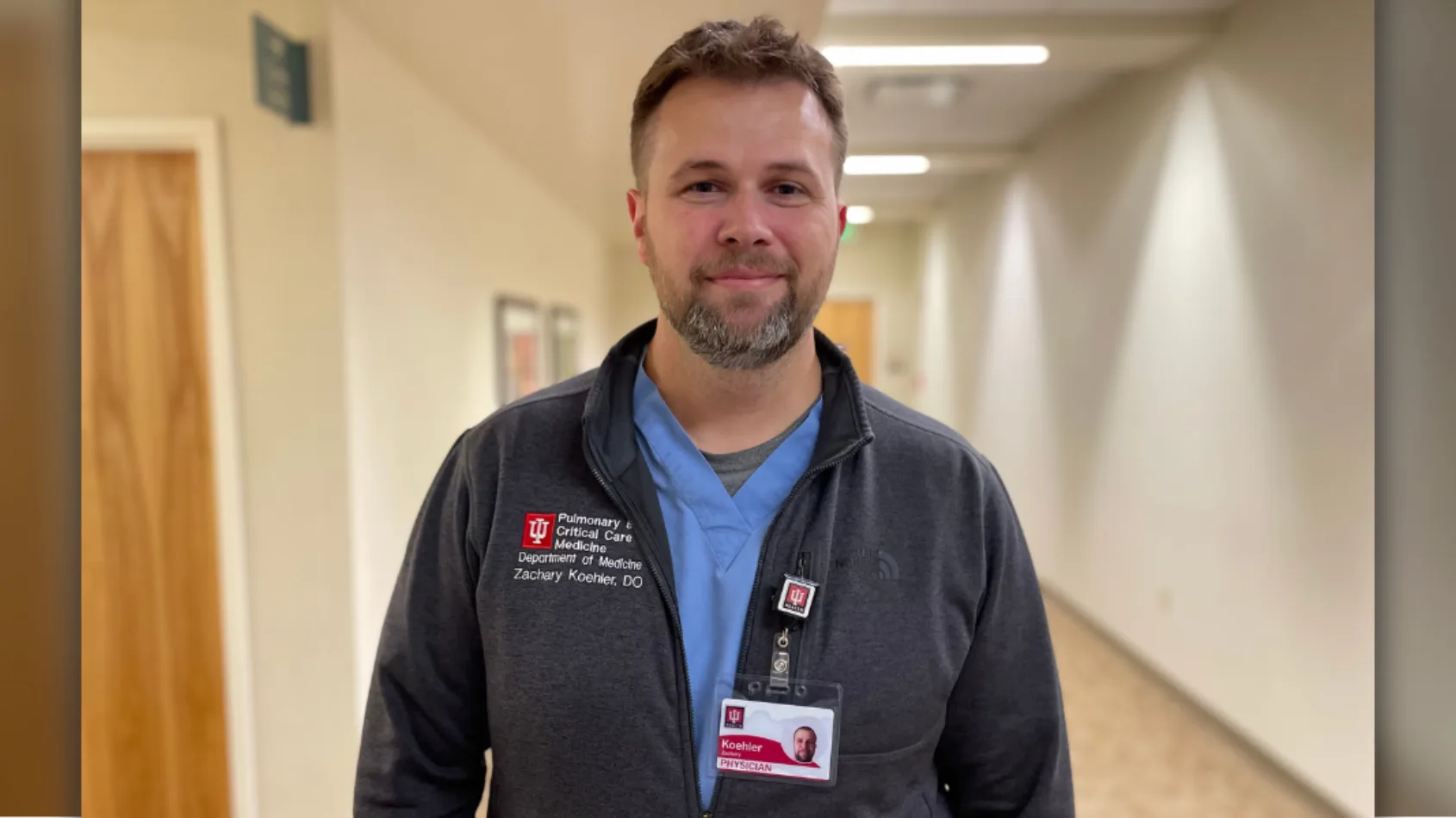
“Our goal is to bring advanced, high-quality pulmonary and lung cancer services to the Fishers community while maintaining the resources and expertise of the larger IU Health system,” says Zachary Koehler, DO.
The lung nodule screening program at IU Health Fishers was established to provide timely evaluation and management of pulmonary nodules and help patients navigate what can often be an anxiety-provoking diagnosis.
In addition, the team is continuing to expand advanced diagnostic capabilities, including robotic bronchoscopy and other minimally invasive procedures, to further enhance lung cancer care close to home.
Koehler, a pulmonary and critical care physician with a special interest in lung cancer, lung nodules and advanced bronchoscopy, focuses on helping patients with lung conditions, particularly those who need evaluation for lung nodules or concerns about lung cancer.
He and the team provide evaluation and management for patients with lung nodules, abnormal chest imaging findings and individuals at risk for lung cancer. It is located within the pulmonology practice in the Medical Office Building at IU Health Fishers.
“Our goal is to guide patients through every step of the process, whether that involves monitoring a small nodule over time, coordinating additional imaging, discussing screening options or arranging diagnostic procedures when needed,” he says. “We work closely with primary care providers, radiologists, surgeons, oncologists, and other specialists to ensure patients receive timely, coordinated care that is individualized.”
November is Lung Cancer Awareness Month, a time to create public awareness, encourage screening, reduce stigma, support patients and promote research of the disease.
“One challenge with lung cancer is that early-stage disease often causes no symptoms at all, which is why screening is so important for eligible individuals,” Koehler says.
When symptoms do occur, they may include a persistent cough, coughing up blood, shortness of breath, chest pain, loss of appetite, unexplained weight loss, recurrent respiratory infections, significant fatigue or fevers and night sweats.
“Anyone experiencing these symptoms should discuss them with their healthcare provider, especially if they have a history of smoking or other risk factors,” he adds.
As the program gets its start, Koehler hopes it can become a trusted resource for patients throughout the region— continuing to expand access to lung cancer screening, to improve early detection and to offer increasingly advanced diagnostic and treatment options.
“I am extremely excited about this opportunity,” Koehler says. “Receiving a diagnosis of a lung nodule or possible lung cancer can be stressful, and being able to access specialized care close to home can make a meaningful difference for patients and their families.”
November is National Lung Cancer Awareness Month. To learn more about lung cancer services at IU Health, visit iuhealth.org/lung-cancer.
Cancer care includes a variety of treatments, systematic therapies, surgery and clinical trials.
A quick, non-invasive and painless lung screening can detect lung cancer at a very early stage and before symptoms appear.
IU Health provides screening, diagnosis and treatment options for lung cancer, a disease that develops when cells grow without proper regulation in the lungs to form a mass or tumor.
Your opinion about this website is important to us. Would you be willing to answer a few questions to help us evaluate and improve our website?