


May 20, 2026
Mental Health Awareness: Personal wellness and community support
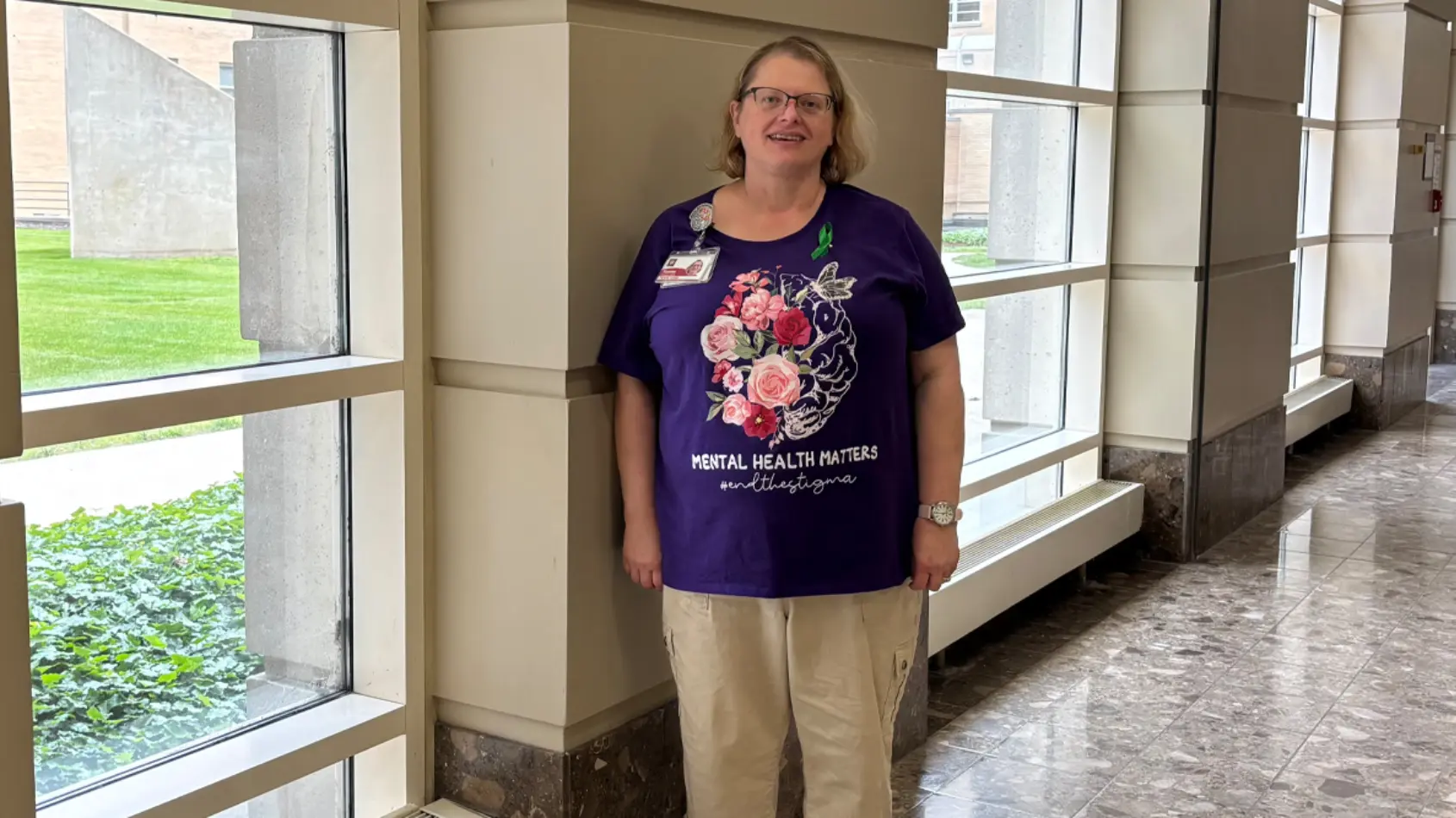
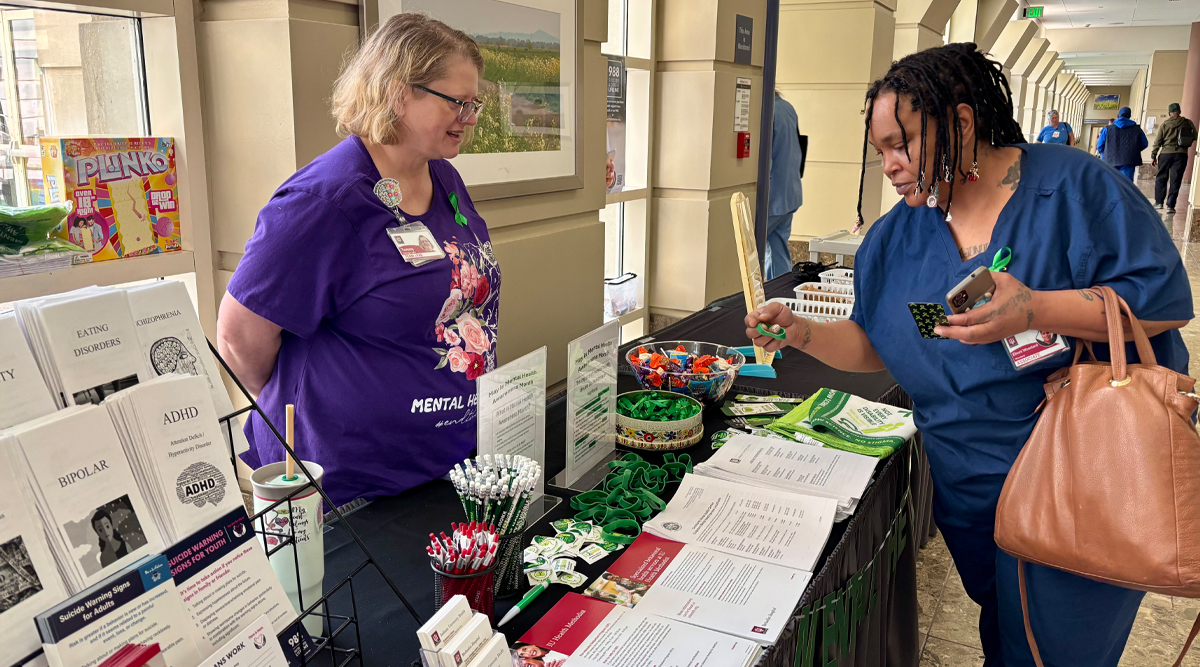
It’s about awareness and advocacy. It’s about education. Tammy Habegger-Spice recently provided those basics at an informational booth for staff, patients and family members visiting IU Health Methodist Hospital.
Habegger-Spice, a licensed mental health counselor and licensed clinical addictions counselor has been with IU Health for more than six years. In her role, she works with a team that includes therapists, a nurse practitioner, Peer Recovery Coach and tech, facilitating 6–8-week Intensive Outpatient Programs.
Practitioners at IU Health offer a wide range of services focused on mental health, including alcohol use disorder, anxiety, bipolar disorder, borderline personality disorder and depression. Psychiatrists, psychologists, clinical social workers, counselors, therapists, and peer recovery coaches work together to assess and provide individualized treatment plans.
That assessment can begin in primary care offices and emergency rooms where on-site mental health experts are available to provide care close to home.
During Mental Health Awareness Month Habegger-Spice offered insight into her practice.
“The most important area of focus for ‘Mental Health Awareness Month’ is awareness of different disorders - how a mental health issues can affect any age group, socioeconomic status, or gender. We also try to break the stigma of talking about mental health issues. Until recently, people were too afraid to admit something was wrong, and too afraid to get help. Discrimination against those with mental illness and an addiction is still a very real thing, unfortunately,” said Habegger-Spice.
To open those doors, Habegger-Spice provided information on such topics as depression, anxiety, eating disorders, schizophrenia, ADHD, bipolar disorder, PTSD, suicide and safety planning.
“The biggest issue with mental health right now is access—either finding services or paying for them. This has always been an issue, but is dire now, with cutbacks to Medicaid in the state of Indiana, the increasing costs of health insurance (and deductibles), and the economy, many people are finding it hard to pay for services. There is also a lack of services in rural Indiana, and in counties with smaller populations,” said Habegger-Spice. “
IU Health’s Community Impact Investment Fund (CIIF) awards millions of dollars annually to state-wide non-profits with a focus on mental health, housing and education. Recent initiatives include $250,000 for mobile health units, and youth counseling.
As part of that support, Mental Health America Wabash Valley Region rolled out a “Minds in Motion” bus supported through one of those grants. The mental health mobile unit brings mental and emotional wellness tools and programming directly to children across White, Tippecanoe, and Clinton Counties.
Crisis support is offered 24/7 throughout the state via the Access Center (317-962-2622).
Mental Health Awareness is a year-round focus for Habegger-Spice and her team. Practitioners take part in community events such as the annual Mental Health and Addiction Symposium, PTSD Awareness Month in June, Overdose Awareness Day in August, and National Recovery Month and Suicide Prevention Month in September.
“I love what I do,” said Habegger-Spice, who earned her master’s degree in Mental Health Counseling at the University of Saint Francis, Fort Wayne, Ind. When she took a temporary position in addictions education, Habegger-Spice continued in that role for three years. She went on to receive her Master Addiction Counselor certification. “Working with people with mental health issues and addictions always keeps me striving to learn new techniques and ways of thinking about behavior.”
-By TJ Banes, IU Health Senior Journalist, tfender1@iuhealth.org