


August 27, 2025
Mom grateful to IU Health West team for saving 5-year-old's life
IU Health West Hospital
Written by Emma Avila, epackard1@iuhealth.org, writer for IU Health's Metro Region
The highly skilled surgical team at IU Health West saved a five-year-old boy's life during a routine surgery when he experienced a rare and life-threatening reaction to anesthesia.
When
Jessica Zajac brought her son, Cameron, into IU Health West in
February to have his tonsils and adenoids removed, she couldn’t have
expected that the highly skilled surgical team would soon save his
life after an unforeseen reaction to anesthesia.
At five years old, Cameron
had already undergone surgery before, so he and his family were feeling confident
going into the procedure.
“He was not nervous at all,” Jessica recalls. “He was mostly excited because he was promised popsicles afterward.”
After Cameron was taken back for his surgery, Jessica remembers it taking longer than expected, but she didn’t think anything of it.
“I started noticing there were nurses coming out and talking to the front desk. I did see they pulled in spiritual support. Then, they called me back,” she says.
The team kept her informed of the situation, sharing that Cameron had a bad reaction to the anesthesia.
“Upon intubation, the staff nurse, Stephanie Berens, was at the head of the bed, assisting anesthesia like we always do. She noticed that his jaw started to clench, meaning the muscles were going into a spasm. That’s not normal,” explains Sean Eads, clinical operations manager of Surgical Services at IU Health West. “She immediately looked at the anesthesia provider and stated, ‘I think we may have a malignant hyperthermia crisis.’”
Malignant hyperthermia (MH) is a rare, but potentially fatal, genetic condition that causes a rapid rise in body temperature and severe muscle contractions when triggered by certain anesthetic drugs. Eads shares about one in 30,000 children has the condition, making it extremely rare.
“This
was the first case at West, and West has been open for 21 years,” Eads adds.
However, the surgical staff
jumped into action. They administered medication and used ice packs
to cool Cameron’s body as quickly as possible. Even though the team had never
seen this condition during a procedure, they had gone
through trainings just in case it happened.
“Less
than a month before this incident, our team had
just practiced for an MH drill. We do
that about once a year,” Eads says. “The team
was immediately on it. The faster you move, the less
likely there's going to be any traumatic brain injury or any
traumatic, long-term effects with the outcome of the child or the
patient.”
Eads and the
doctor kept Jessica updated on Cameron’s status.
“They told me he was
okay and there was a whole team back there. They had recognized the reaction
and pushed medicine to counteract it,” she recalls.
Cameron
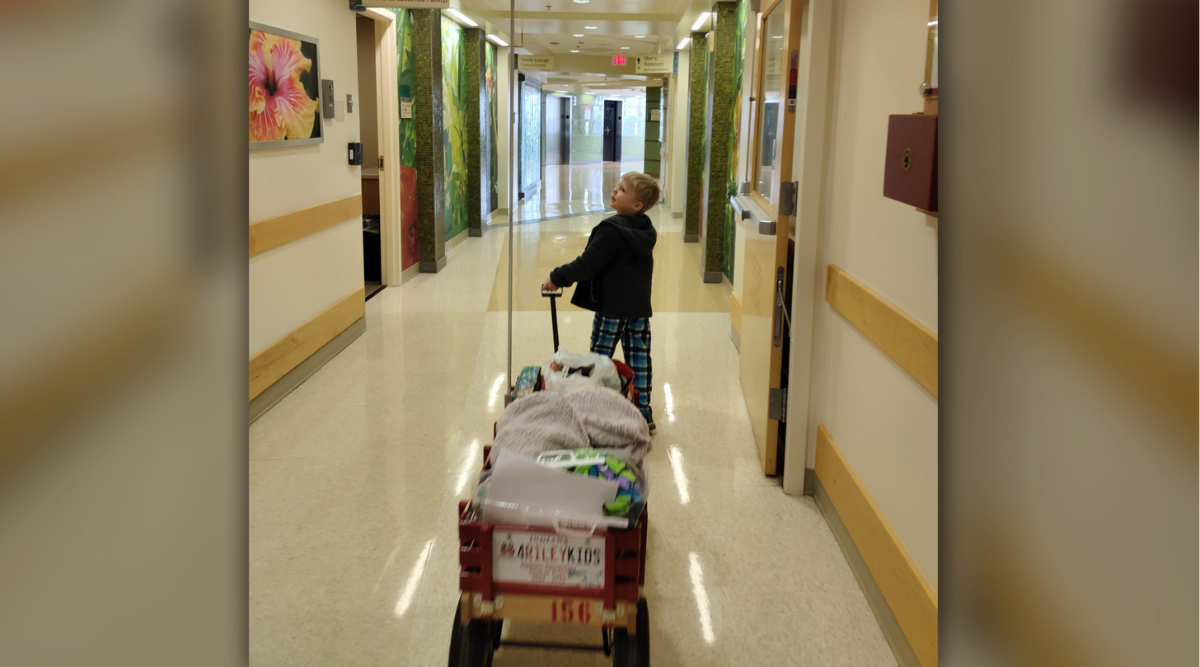
was lifelined to Riley Hospital for Children, where he stayed for
four days.
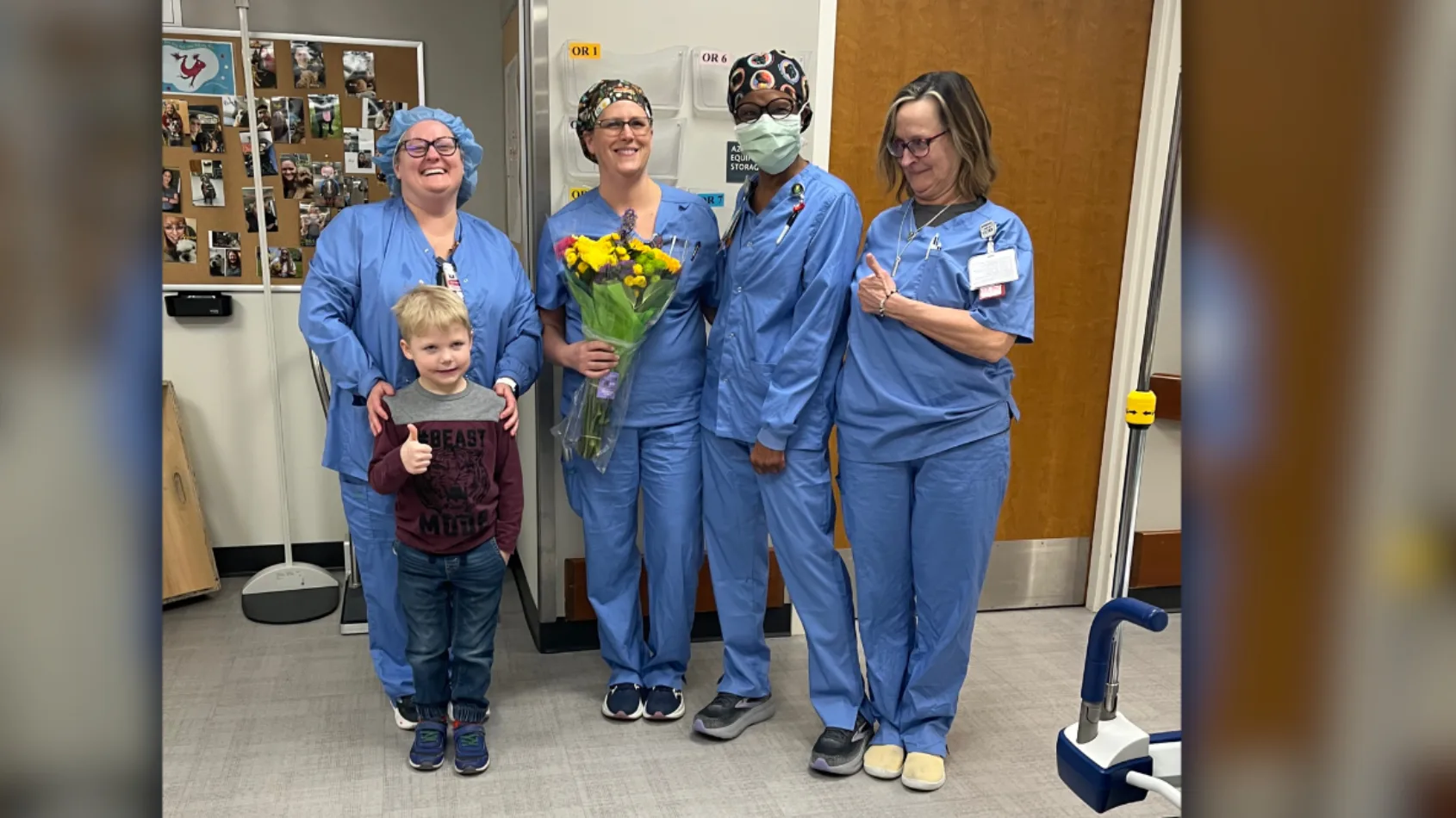
The day after he was discharged, Jessica and Cameron picked up flowers and cookies and visited the surgical team at IU Health West to thank them for saving Cameron’s life.
“I knew how important that was to circle back and let them know he was okay,” Jessica says. “You know your doctors and nurses go through emergency training drills, but you don’t consciously think that it will ever be needed for your child. That training is what saved his life.”
“After
he left, our team had tears of joy. There was a lot of
overall happiness within the department because we could see we
made a difference,” Eads recalls.
In April,
Cameron had his tonsils and adenoids removed at Riley Hospital using a
different type of anesthesia so his reaction wouldn’t be
triggered.
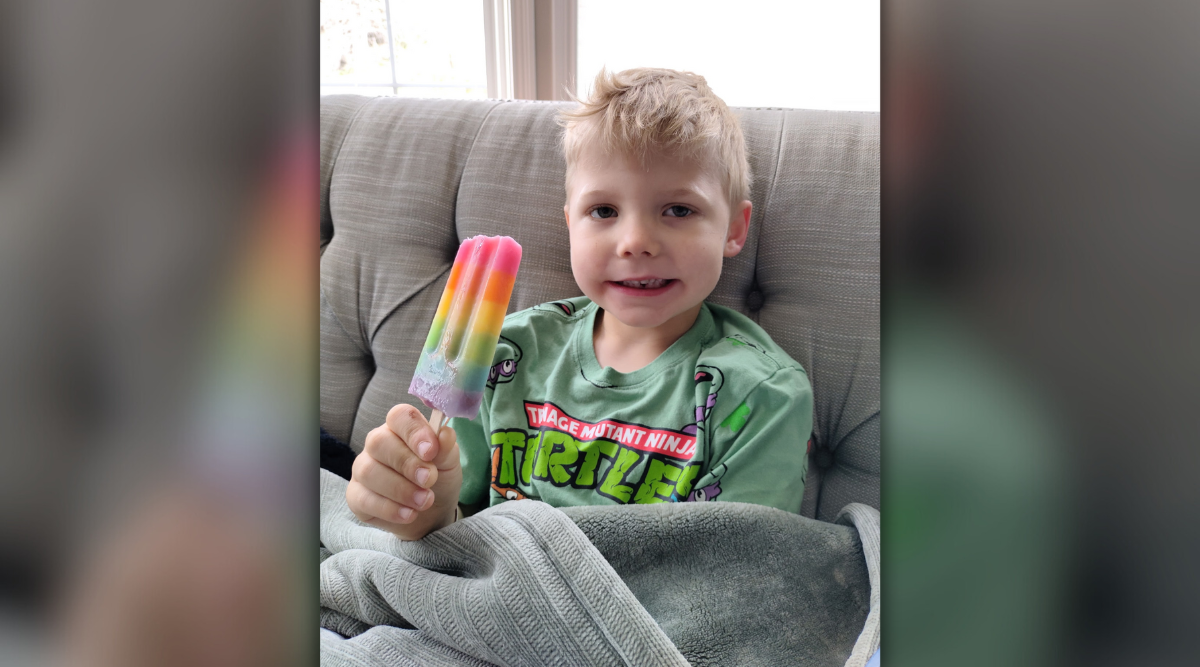
Now, Cameron is back to
being a normal child. He just started kindergarten. And while he may not fully
understand what happened to him, Jessica does.
“Our family is eternally
grateful to the surgical team at IU Health West for making sure Cameron made it
out of the OR safely,” she says. “They saved his life. If
they hadn’t acted as quickly and with the expertise they
did, he would not have had a good outcome. Words fail to express how deeply
thankful we are for their quick action and true compassion for our family.”
