


October 14, 2026
Nurse trained to work with victims of violence
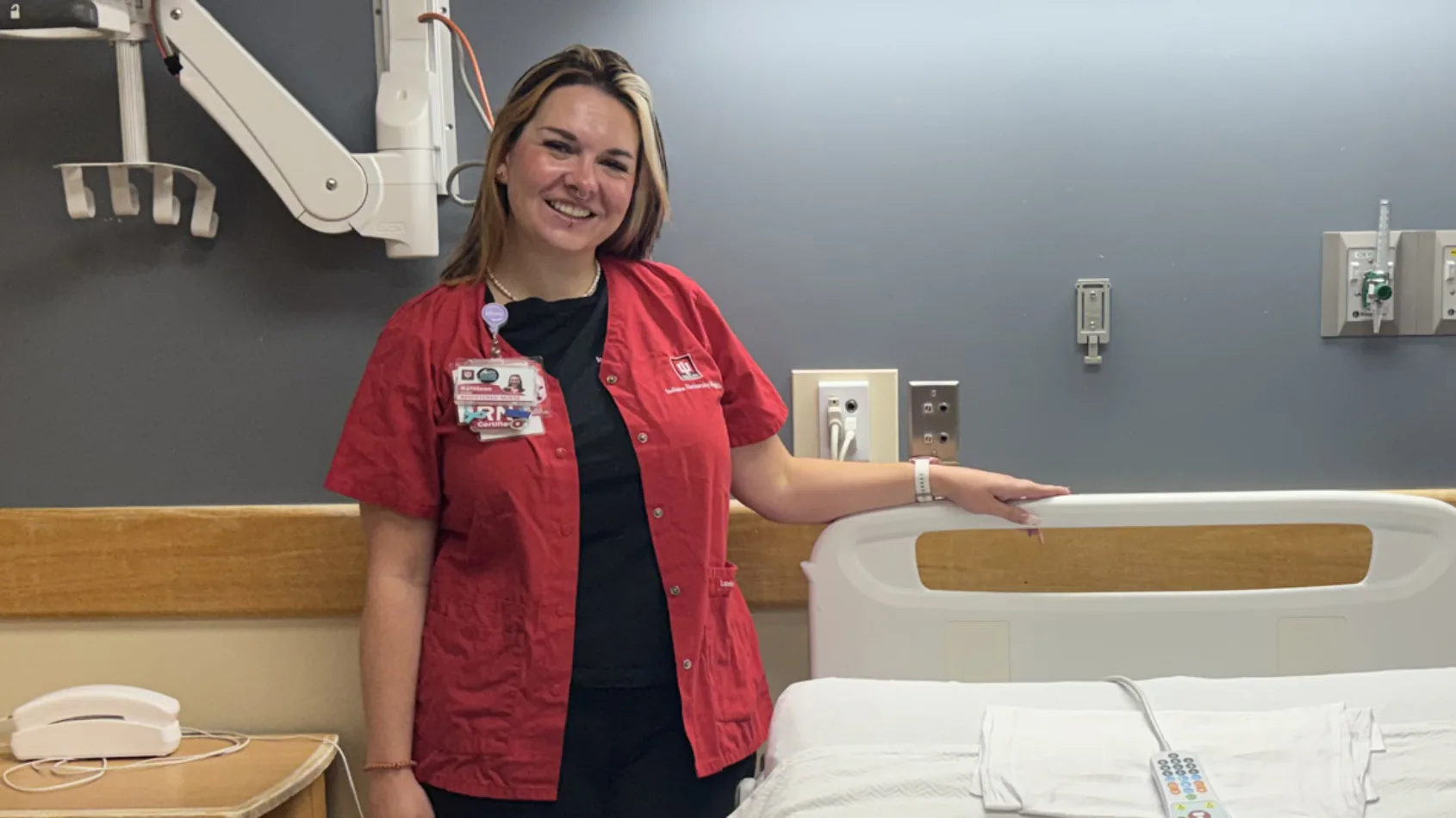
She sees them come into the ER – the most vulnerable patients
By TJ Banes, IU Health Senior Journalist, tfender1@iuhealth.org
She’s been a forensic nurse since 2022. In the past years, Kathleen Janosik Doan says she’s a growing need for forensic nurses – especially in outlying counties of central Indiana.
Working from IU Health’s Center of Hope Doan meets patients in the ER at Methodist Hospital. The Center started in 1999 and includes other locations throughout IU Health including Lafayette, Bloomington, and Muncie.
“Our program has expanded and the staff remains busy,” said Doan, who started her career as a patient care tech at Methodist Hospital in 2016. After obtaining her nursing degree from IUPUI she joined IU Health first working in surgical trauma critical care, then forensic nursing.
As a Sexual Assault Nurse Examiner (SANE), Doan obtained special certification and on-the-job training in recording patient history, collecting evidence, and gathering resources to help patients create a safety plan when they leave the emergency department. Forensic nurses collaborate with emergency room staff, law enforcement officers, and prosecutors.
October is “Domestic Violence Awareness Month,” a time to mourn victims, support survivors, and raise education to help stop abuse.
Forensic nursing is a specialty that combines traditional nursing with health care science as well as the legal system to help bridge the gap between medicine and law.
Forensic nurses provide comprehensive care to victims of violence, offering detailed medical forensic exams, while placing medical and emotional well-being as the priority. A forensic nurse can be a registered nurse (RN) or an advanced-practice nurse (APN).
There are a variety of subspecialties within forensic nursing, including forensic nurse examiner (FNE), sexual assault nurse examiner (SANE) for adolescent/adult or pediatric patients. There is also forensic nurse death investigator (NDI) or nurse coroner, forensic psychiatric nurse, forensic clinical nurse specialist, legal nurse consultant, forensic gerontology specialist, and correctional nurse, SWAT team nursing and more.
IU School of Nursing Academic-Practice Partnership for Forensic Nursing offers multiple training opportunities. That training includes 40-plus hours of forensic SANE training, a two-day forensic SANE simulation training, up to 60 hours of clinical experience, a variety of evidence-based continuing education opportunities, and peer support.
The Bureau of Justice Statistics within the US Department of Justice estimates 301,580 people age 12 and older are harmed by sexual violence every year in the United States. An average of 800 people experience sexual assault or rape every day. Less than half of all sexual assaults and rape cases are reported to law enforcement and half the reported rape victims are children or teens.
Recently, Doan has seen an increase in the number of cases involving strangulation.
“Some people downplay the severity of strangulation. Sometimes, there are no signs until you get symptoms and it’s important to go to an ER immediately,” said Doan.
She described a victim she assisted in the past year.
“I had a female patient who had recently relocated to Indianapolis for a job and the father of her children was living here. She was staying with him temporarily and then he turned physical. He hurt her very badly and she was heartbroken. They had a good relationship, and he was the father of her children, and she was embarrassed because of her job where she helps other people. She didn’t understand how this could happen to her.”
A lot of Doan’s role is teaching victims to regain their autonomy and power and to help them realize they are not responsible for the actions of others.
“We do a lot of personalizing their care and connecting them with resources such as safe housing, community advocacy and partnerships,” said Doan. There is also follow-up clinic visits to re-evaluate their injuries and their status.
A hurdle that many victims face is seeking the help they need – especially with forensic exams and collecting evidence.
“I like to explain to my patients that I want to be sure they are healthy and safe to leave. I’m their buddy and follow them through the emergency department to make sure they get the care and resources they need.”