December 17, 2025
Sudden symptoms to survivorship: Brittany Zedaker’s head and neck cancer journey
IU Health North Hospital
By Emma Avila, epackard1@iuhealth.org, writer for IU Health’s Metro Region
After months of misdiagnosed symptoms, 38-year-old Brittany Zedaker learned she had tongue cancer. With surgery, treatment and rehabilitation at IU Health, she shares a message of hope for others.
Brittany Zedaker first noticed something strange happening with her tongue in December 2024. It started as a rash, but she began to lose mobility as well.
She went to see her doctor, who told her it was shingles. She was prescribed medicine, which she took for a week. When the problem persisted, she went to another physician, who diagnosed it as a fungal issue. Again, she was prescribed medicine, but nothing changed.
When the symptoms worsened, Zedaker went back to her physician. This time, an MRI revealed a tumor. Almost immediately, she was diagnosed with cancer at 38 years old.
“It was a complete shock,” she recalls. “I felt hopeless.”
She met with Dr. Michael Moore, a head and neck surgeon at the IU Health Joe & Shelly Schwarz Cancer Center in Carmel, in February. Within two weeks, she underwent surgery at IU Health University Hospital to remove 66% of her tongue and 22 lymph nodes. Additionally, muscle from her back was used to reconstruct her tongue.
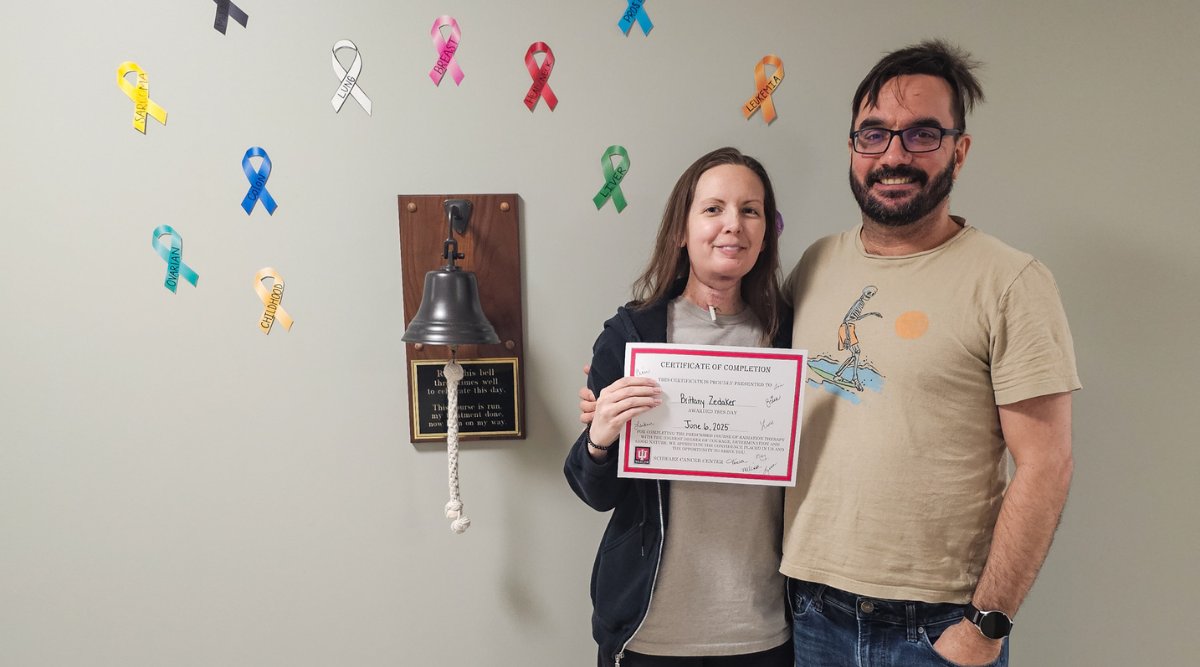
She healed for about six weeks. After that, she underwent 33 rounds of radiation and six rounds of chemotherapy.
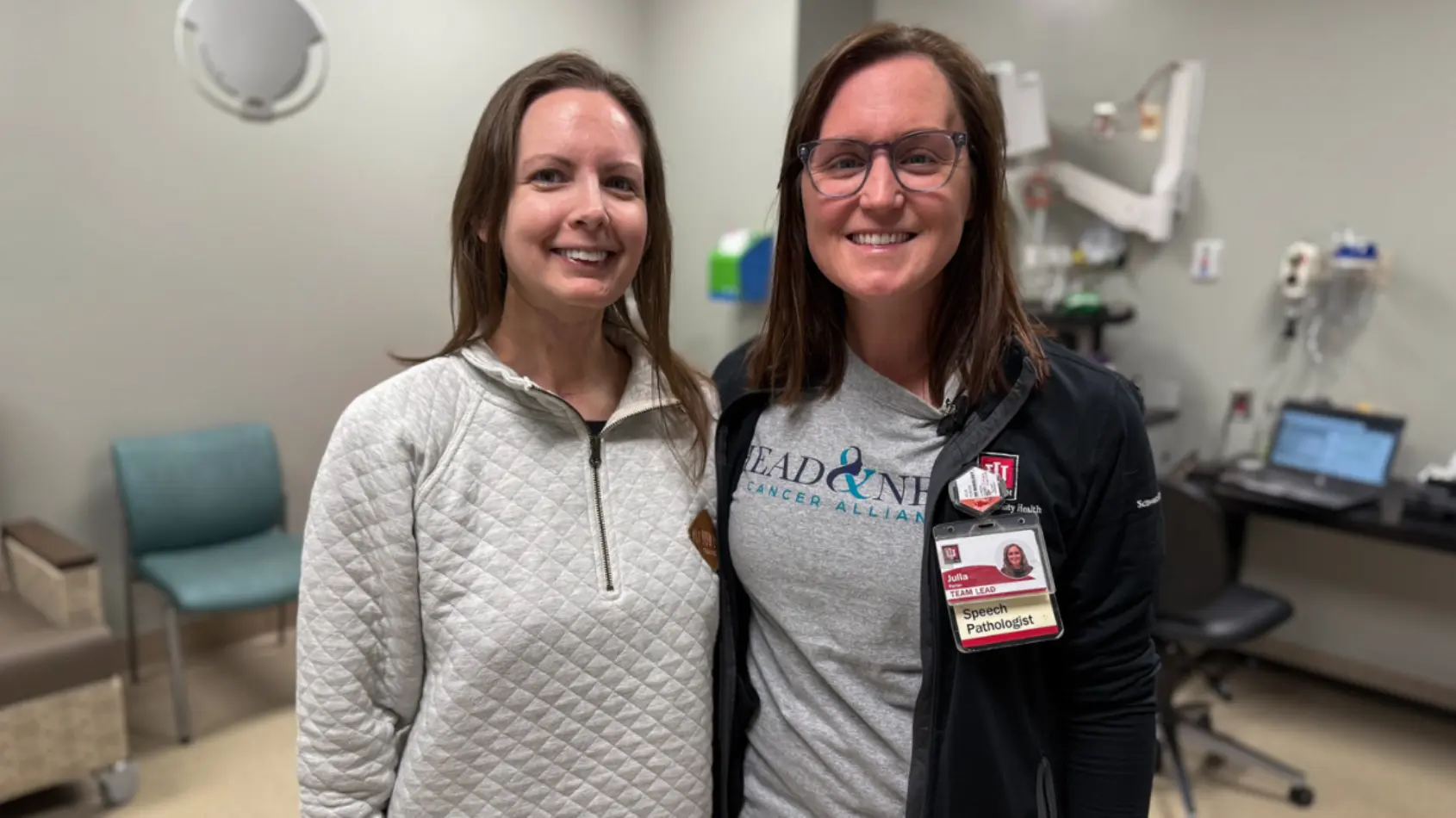
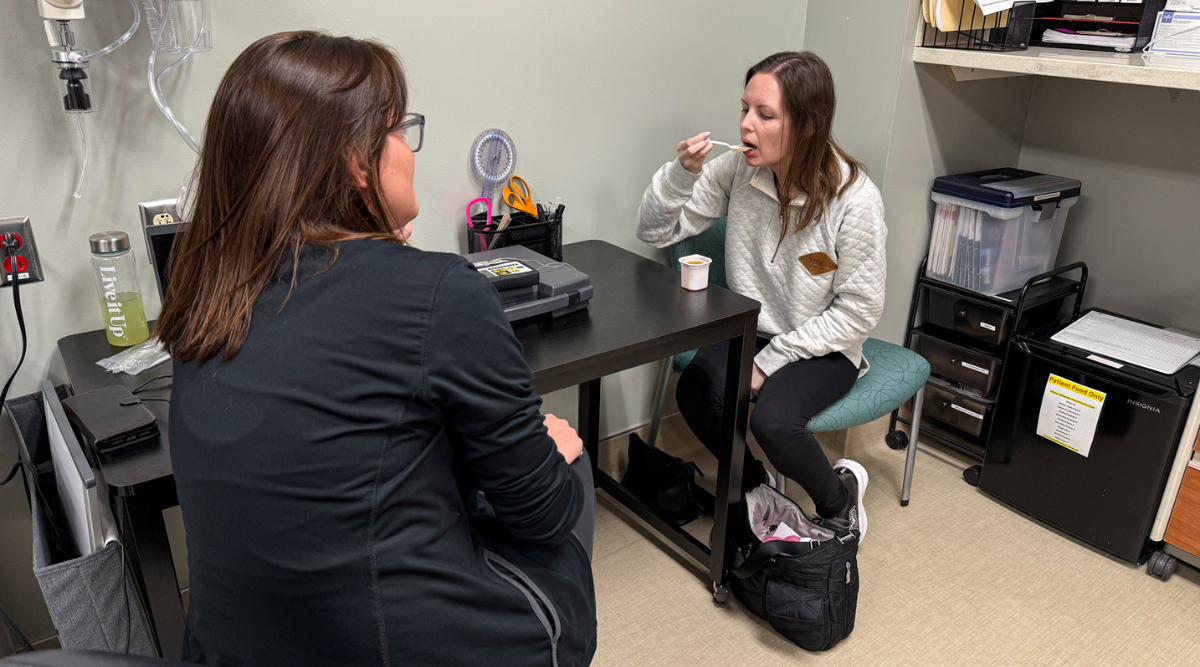
During that time, Zedaker also began seeing Julia Porter, a speech-language pathologist at the IU Health Schwarz Cancer Center, for speech intelligibility and swallowing.
“I saw her once she was recovered and cleared to start eating after surgery,” Porter explains. “She got a little bit of time to recover and then bam, it’s time to start chemoradiation. So, you finally start feeling marginally better, and then it’s time for more treatment that is going to impact your progress and overall well-being.”
“It absolutely changes your life. Being a young adult with cancer adds a layer to this,” Porter says. “Despite her situation, she’s real, she’s motivated and she’s doing everything she can to make the most out of the hand she’s been dealt.”
“You don’t realize how much you use your tongue until you can’t, but this is my new normal and that’s okay,” Zedaker adds.
Zedaker has also received care from Carrie Morris and Beth Maier, who both work in occupational therapy and are certified lymphedema therapists. In physical therapy, she has worked with Nikki Cooper. Additionally, she has seen Dr. James Pastrnak, a physical medicine and rehabilitation physician, and Lori Rosebrock, a head and neck surgery physician’s assistant.
“Without the support here, this wouldn’t have been possible,” Zedaker says. “They tell you whatever you need, ask.”
Despite her journey with cancer, Zedaker has also experienced some positive milestones this recently. She moved to Indiana from California last June. This year, she got married in August and bought a house in September.
“It’s okay to still have a bad day. A bad day doesn’t mean a bad life. There are still so many things to be grateful for,” she says. “Staying positive makes all the difference in the world.”
Now, she shares her story in hopes of encouraging others walking a similar path.
“I’m doing better. It’s okay to ask for help. It will make everything a lot easier. There are people here to help you.”
To learn more about head and neck cancer, visit iuhealth.org/find-medical-services/head-neck-cancer.