


Two cancer journeys, one fund supporting a crucial service
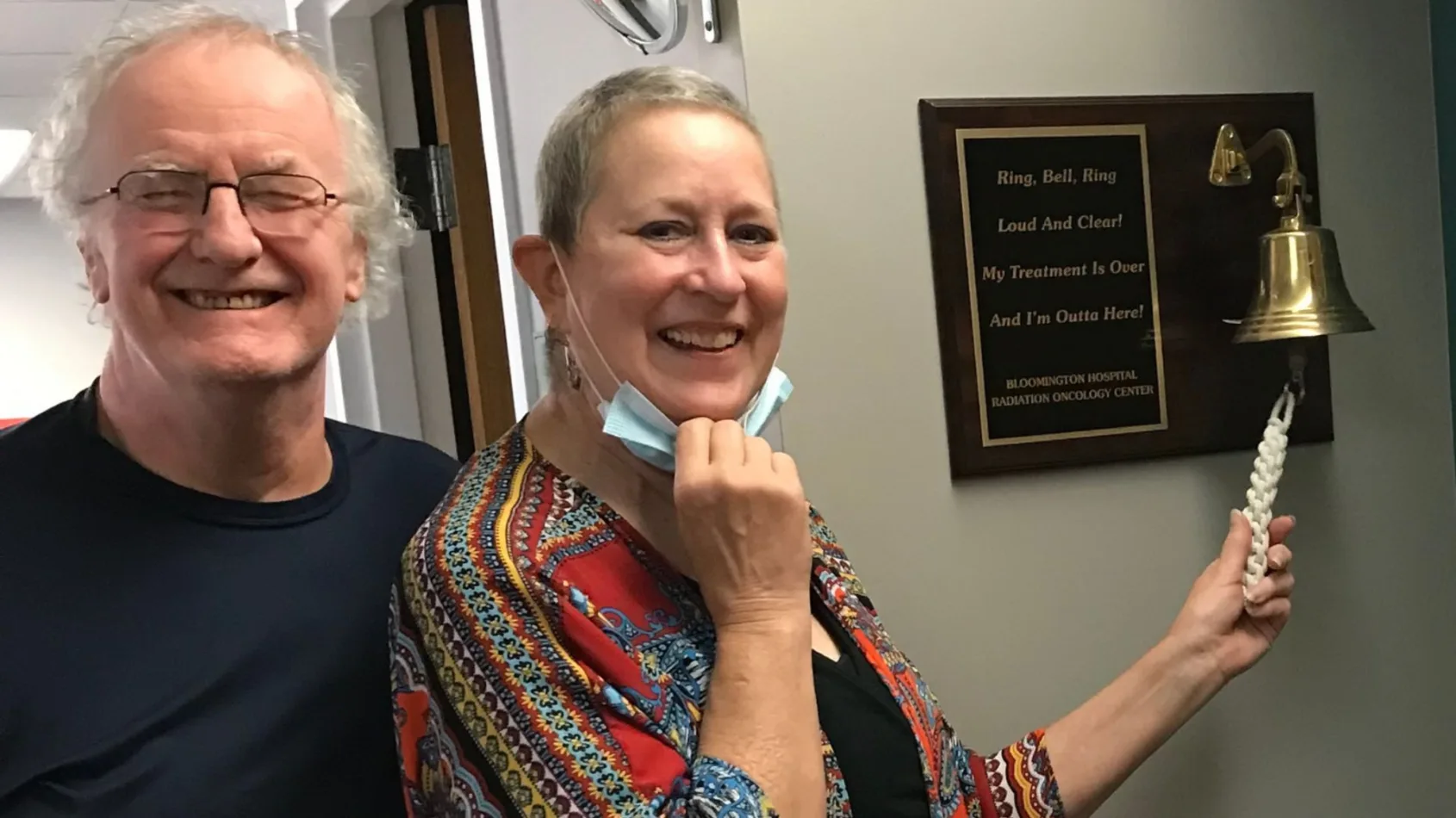
Lon and Ranita McMurtrey plan gift for nurse navigators
Lon McMurtey was prepared for the worst. He was sitting in an exam room on May 8, 2019, after five immunotherapy infusions. His wife Ranita was right by his side.
Lon’s oncologist at Indiana University Health, Harold Longe, MD, pulled up the image from Lon’s original CT scan, then tried to open the new one for comparison. But the computer failed. Dr. Longe, normally calm as can be, went running into the hallway, scrambling to wheel in a new cart as fast as he could.
Lon stood. “Whatever the news was, I planned to take it on my feet,” he said.
Finally, the new scan came into focus. After only five treatments, his tumor had shrunk by approximately 95%. “I took the deepest breath I ever took in my life,” Lon said. He looked at Dr. Longe and said, “I’ll bet you live for days like today.”
“Yes, I do” was the response.
Lon’s metastatic melanoma was discovered unexpectedly, after preventive testing. He’d had no symptoms and initially feared that treatment would offer little benefit – the cancer was that advanced. Instead, immunotherapy gave him what he calls, “a new life.”
But then cancer came for his wife, Ranita.
After the McMurtreys had retired and moved north to Bloomington, from Washington, Ranita discovered a lump in her breast through a self-examination. This was during the early weeks of the COVID-19 pandemic, which delayed her care amidst the chaos of those days. As her care plan eventually came into focus, and just before receiving a double mastectomy, a nurse noticed she had an irregular heartbeat. Further testing revealed a blood clot in Ranita’s heart, postponing cancer treatment once again while the clot was treated.
Through all this uncertainty, Ranita found a reassuring presence in Jami Cornwell, her Nurse Navigator.
Through Cornwell, Ranita gained someone who could help with questions she might not otherwise know to ask. Cornwell let her know what would happen next, helped Ranita prepare for chemotherapy and offered practical guidance about side effects. Most importantly, Cornwell also listened, which gave Ranita the mental and emotional support she dearly needed.
“A lot of it was just conversation,” Ranita said. “I could call her just about any time and ask, ‘Is this supposed to look like this?’ or ‘What are they going to do to me next?’ Jami always showed up for me.”
Jacqueline Joyce, MD, Ranita’s IU Health oncologist, adds, “Nurse Navigators are invaluable for our cancer patients. We treat many patients who are seriously ill, and it can be overwhelming for them. Knowing where to turn and what to expect is incredibly difficult. My colleagues in the Nurse Navigator unit are an absolutely crucial piece in our treatment plans and teams. They never fail to keep the patient’s needs a top priority at all times.”
Cornwell begins her process of connecting with patients by “listening, answering questions and giving them hope,” she said. “We measure their distress, which allows us to determine how much support they need. We also look at the causes of that distress, such as if they need help with gas to get to treatment, covering their copay, housing, utilities, etc.”
Nurse Navigators help patients manage the medical and emotional complexities that accompany cancer, serving as educators, advocates and trusted points of contact throughout diagnosis, treatment and healing. Their work revolves around caring for the entire human being, not just treating the cancer.
For Ranita, that distinction was invaluable.
“The Nurse Navigator may know you better than your oncologist,” she said. “That person is your best friend for a while.” To this day, she and Ranita still talk regularly.
The McMurtrey’s often refer to themselves as “The Cancer Couple.” For a time, both received treatment at the same infusion center. Lon went every three weeks, while Ranita went every two. Whoever felt better on any given day would handle the cooking, laundry or other chores around the house and yard. Lon’s scans have remained stable since 2019, while Ranita is now cancer-free.
Throughout these years, they held tightly to humor and to each other.
“There is no greater gift than having somebody to go through life with whom you love, and who loves you,” Lon said. “We are rich beyond compare.”
They’ve now been married for more than 50 years, have fostered nearly 30 children (many of whom were teenagers) and continue to build their lives around helping others. Today, they tend their gardens, care for three rescue dogs and enjoy the cultural offerings of Bloomington.
They are also planning a gift with the IU Health Foundation that supports nurse navigation for future patients. Ranita hopes the gift ensures more patients receive the guidance she did. “The nurse navigator program is vital,” she said. “It needs to continue, and it needs to grow.”
Cornwell agrees. “I can honestly say some patients would never finish treatment if they did not have the support of a navigator. We meet people during the worst time of their lives, help them find hope and manage whatever needs they have so they can live beyond cancer,” she said.
Reflecting on her experience, Ranita understands how frightening a cancer diagnosis can feel, and her advice is to accept help. “Ask for a nurse navigator. Do not try to face cancer alone,” she said.
The purpose of their gift is equally straightforward. “If other people are cared for by this program the way she was,” Lon said, “that is good enough for us.”
“We invite you to join us.”