


December 19, 2025
Decades after mastectomy, patient finds relief through occupational therapy
IU Health Tipton Hospital

More than 20 years after breast cancer treatment, Heidi Freeman turns to occupational therapy at IU Health Tipton Hospital and discovers how rehab can be a vital part of healing.
Heidi Freeman is no stranger to resilience. A Tipton County native, she enjoys spending time with her husband, restoring antique cars and traveling with family. But beneath her active lifestyle was a challenge she quietly carried for years.
More than two decades ago, Freeman was diagnosed with advanced breast cancer and underwent a mastectomy. Like many patients, she expected some limitations during recovery and assumed certain discomforts were simply part of life after cancer.
Over time, however, those symptoms began to worsen. She noticed increasing tightness, pain with repetitive movements and eventually a tremor that made writing and everyday tasks more difficult.
“I just kept pushing through,” Freeman says. “I thought, ‘this is just how it is.’”
Choosing to seek help
It wasn’t until the symptoms began interfering with her daily life that Freeman decided to seek help. With encouragement from her care team, she scheduled an appointment with IU Health Physical Therapy & Rehabilitation in Tipton.
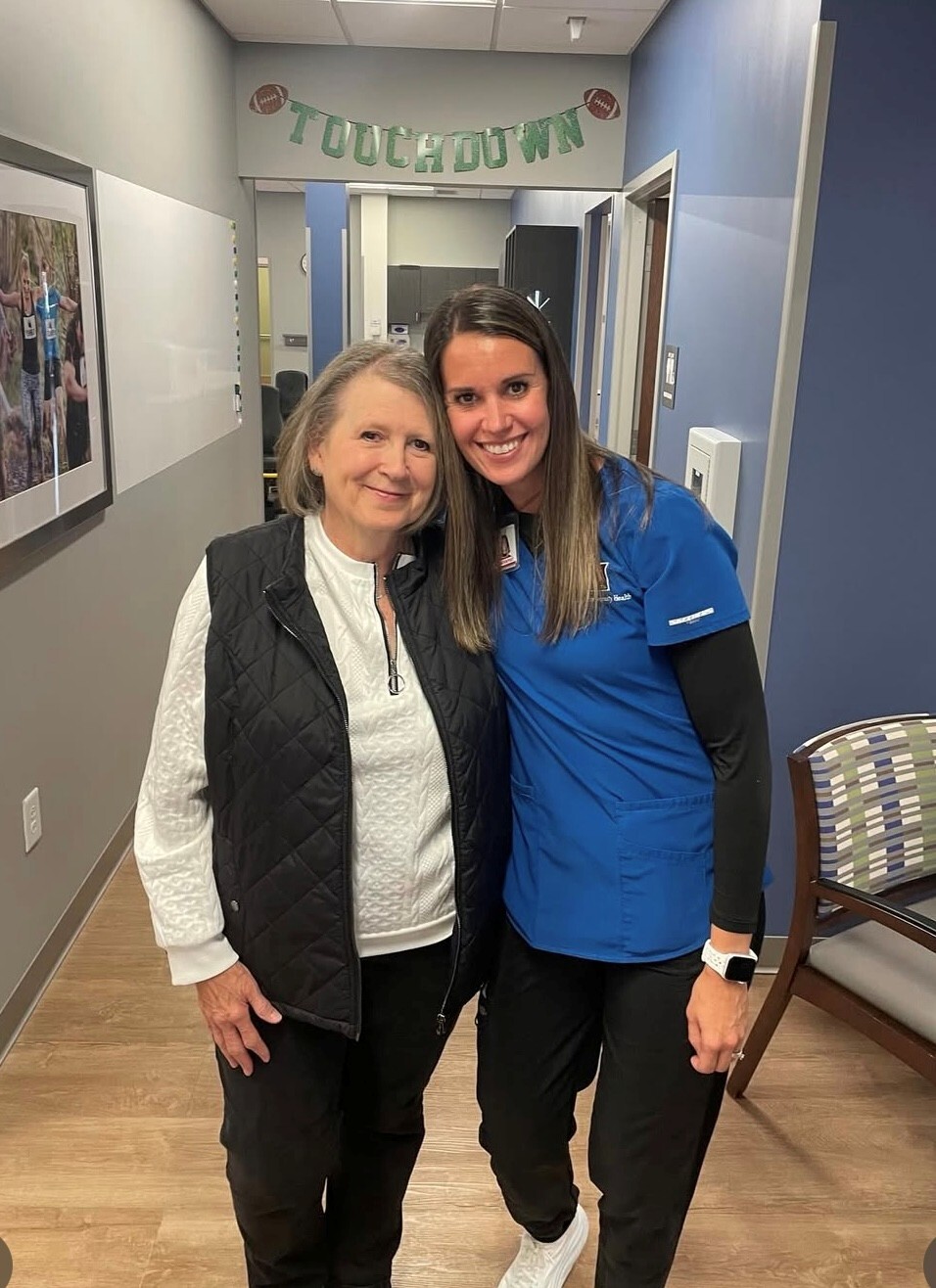
There, she met occupational therapist Amanda Petker, who carefully reviewed Freeman’s history and assessed what might be contributing to her symptoms years after surgery.
Petker identified scar tissue, tightness and lymphatic issues related to Freeman’s mastectomy and lymph node removal—factors that can continue to affect patients long after treatment ends.
“Amanda didn’t dismiss anything,” Freeman says. “She was determined to help me and figure out what was going on.”
The impact of occupational therapy
Through manual lymphatic techniques, targeted stretches and personalized exercises, Freeman began to see improvement. The tremor resolved, her range of motion increased, and everyday activities became easier and less painful.
Freeman completed occupational therapy in October 2025 and continues to use the techniques she learned to maintain her progress at home.
“I didn’t realize how much better things could feel,” Freeman says. “Occupational therapy helped me regain strength and confidence I didn’t even realize I’d lost.”
Whole-person support from IU Health
For Freeman, the impact of rehabilitation goes beyond physical improvements. She describes the rehabilitation team at IU Health Tipton Hospital as kind, encouraging and “top notch,” noting that their support goes further than exercises and equipment.
“My experience with IU Health rehab and the hospital has been so smooth and flawless—helpful, kind, friendly, supportive and effective,” Freeman says.
She credits the rehabilitation team for creating an environment where patients feel supported not only during appointments, but throughout their recovery journey.
A message for others
Today, Freeman is doing well, and she hopes sharing her story encourages others not to ignore lingering symptoms or hesitate to ask for help.
“If something doesn’t feel right, say something,” she says. “Even years later, there are options. You don’t have to just live with it.”
She also hopes more patients become aware of rehabilitation services like occupational therapy and the role they can play in recovery.
“Recovery and healing don’t end when treatment stops,” Freeman says. “Taking care of the whole person matters, and this was an important part of my healing.”
