


November 12, 2025
A milestone in heart care at IU Health Bloomington
IU Health Bloomington Hospital
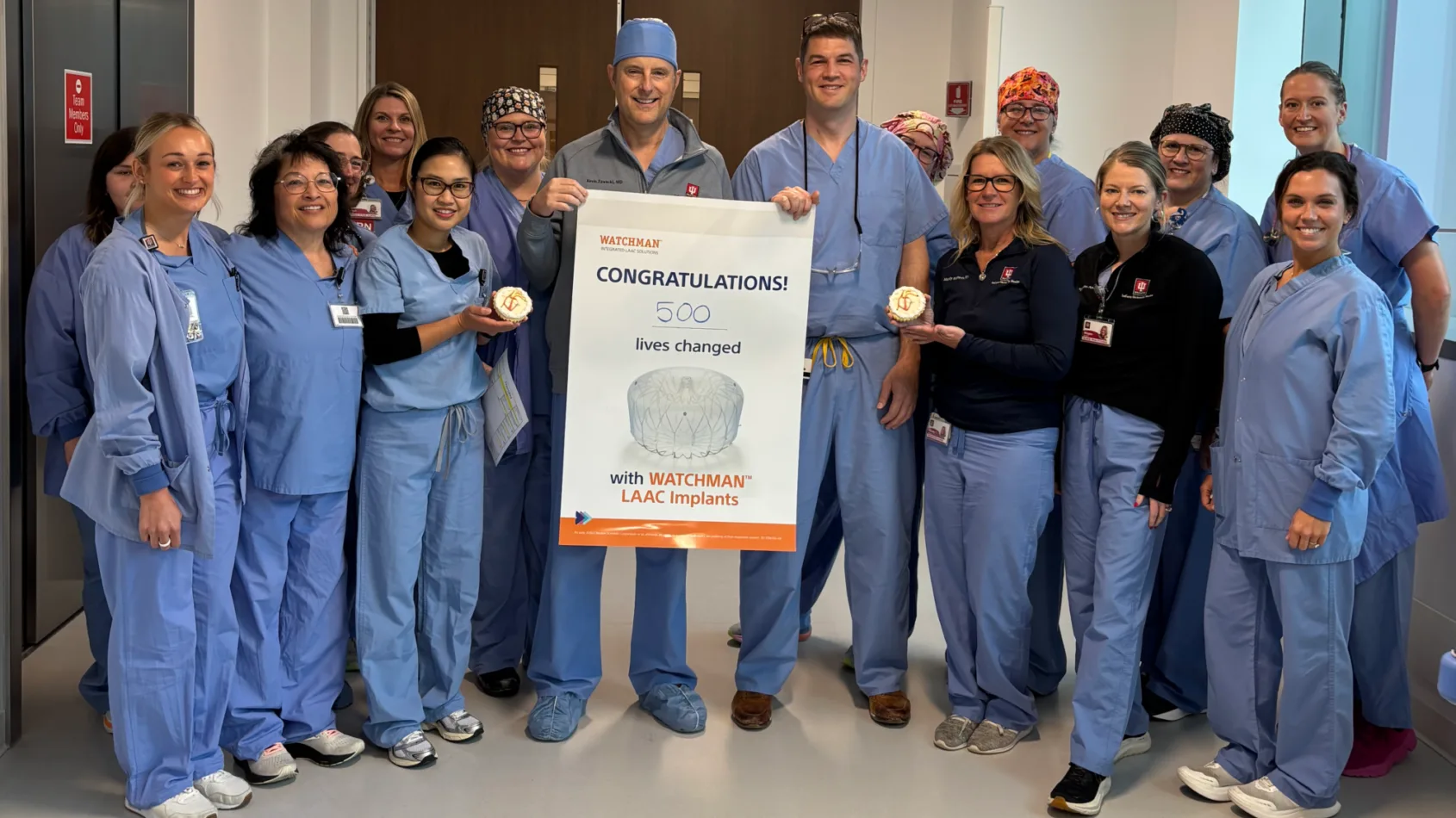
The IU Health Bloomington Cardiology team celebrated World Stroke Day by performing their 500th Watchman procedure on Wednesday, Oct. 29.
“Our team is very excited to reach this important milestone,” said Megan Monnier, Structural Heart coordinator. “We are grateful for the opportunity to change 500 lives with this remarkable procedure that protects our patients from atrial fibrillation-related strokes while eliminating the bleeding risks that arise with long-term use of anticoagulation.”
The minimally invasive procedure works by closing off the left atrial appendage, where blood clots often form in the heart, and reduces the risk of stroke by 85%. It also allows patients to live a life without blood thinners, reducing the risk of bleeding and allowing patients to live more active and fulfilling lifestyles.
“We look forward to continuing our partnership with our healthcare colleagues to provide this procedure for our patients and positively impact the health of our community,” shared Monnier.
The Bloomington team has done great work in helping atrial fibrillation patients reduce their risk with the Watchman device, but it’s important to remember that strokes can happen to anyone.
Recognizing the signs of a stroke is crucial as prompt medical attention can make all the difference in outcomes, so be aware of stroke symptoms including:
- Numbness and/or weakness, usually one-sided, in the face, arm or leg
- Severe headache
- Trouble walking or other signs of loss of coordination
- Difficulty seeing
- Confusion
- Dizziness
If you or someone else is experiencing symptoms of a stroke, please call 911 or visit your nearest Emergency department.
