February 11, 2026
A routine stress test saved his life
IU Health West Hospital
By Emma Avila, epackard1@iuhealth.org, writer for IU Health’s Metro Region
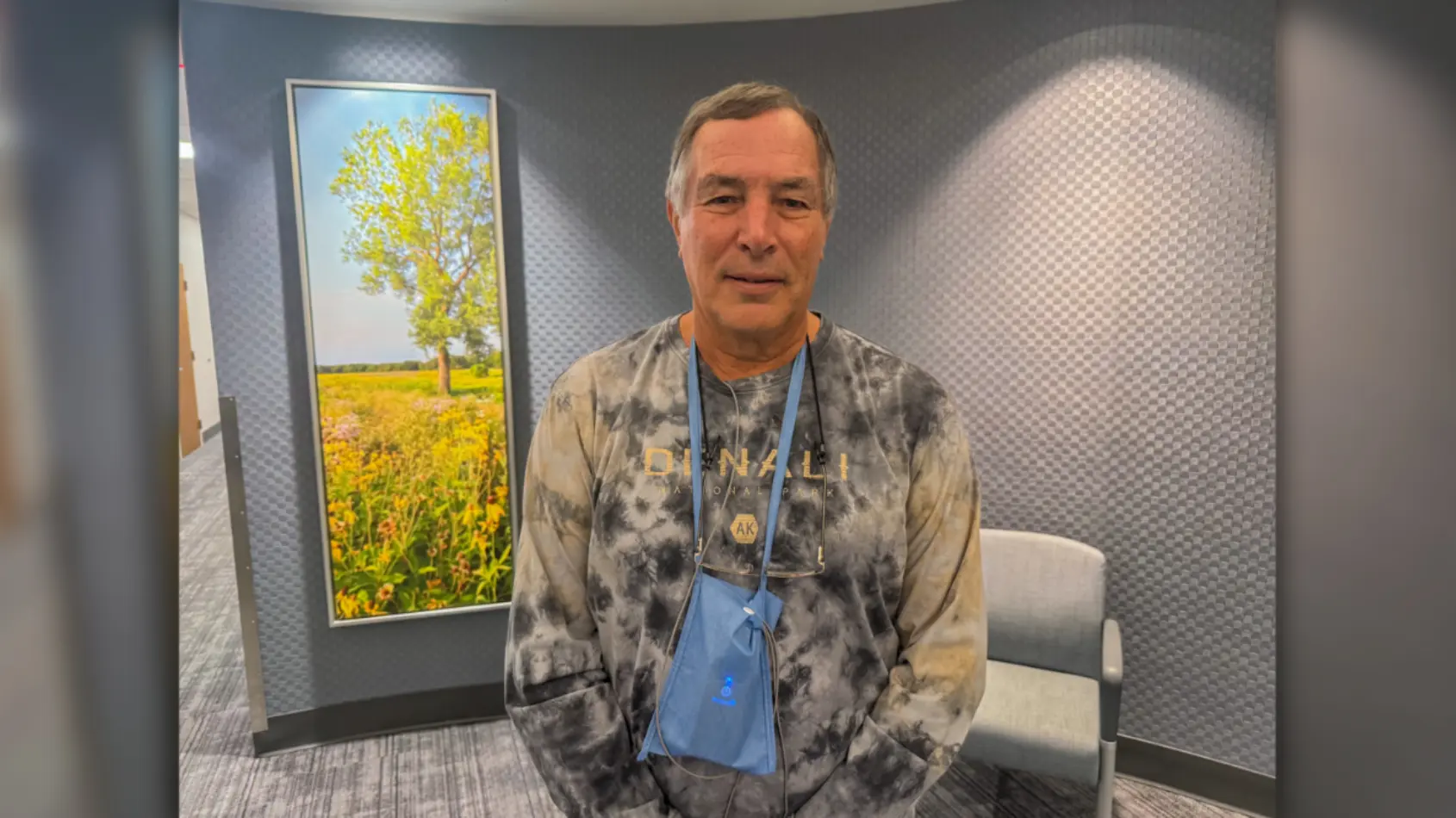
When a routine stress test revealed a life-threatening blockage in Anthony Marsiglio’s artery, the team at IU Health West worked across multiple departments to save his life.
When 67-year-old Anthony Marsiglio started feeling chest discomfort in late September, he assumed it was heartburn.
“After 10 nights of waking up in the middle of the night, I contacted our family doctor, Dr. Nicole Phillips” he says. “She did an EKG, saw something and ordered a stress test.”
A nuclear stress test evaluates blood flow to the heart at rest and during exertion, either on a treadmill or through medication, using a small amount of radioactive tracer. Each test is tailored to the patient and typically lasts between one and a half to two hours.
A Stress Test That Took an Unexpected Turn
Marsiglio went to IU Health West on October 9 for what he thought would be a routine stress test. Other than his recent discomfort, he had no history of heart problems.
Exercise physiologists Andrew Mungia and Jillian Baker administered the test. Mungia set him up on the EKG, took his history, checked vitals and began the treadmill portion. Baker then took over.
“The test started as any other. Anthony completed the first stage and most of the second stage of exercise with no issues,” Baker says. “Just as the third stage of exercise was about to begin, I noticed an abnormal change in his EKG.”
“In my experience, I had never seen the degree of EKG changes that Anthony had,” Mungia adds.
Baker immediately called in Dr. Scott Byers, the supervising cardiologist.
“I had my coworkers alert radiology, nursing and called a rapid response. That’s when everyone came rushing in. I continued to monitor his vitals and symptoms while Dr. Byers assessed what to do next,” she explains.
“It all happened so fast,” Marsiglio recalls. “Dr. Byers was with me. He said, ‘We’re going to wheel you upstairs.’”
A Dangerous Blockage Discovered
Dr. Byers quickly evaluated the situation, and Marsiglio was rushed to the hospital’s Cath Lab for an urgent coronary angiogram. The scan revealed a major blockage, about 80%, in the left anterior descending artery (LAD), one of the heart’s main arteries. Dr. Ibrahim S. Abu Romeh, an interventional cardiologist, placed a stent to restore blood flow.
The LAD is often referred to as the “widowmaker” because blockages there can be fatal due to the artery’s critical role in supplying blood to the heart.
“He was at relatively high risk of complications such as heart attack, arrhythmia and even death if his coronary artery disease had not been diagnosed and treated in a timely fashion,” Dr. Byers explains.
Despite the severity, Marsiglio handled the experience with calm resilience.
“I didn’t really miss a beat, no pun intended,” he says. “I didn’t have shortness of breath, exhaustion, none of it.”
The Road to Recovery
One week after receiving his stent, Marsiglio began cardiac rehabilitation.
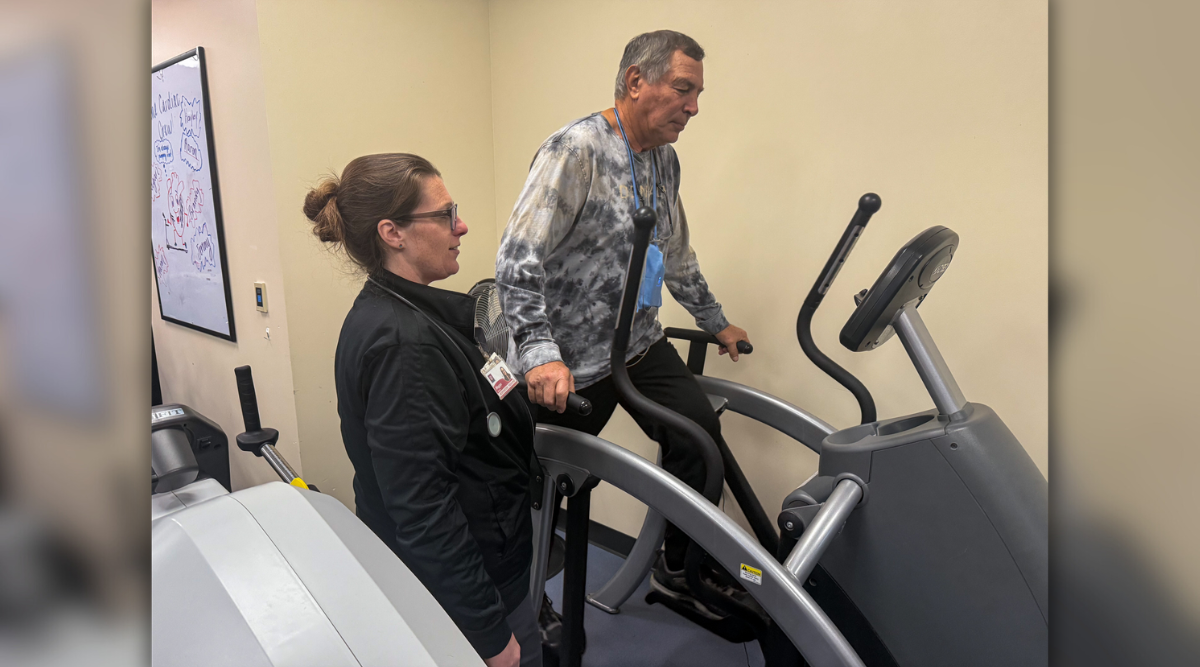
“Whether it’s a stent, a heart attack or open-heart surgery, we typically want patients to start cardiac rehab within one to four weeks,” says Jeremy Kimbley, exercise physiologist and team lead. “The sooner they start, the faster they can begin strengthening their heart.”
Marsiglio was already an active person, an avid pickleball player who could walk up to five miles a day.
“I truly believe in exercise, so I always go as full as I can,” he says.
He attended cardiac rehab three times a week for four weeks and quickly built rapport with the team.
“It’s important to find things patients connect with in their everyday lives,” Kimbley says. “For Anthony, that was things like pickleball or deer hunting. It helps them see that cardiovascular disease doesn’t have to limit them. In most cases, we can get patients back to doing what they love.”
A New Perspective on Health
Marsiglio graduated from cardiac rehab in November and returned to his busy life as a husband, father, grandfather and real estate broker in Plainfield.
Though he hasn’t let the experience slow him down, it has changed how he thinks about his health, and what he wants others to know.
“It’s made me reflect on life. It’s taught me to pay attention and obey my doctor,” he says. “We’re all guilty of it, especially men. We don’t like going to the doctor, but it’s so important.”
To learn more about IU Health’s cardiovascular care, visit iuhealth.org/heart.