


June 30, 2026
Baby girl breaks cycle of hereditary kidney disease
IU Health University Hospital
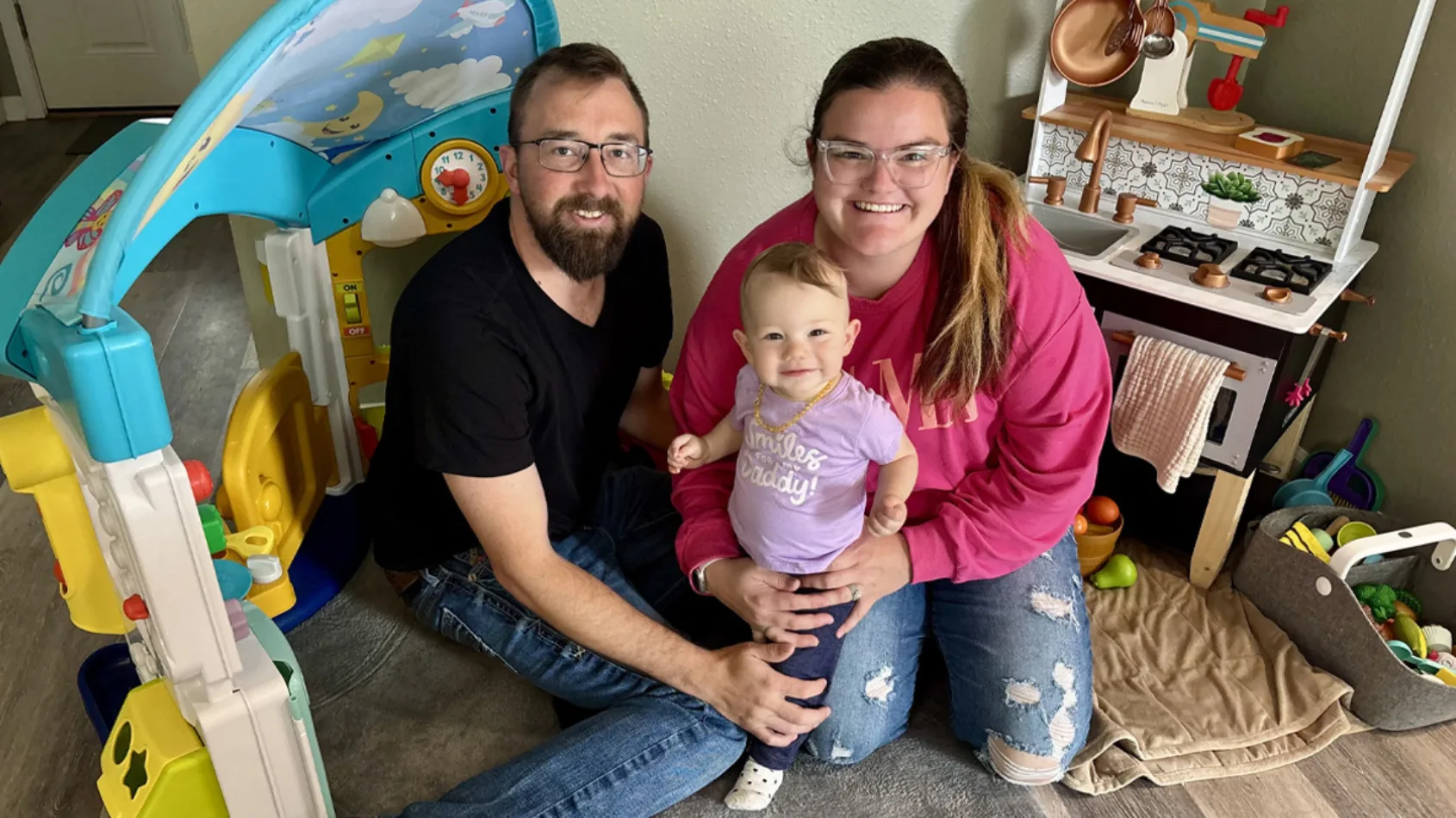
Genetic testing played a key role in helping this Whitestown, Ind. couple have a healthy baby.
By TJ Banes, IU Health Senior Journalist, tfender1@iuhealth.org
He didn’t know life any other way. Marcus Payne spent his childhood at IU Health Riley Hospital and then as an adult he was a patient at University Hospital.
Before he was born, his parents knew Payne would live with Polycystic kidney disease (PKD). The genetic disorder affects about 600,000 Americans and often leads to chronic kidney failure. Symptoms include high blood pressure, belly and back pain, feelings of fullness, kidney stones, and urinary tract of kidney infections.
“When I was little, I was on blood pressure meds and in and out of doctor appointments. They were watching my kidney function the whole time,” said Payne, 32. On June 24, 2010, he received his first kidney transplant in the care of Dr. William Goggins. When his body went into rejection, Payne began perinatal dialysis two years later. He received a second transplant on May 9, 2013.
At IU Health University Hospital, Payne was in the care of Dr. Dennis Mishler. His transplant coordinator is Christine Gibson.
“Thirteen years out and everything is running smoothly,” said Payne, a graduate of Brownsburg High School who works as a union electrician.
When Payne and his wife, Callie married in April 2023, they both knew the challenges they faced with starting a family.
Through bloodwork and testing, they learned that Payne’s dad has the PKD1 gene, accounting for about 85% of Autosomal Dominant Polycystic Kidney Disease (ADPKD). Payne’s mom has PKD2, accounting for about 10-15% ADPKD cases. In his immediate family, both Payne’s dad and grandmother received kidney transplants.
“Early in our relationship I wasn’t thinking about having kids, but we got serious and when I met his nephrologist I asked if my kids would have PKD,” said Callie, who learned that one in two children inherit the disease.
That’s when they sought professional advice from fertility experts. They did their research and learned about pre-genetic testing. They also learned about support from the PKD Alliance, a nonprofit organization focused on ending PKD by preventing it from being passed down from one generation to the next. The PKD-Free Babies Initiative launched in July 2023 provides grants to cover costs for Preimplantation Genetic Testing and In Vitro Fertilization (IVF).
“The opportunity to eradicate a hereditary disease is akin to developing antibiotics that kill the infection and not the host, or to vaccinations that eradicate specific diseases, such as smallpox. Life is difficult, but if you can be free of a kidney disease such as PKD, just think how much easier life can be. I cannot think of a way to make someone with PKD happier than knowing their child will not have PKD,” said Dr. Mischler.
“In vitro fertilization (IVF) combined with preimplantation genetic testing for monogenic disorders (PGT-M) is increasingly a viable and preferred option for patients with polycystic kidney disease (PKD). When successful, this process eliminates the generational spread of PKD in a family tree. This shifts the probability of passing PKD to the offspring from 50% to 0% if all preimplantation testing is accurate. This is my first patient to take this journey, and I could not be happier for them,” he said.
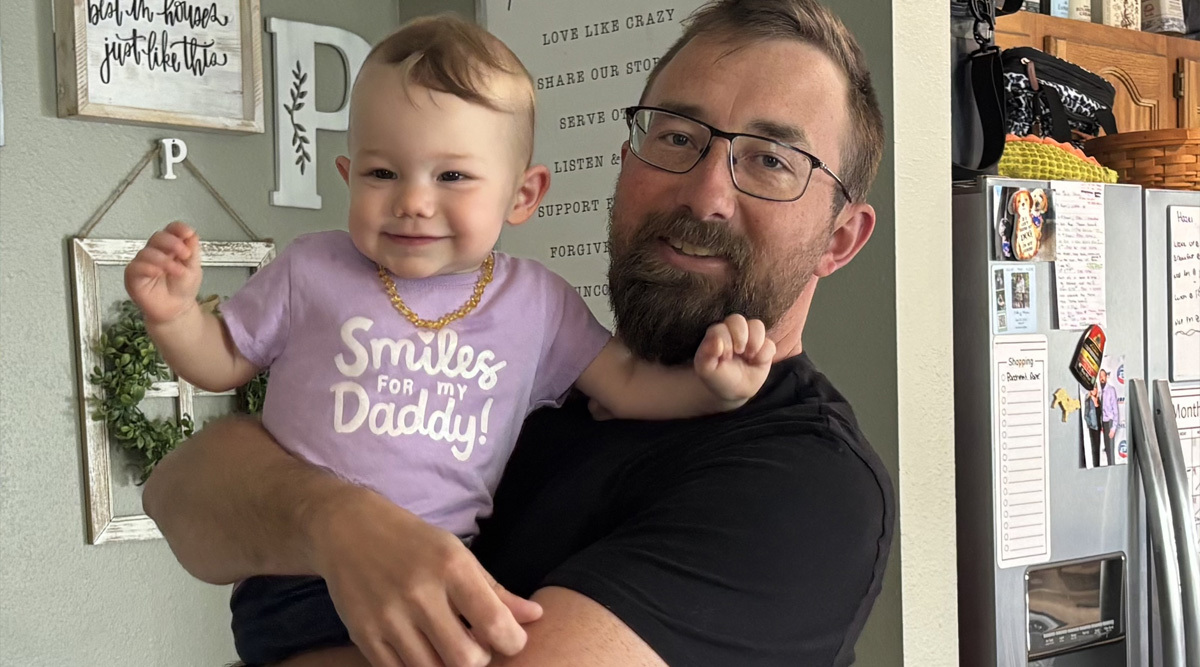
On May 28, 2025, the Paynes welcomed their daughter, Hazel, the first grandchild on Marcus’ side and the first girl on Callie’s side of the family. Hazel was born at 36 weeks at IU Health North and remained in Riley NICU for a week but is otherwise healthy.
“Every time we did an ultrasound, I’d say ‘do her kidney’s look ok?’ We Haven’t done any testing with her, but her urine output and blood pressure seem to be normal, and the embryo tested was PKD free,” said Callie. Hazel has regular well-child visits with the same pediatrician her dad saw as a child.
As a child, Marcus remembers concerns over playing contact sports, taking growth hormone shots in middle school, and then being tied to a timeline by dialysis treatments. “There was always a concern that a cyst would rupture in my kidneys or I couldn’t spend the night at a buddy’s house because I had to get home and do dialysis. I didn’t want that for my child,” said Marcus.
“We stopped the cycle and that’s what I wanted. How do we find a way to not have a baby that isn’t sick and to give her the best life,” said Callie. Hazel greets visitors with a big smile. She loves watermelon and she is fearless at the playground – gliding down the slide like a pro. On a recent day she wore a purple shirt with the words, “Smiles for my daddy.”
And Marcus Payne is smiling back.

