


July 08, 2026
Bringing lifesaving skills into the community
IU Health North Hospital
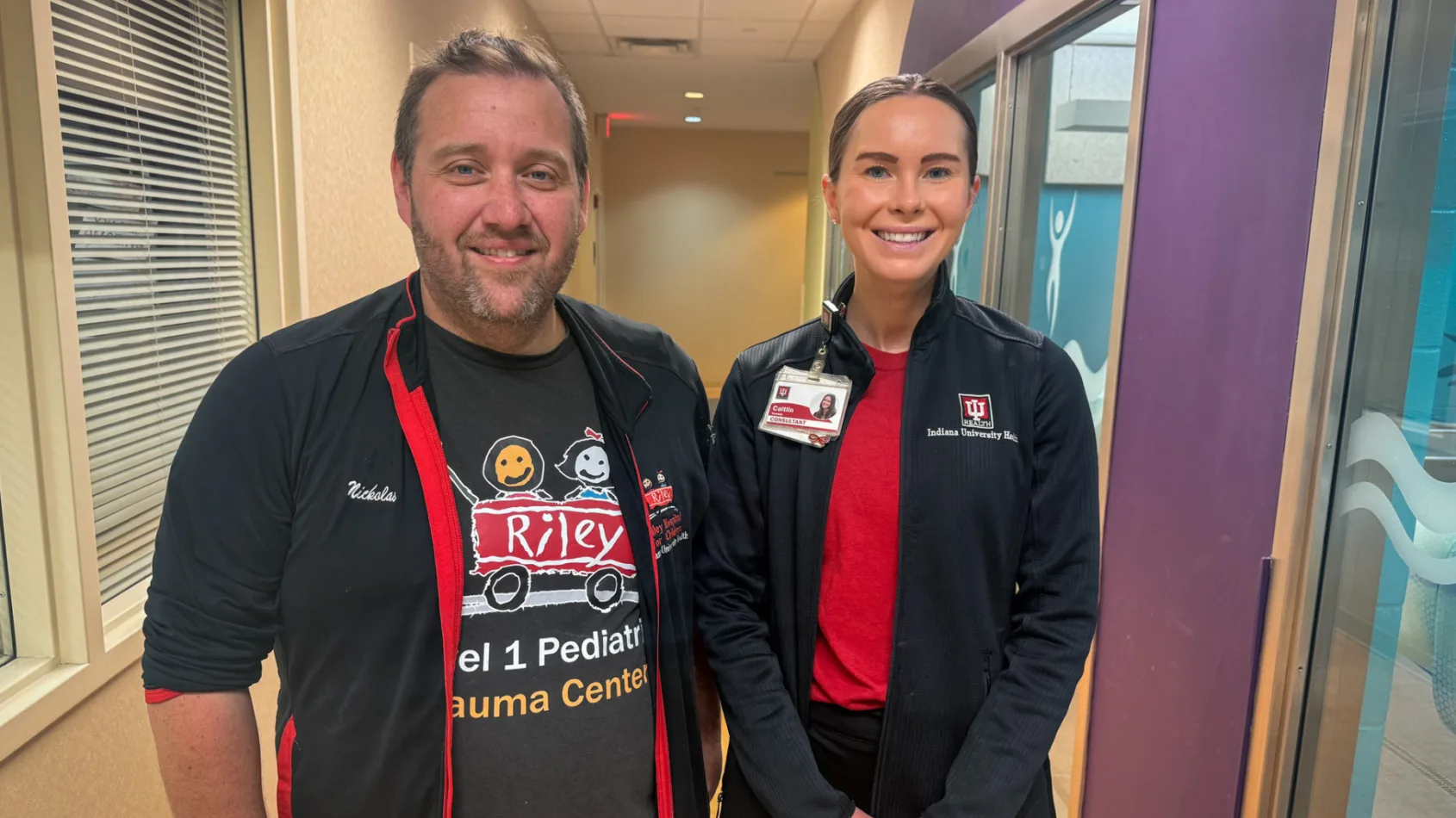
IU Health and Riley Children’s Health are bringing “Stop the Bleed” training into the community, equipping people of all ages with lifesaving skills to control severe bleeding before emergency help arrives.
Improving the health and quality of life of communities across Indiana is at the heart of IU Health’s mission. That work often extends beyond hospital walls.
For Nick Hogan, professional outreach and injury prevention coordinator for Riley Children’s Health, that means bringing critical education directly to the public through a free program called “Stop the Bleed,” where he teaches how to respond when someone experiences a serious injury involving heavy bleeding.
“I really enjoy bringing education directly to the community and meeting people where they’re at,” he says. “For adults and children, we treat wounds the same, so understanding basic wound care is a skillset anyone can apply. We first teach getting hemorrhaging under control, then focus on foundational wound care skills to manage the situation until help can arrive.”
Reaching older adults and caregivers
In Hamilton County, Hogan recently shared this education at the PrimeLife Enrichment Center in Carmel during an event hosted by the Carmel Fire Department.
“It’s important that we go outside hospital walls to educate aging adults and caregivers about relevant health topics. Meeting these communities where they are is a crucial aspect of this education,” says Caitlin Vendely, Community Outreach consultant for IU Health’s Metro Region.
As people age, Hogan notes the risk of injury can increase.
“As we age, we can get a lot more fragile in our skin and the risk for injuries increases for just even minor things like bumps and cuts,” he says. “Knowing how to handle wound management or any type of hemorrhaging becomes very important.”
Why every minute matters
During trainings, Hogan focuses on practical, hands-on skills. Participants learn how to apply pressure to stop bleeding, pack wounds when necessary and use a tourniquet.
The urgency behind those skills is clear.
“It only takes about six to 10 minutes for EMS to get to a city location, but it only takes three to five minutes for a major, uncontrolled wound to bleed out. So, those minutes can be life or death for a victim who is suffering from uncontrolled bleeding. Understanding the education, understanding what to do, can really help save a life,” he says.
By equipping community members with these tools, IU Health and Riley Children’s Health are helping ensure more people are prepared to act when it matters most.
To learn more about Riley Children’s Health’s Injury Prevention Program, visit rileychildrens.org/injuryprevention.
