


April 30, 2026
Head and Neck Cancer Awareness Month: Listening to her body saved her life
IU Health North Hospital
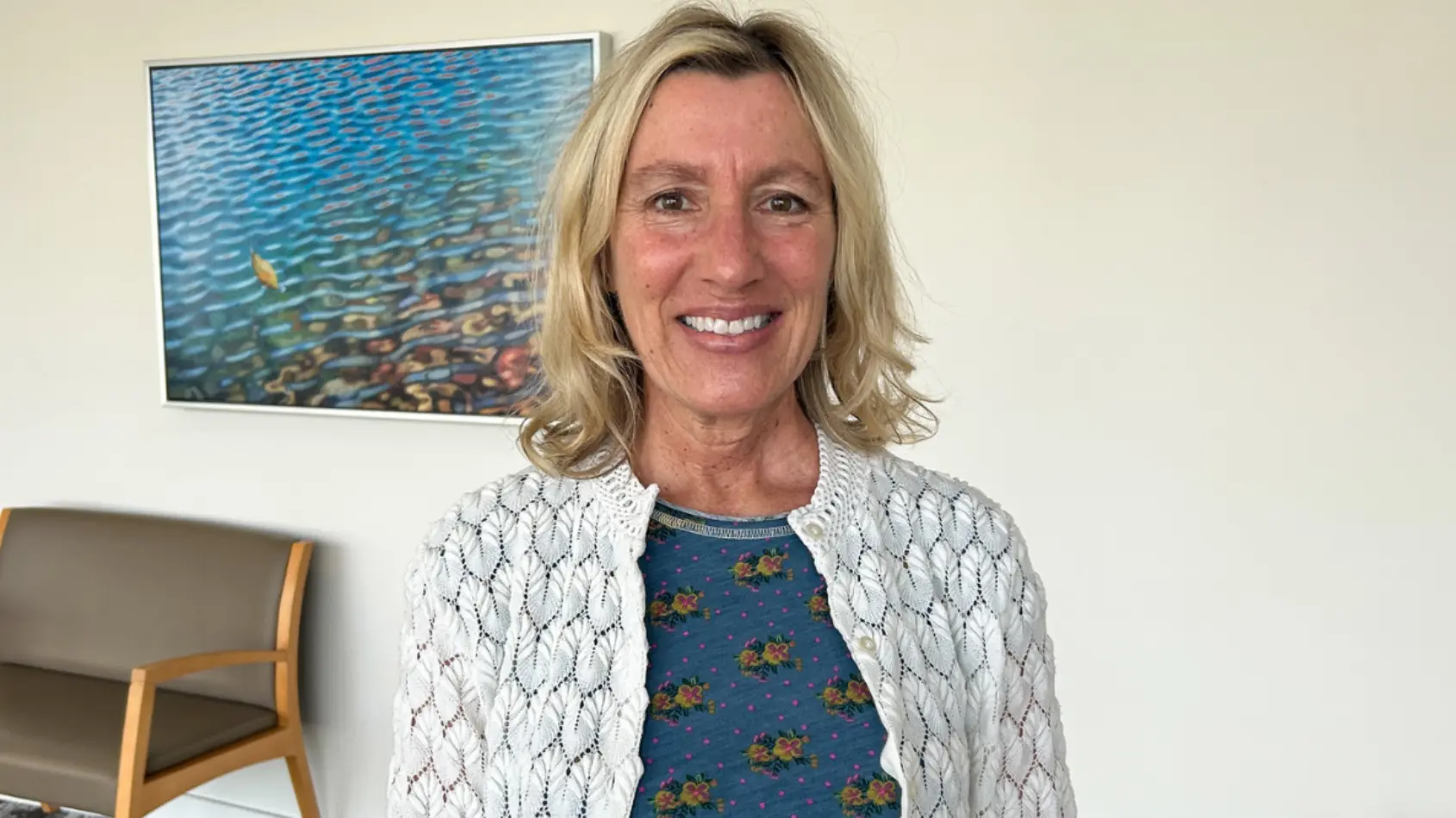
After noticing a persistent neck lump, high school teacher Traci Rodgers was diagnosed with early-stage HPV-related tonsil cancer. Through timely surgery, treatment and rehabilitation at the IU Health Joe & Shelly Schwarz Cancer Center, she is cancer free and now advocates for awareness and early detection.
As a high school Spanish teacher, Traci Rodgers is used to managing unexpected situations. When she noticed lumps on the left side of her neck in late 2024, she trusted that instinct and went to see her primary care physician. At the time, her doctor didn’t see an immediate cause for concern. However, when the lumps were still there in early 2025, a biopsy was recommended.
The results were unexpected and devastating: cancer. More specifically, Rodgers was diagnosed with stage one left palatine tonsil HPV-positive squamous cell carcinoma.
“When they told me I had cancer on my tonsil, at first, I thought it could affect my ability to speak, and that’s my job,” she recalls. “It’s your worst nightmare.”
Connecting with the right care team
A family connection helped guide Rodgers to IU Health. Her husband had a family member who worked for the health system, which led her to Dr. Michael Sim, MD, a surgical oncologist specializing in head and neck oncology and microvascular reconstruction at the IU Health Joe & Shelly Schwarz Cancer Center in Carmel.
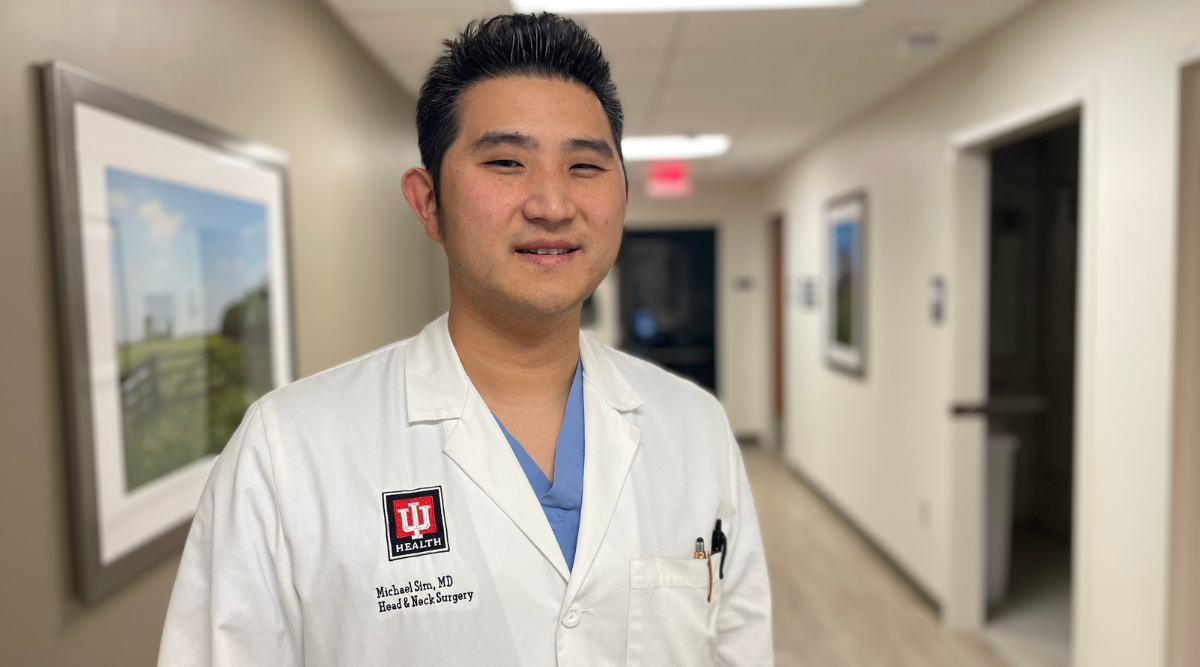
By February 2025, Rodgers was scheduled for surgery. She underwent two procedures; a neck dissection in February, followed by tonsil removal in March.
“She had 22 lymph nodes removed during a neck dissection and had the tonsil cancer removed via transoral robotic surgery,” Dr. Sim explains. “She received highly effective surgery with less morbidity, and she was able to receive lower doses of radiation due to surgery. This helps minimize long term side effects.”
“Dr. Sim was very instrumental. After he took my tonsils out and saw the biopsy of the lymph nodes, he was the one who decided my treatment course,” Rodgers adds. “He was the best.”
Treatment and perseverance
Following surgery, Rodgers received 28 rounds of proton radiation and six rounds of chemotherapy. Despite significant side effects, including weight loss, radiation burns, a feeding tube and fatigue, she continued teaching throughout most of her treatment.
Beyond radiation and chemotherapy, Rodgers also began occupational, physical and speech therapy to address speech changes, swallowing challenges and weakness from surgery. Her rehabilitation care team included Hannah Wischmeyer in physical therapy for range-of-motion work, as well as Carrie Morris and Beth Maier in occupational therapy for lymphedema and myofascial release.
Rodgers formed a meaningful connection with Julia Porter, a speech-language pathologist and team lead for Oncology Rehabilitation. Porter, herself a survivor of head and neck cancer, first met Rodgers after her tonsil surgery.
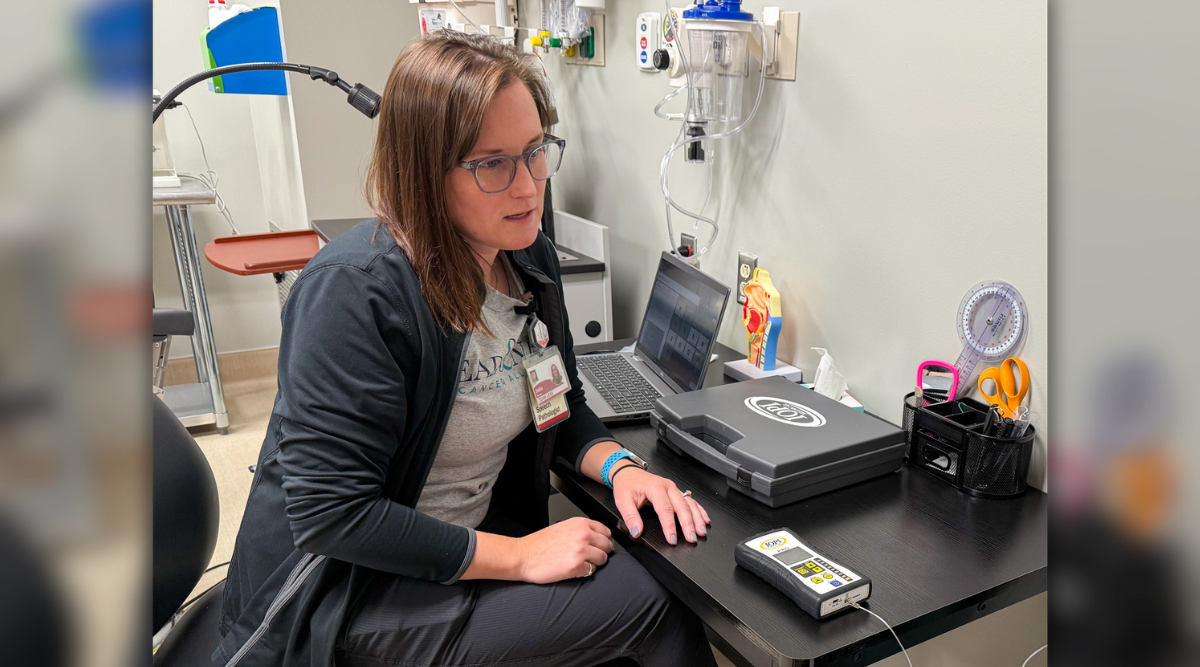
“She came up to see me and said, ‘Through this process, I'm going to be seeing you quite a bit, because it can affect your speech.’ And it did,” Rodgers says. “There were times when my voice was super hoarse. The left side of my mouth and my tongue aren’t as flexible. When I hear myself speak, I sound different than what I used to.”
“We know that early rehabilitation for head and neck cancer can have a positive impact on long-term outcomes for swallowing,” Porter adds. “This support can mean survivors are more likely to be off a feeding tube or eating a normal diet after treatment, which is huge now that we have younger survivors living more years of life after diagnosis. Traci was great at keeping up with her exercises and eating during this crucial period, even if it wasn’t particularly enjoyable to swallow at the time due to side effects of treatment.”
Life after cancer
Over time, Rodgers’ sense of taste and ability to eat returned to normal. She continues to receive regular follow-up care, including PET and CT scans and HPV-specific blood tests—all of which have been negative for recurrence.
Today, Rodgers is actively involved in the head and neck cancer community. She now serves as a patient ambassador for the Head and Neck Cancer Alliance, a nonprofit organization Porter is also involved with.
“It’s been great seeing Traci is willing to use her experience to help others who are facing this diagnosis,” Porter says.
Raising awareness
April is Head and Neck Cancer Awareness Month, an annual observance focused on early detection, symptom awareness and prevention.
“The most common presenting sign of HPV-related head and neck cancer is a neck mass. Patients should seek evaluation if they have a persistent neck mass that does not go away after several weeks,” Dr. Sim says. “For prevention, it's important to stop smoking and heavy drinking, which significantly increases risk for head and neck cancer. The HPV vaccination is also an effective way to help prevent HPV-related cancers. It's important to seek evaluation sooner than later as chances of cure are better when cancer is caught in earlier stages.”
For Rodgers, the experience has reshaped how she approaches life. She credits her recovery to staying active, maintaining a positive outlook, leaning on support from her husband and placing trust in her care team.
“It's hard, but you have to really stay positive,” she says. “You have to keep moving physically and just trust in the people that are taking care of you.”
To learn more about head and neck cancer services at IU Health, visit iuhealth.org/find-medical-services/head-neck-cancer.

