


September 02, 2026
Hours after liver transplant: ‘I had to walk 15 stairs; I have 15 stairs in my apartment’
IU Health University Hospital
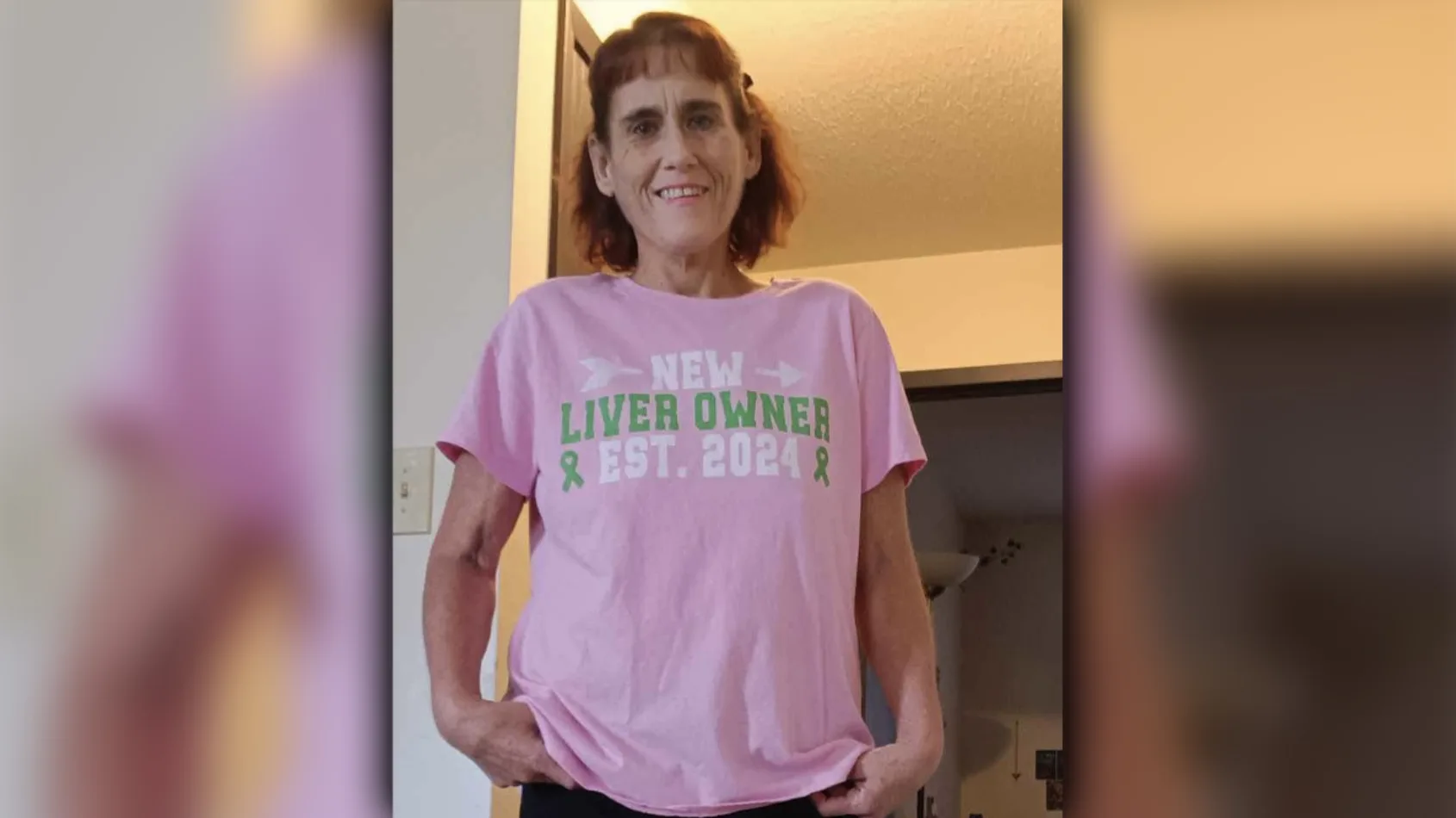
Kathryn “Kathy” Shockey said she was going to keep moving after surgery.
By TJ Banes, IU Health Senior Journalist, tfender1@iuhealth.org
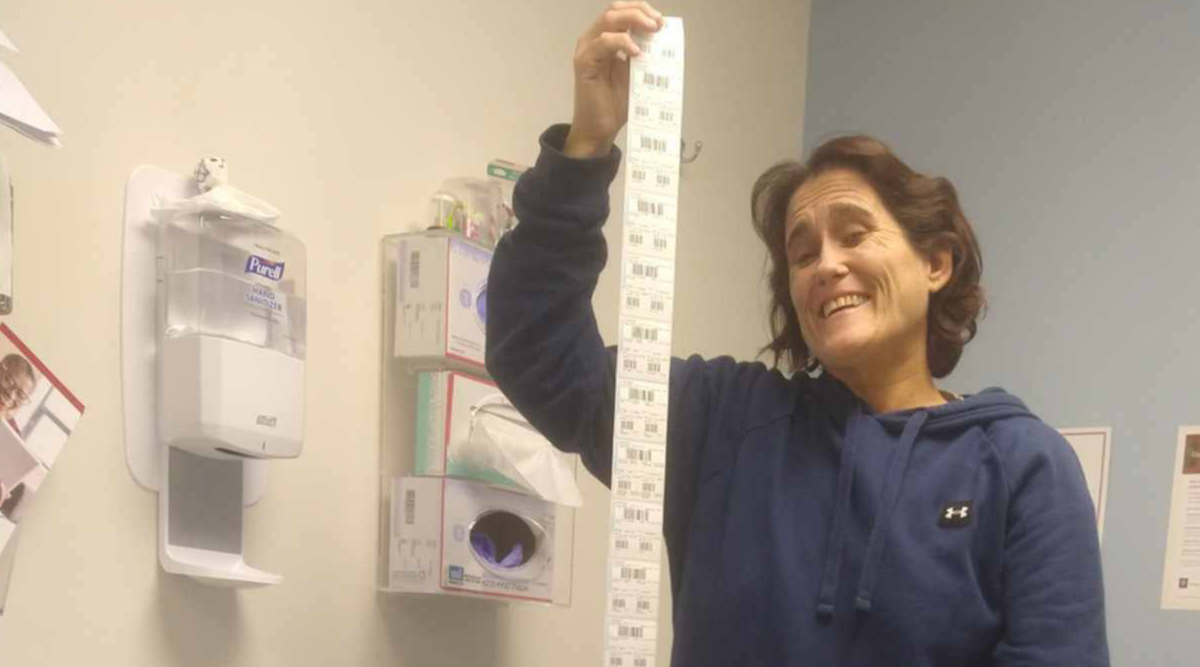
As she marks her second-year post transplant, Kathryn “Kathy” Shockey looks back at photos and videos of her journey toward liver transplant. One photo shows Shockey holding a tape of blood labels as tall as she is. In a TikTok video 12 days after her discharge Shockey talks about how she’s “not the normal.” The video received 175,000 views in a matter of days.
Shockey’s reference to “not the normal” is her way of saying that her recovery progressed slightly quicker than some liver transplants. She attributes that recovery to her willpower to move and to work steadfastly toward healing.
“I spent too many years in in my bedroom sick. I want to be moving and outside,” said Shockey, of Rockville, Ind. The day after her surgery, she walked the hall at IU Health University Hospital. When she was coaxed to navigate stairs she said, “I have to complete 15 because I have 15 stairs in my apartment.”
Shockey was pregnant with her son, now 21, when she first felt an itching sensation. Doctors attributed the symptoms to the pregnancy. Three years later, when she was pregnant with her daughter, the itching was heightened. Doctors thought it might be caused by high levels of acid in her system. Then in 2020, she ended up in the hospital with GI bleeds. Shockey was diagnosed with Primary biliary cholangitis (PBC), a chronic autoimmune disease that slowly destroys the small bile ducts in the liver, bile buildup, and scarring (cirrhosis), and potential liver failure.
“By the time I got diagnosed, it had wrecked my bile ducts, and I was already showing signs of cirrhosis,” said Shockey, 47. Within four years she ended up with 19 GI bleeds from her throat down into her intestines, and multiple bands to stop the bleeding.
“By the time the autoimmune disease progressed I spent every four to five weeks in the hospital,” said Shockey. One ER told her that with the coils throughout her body, it was too risky to treat her.
She became a patient of Dr. Lauren Nephew in 2020. “At the time, I was told there was nothing that could be done to reverse the damage. I ate lots of fruits and vegetables and maintained a healthy diet,” said Shockey. For a time, the condition was better, and then it got worse. Her bones were so brittle that a hug, crushed her ribs. She was listed for an emergency transplant in August of 2024 and within a 24-hours got the call, “How fast can you be here?” She was in the surgical care of Dr. Chandrashekhar Kubal when Shockey received her liver transplant on Aug. 22, 2024.
IU Health’s Transplant Program is nationally ranked in both volume and specializations. The team has averaged 520 transplants since 2021. IU Health is the only center in Indiana approved to perform all organ transplants and the only liver, lung, and pancreas transplant program in the state. IU Health is the only living liver donor transplant program in Indiana.
During her recovery, Shockey turned to her children and her mother for support. She took up temporary residence at Fair Haven, a foundation that provides free housing to patients and their families conveniently located near IU Health University Hospital and Simon Cancer Center. During her stay, Shockey made friends with four other transplant patients.
Since her transplant, Shockey said she feels like she has a renewed life.
“I met my soulmate and we go hiking, fishing, boating. I have to keep the sun to a minimum, but I love spending time outside.” She attributes her post-transplant health to keeping active.
“The reason I’ve done so well is because they didn’t tell me what I could do, so I’ve just kept moving.”
To celebrate her two-year anniversary Shockey completed something that she’s been thinking about since the day she received her new organ. She wanted to write a letter to her donor’s family.
For the past two years, Shockey has carried something with her but hasn’t been able to put the words on paper. “I’ve written a thousand times and couldn’t get it out. I am very empathetic and couldn’t find the words to express how grateful and thankful I am,” said Shockey.
When she wrote her letter to her donor’s parents she told them: “I was a single mom of two kids dying of liver disease. Just when my outlook was bleak, I got the call. I got to see my kids graduate and someday I will see them get married. Your son is a giant part of my life. I pray for him daily. I promise a part of him lives on. Thank you from the bottom of my heart.”


