


December 18, 2025
“I got my lungs, and here I am breathing on my own”
IU Health Methodist Hospital
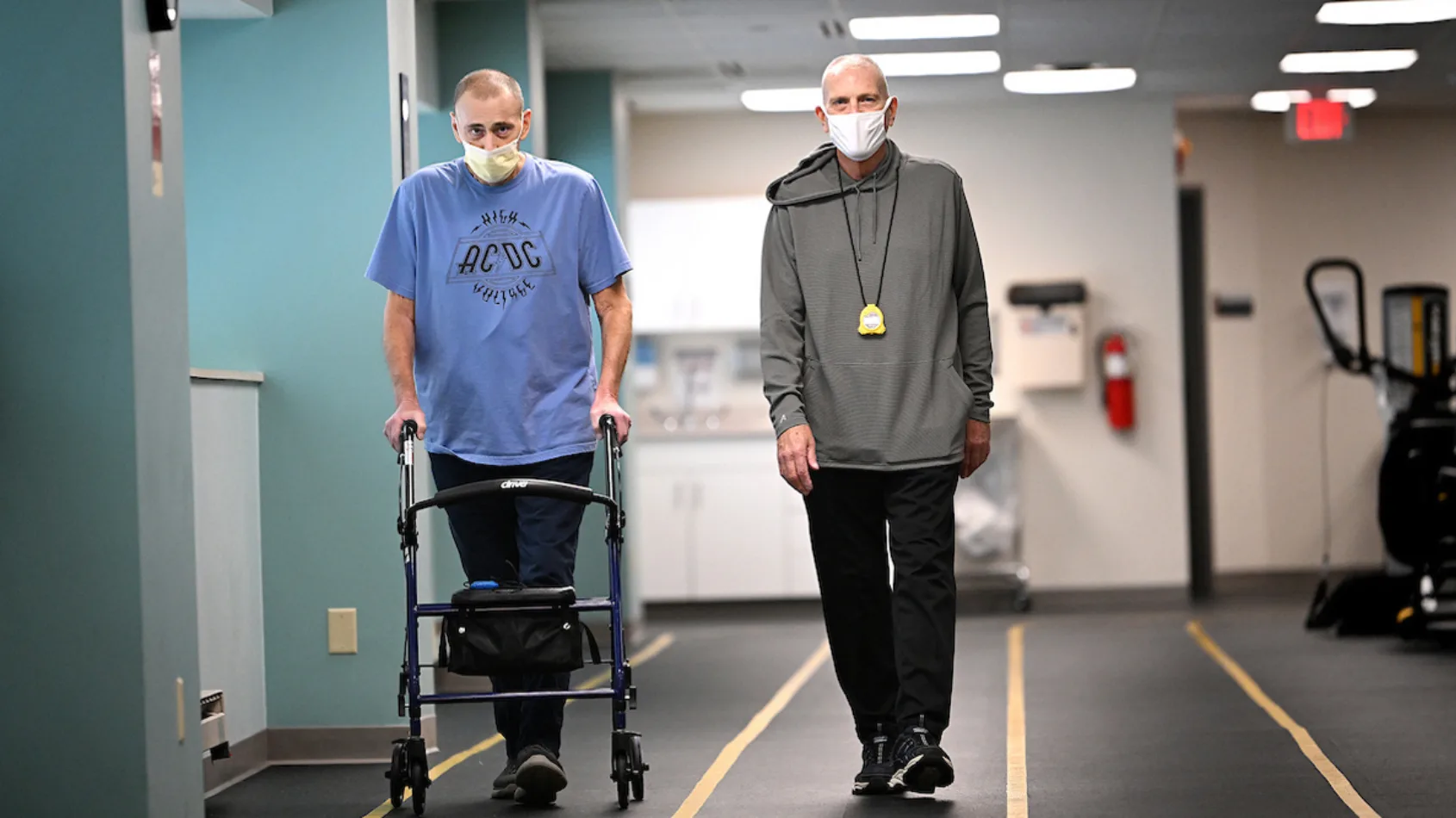
As two men recover from lung transplants, their hearts are filled with gratitude.
By Maureen Gilmer, IU Health senior writer, mgilmer1@iuhealth.org
One by one, he watched as patients around him were matched with new lungs while he waited.
Dan Duckworth didn’t begrudge them their good fortune. His time would come. Meanwhile, as he waited on 4E at IU Health Methodist Hospital, he did his exercises to keep up his strength and told his nurses to go take care of sicker people.
“I was in good shape. I just couldn’t breathe,” he said with no hint of irony. “But when I was just sitting there, I didn’t require any oxygen.”
“You have sick people who need you,” he told his care team. “I didn’t want to be a nuisance. I wanted them to be able to do their job.”
This is the same guy who required 55 liters of oxygen anytime he as much as stood up to do anything.
On the other side of the unit during part of his stay was another man waiting for a set of lungs. David Garner would occasionally see Duckworth as the two did laps in the hallway. They would wave and offer fist pumps for encouragement, but they hadn’t really gotten the chance to speak.
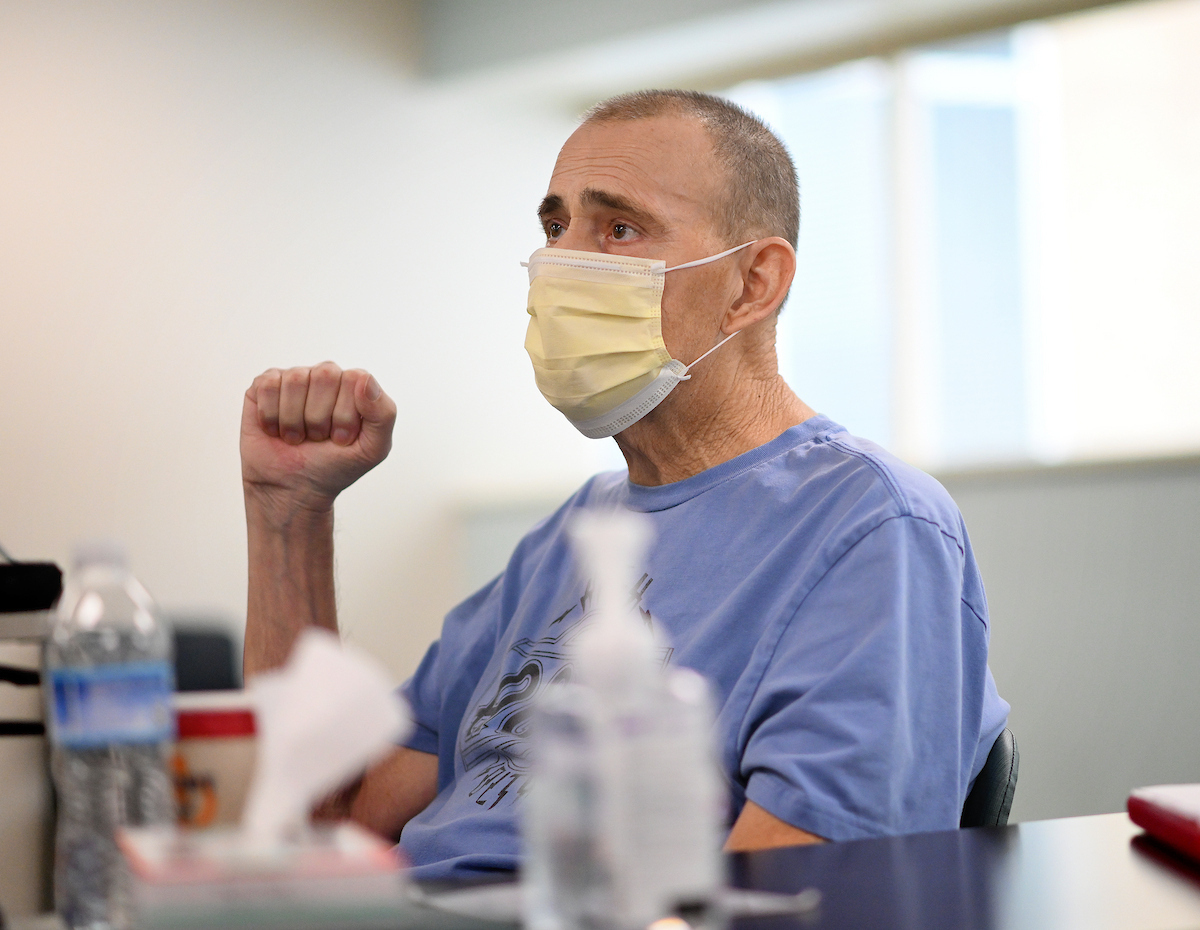
Garner, 63, would get his lungs Oct. 27. Duckworth remembers walking with him to the elevator before he went into surgery.
“We’ve been there for each other,” he said.
But it would be another two-plus weeks before Duckworth, 73, received his transplant.
When thoracic surgeon Dr. Chad Denlinger, who performed both transplants, stopped by Garner’s room on 7N during rounds one morning after Garner’s transplant, he recalled that his patient had only one question: “Hey doc, how’s Dan?”
“Both men are incredibly gracious and grateful individuals,” Dr. Denlinger said. “I just thought it was really cool that both these guys had life-threatening problems, both were stuck in the hospital, but they were able to look beyond their own situations and wish the best for each other.”
Now, the two are reunited again at COLTT (Center of Life for Thoracic Transplant) at Methodist.
There, they boost each other’s spirits with jokes and idle chatter, each comforted by the idea that the other knows exactly how challenging the transplant process is.
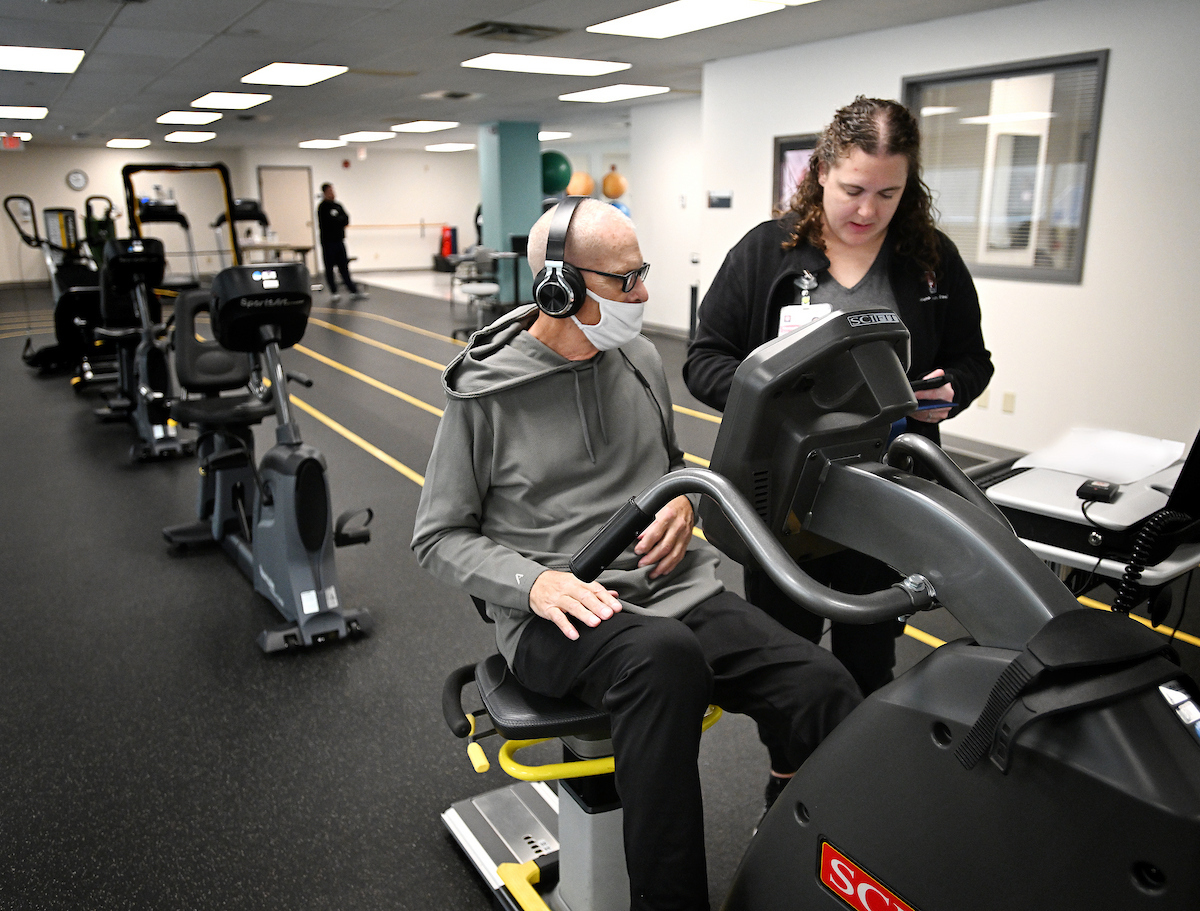
“It’s nice to see them encourage each other,” said respiratory therapist Hannah Emery, who checks in with the men at multiple points during their 2½-hour daily rehab sessions at COLTT. “It’s a very difficult thing physically, mentally and emotionally to go through, but they’re doing great,” she said.
Both men express deep gratitude to the transplant and rehab teams who have walked this journey with them, as well as everyone connected with the hospital. All have played a part, Garner said.
“How wonderful the whole staff here is,” he said as he took a break after walking more than a mile around the track at COLTT. “I couldn’t ask for a better bunch of people. They’re all here to help you get better.”
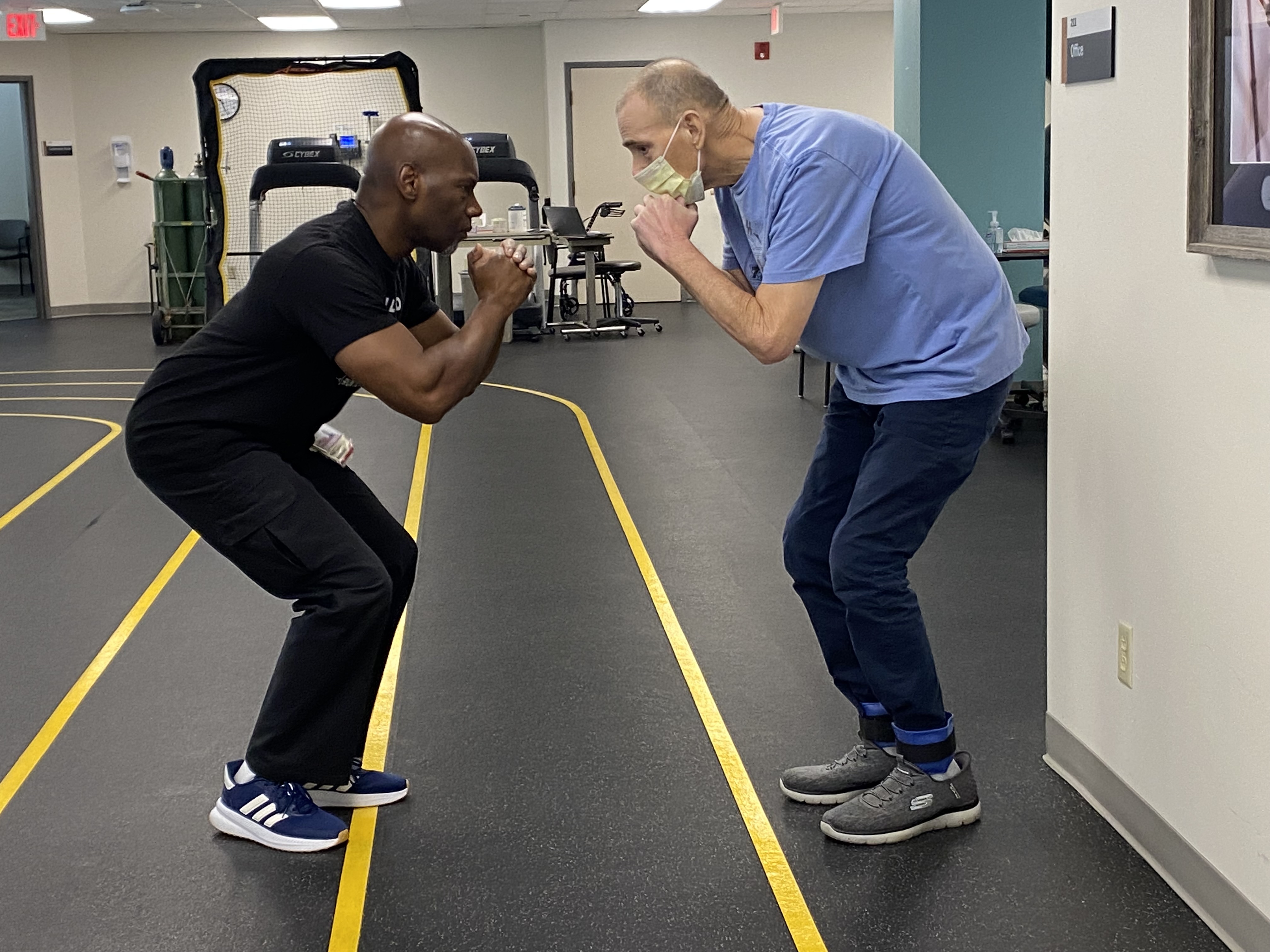
That includes physical therapist Zelle Crawford, who works with both men on strengthening exercises as their time in COLTT nears its end.
“I have some separation anxiety,” Crawford said with his booming laugh. “We do sometimes hate to see them go, but they’re ready to go because they miss home.”
Garner, who spent most of his life in Chicago and worked as a union painter much of that time, is retired now and moved to Valparaiso a few years ago with his wife, Kathryn.
She has been his rock, he said.
“She has never left my side. She took her vows to heart.”
The two have been staying in Indianapolis as Garner finishes COLTT, with the hope that he graduates on Christmas Eve, which just happens to be his wife’s birthday.
It will be a big celebration for sure, he said, as he reunites with his three children (two of whom are nurses) and six grandkids.
“We’re a close-knit family, so it’s been hard on all of them.”
Duckworth, whose wife passed a decade ago, is able to commute back and forth to COLTT because his home is just a mile south of Lucas Oil Stadium. There, he lives with his two daughters and grandkids, while his son lives just blocks away.
He had quit smoking last year and hoped that his shortness of breath would improve. When it didn’t, his doctors brought him in for a full workup.
Diagnosed in April with pulmonary fibrosis caused by rheumatoid arthritis, he was still trying to play golf in July with supplementary oxygen. But his health failed quickly by August, and he was admitted to Methodist in September, where he waited to be matched with a set of donor lungs.
When his day came, the team around him couldn’t have been more thrilled.
“He’s just the nicest guy,” Dr. Denlinger said. “All the nurses loved him. The nurses on 4E were so excited for both these guys and all the others,” he added.
“They invest a lot of time, and for Mr. Duckworth, you can imagine how he could get depressed and demoralized as his buddies got transplanted and he’s just hanging out, but the nurses did an incredible job keeping his spirits up and keeping him exercising, which made his transplant that much safer and smoother.”

Duckworth, who worked at Eli Lilly & Co. in the drug processing area for three decades, is set to graduate from COLTT on Friday and is living for the day when his doctors give him the OK to get back out on the golf course and to help out with dinners for the homeless at his church again.
“I can’t tell you how many people have been praying for us and sending cards and good wishes,” he said. “It’s great to have somebody you don’t even know rooting for you.”
To the donor family, he doesn’t have the words yet to express his gratitude, but the tears in his eyes say everything. He is a registered donor himself, so he understands the need for organ donation.
Garner, who quit smoking 10 years ago, said he spent weeks in the hospital in Valparaiso last fall before doctors eventually diagnosed him with interstitial lung disease caused by an autoimmune disorder.
Walking to the baseball diamond from his car to see his grandson play travel ball became more and more difficult over the summer, he said.
He landed at Methodist in early October and was on the transplant list for just 10 days when he was matched.
“I got my lungs, and here I am breathing on my own.”

Once the weather turns, he’s looking forward to getting back on his fishing boat and enjoying the beauty of Wisconsin, which he claims is the best place to fish.
As both men wrap up COLTT and move on to continue their rehab in everyday life, Dr. Denlinger can’t help but express his pride – in them and in the teams that have gotten them this far.
“For people here, it’s not just a job. It’s an investment,” he said of the transplant and rehab teams. “They’re here because they like people, and I think that makes an incredible difference for those who are stuck here for a little while. That speaks to the strength of our people at COLTT as well,” he added.
“They enjoy working with our patients, seeing them get back on their feet and then getting out of here to enjoy their great lives.”
For more than 35 years, the thoracic transplant team has performed lung transplants at IU Health Methodist Hospital. As the state's only lung transplant program, it counts more than 1,200 patients transplanted.
Photos submitted and by Mike Dickbernd, IU Health visual journalist, mdickbernd@iuhealth.org

