


Non-smoking patient overcomes stage four lung cancer
IU Health Arnett Hospital
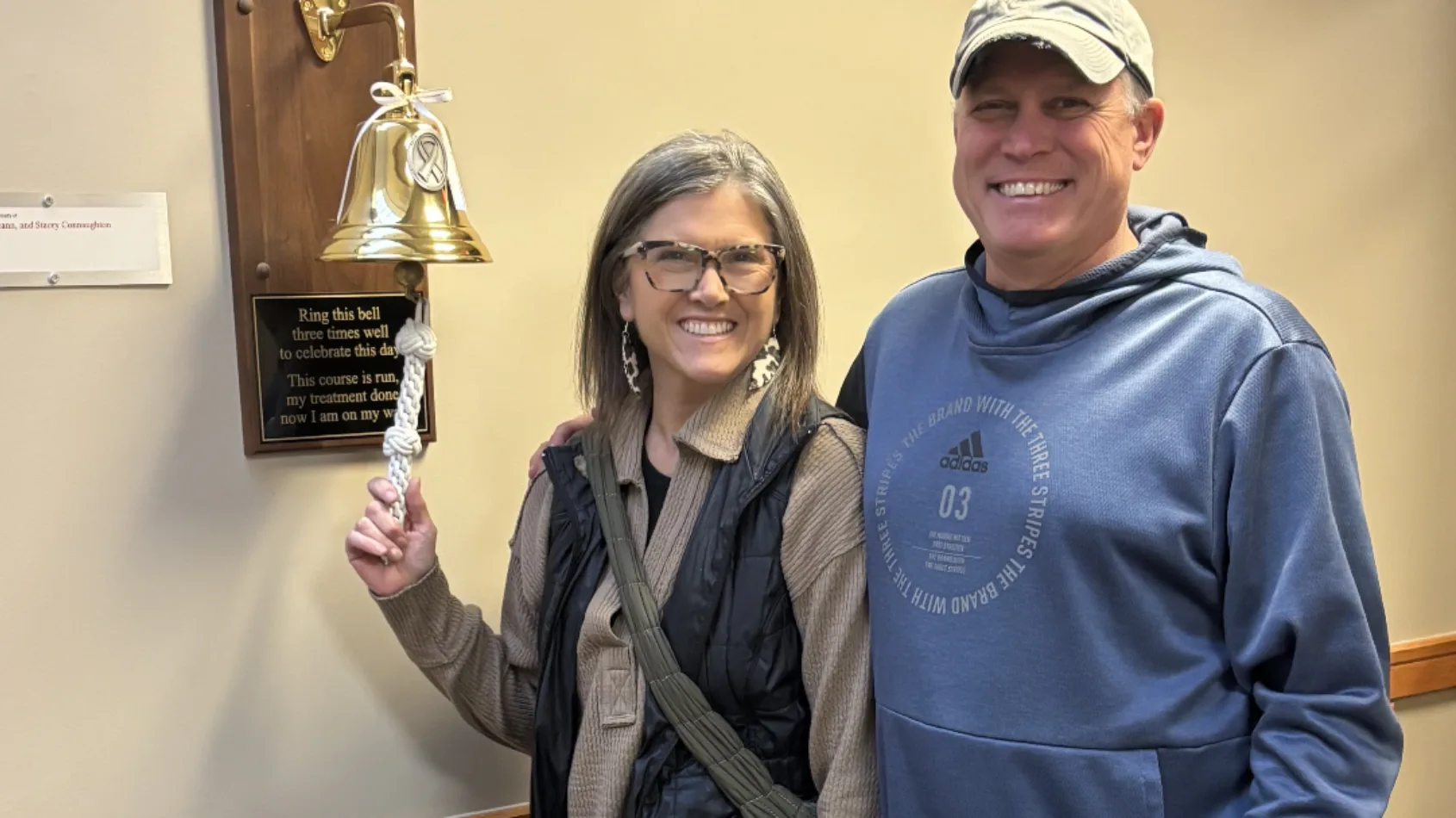
Brandy Cain is an overcomer. She is in remission from stage four lung cancer, a diagnosis she never saw coming.
"Never been a smoker," Cain said. "I believe what they said for my diagnosis was, it's the most common type of lung cancer that non-smokers get: small cell lung cancer. No lung cancer history in my family."
In June 2025, Cain had just finished a day of teaching summer school and was tending to the grill when she started feeling pain in her chest.
"I felt something right here in my heart, my chest, that just didn't feel right, and it wouldn't go away," Cain said. "So, I asked [my son] to drive me to urgent care. That first appointment when I went to urgent care and [the doctor]'s like, 'we found something in your lungs, I want you to go to the hospital.' I'm like, 'okay, this is serious.'"
A doctor told Cain she needed to promptly see a pulmonologist and needed a biopsy.
"In the back of my throat, I just knew something bad was coming out of this," Cain recalled. "Right after that biopsy that I had at the hospital, the doctor actually came in and told me that it was cancer."
Cain will never forget the ride home after hearing this news.
"My husband and I both just broke down and cried," Cain said. "Got it out of the way, and then we moved on. We were like, 'okay, we're just going to start fighting it.'"
Battling the cancer means taking daily oral medication to continue her fight. Dr. Vandana Raman, an IU Health Hematologist-Oncologist, is a part of Cain's care team. She explained that new diagnostic testing helped doctors decide this treatment plan for Cain.
"All lung cancers go through some genomic testing these days," Dr. Raman said. "We were able to isolate this DNA defect in her lung cancer cell right away so we knew she would be a candidate for this oral, targeted pill that controls her cancer better than chemo. So that really improves her long-term survival."
Genomic testing is an important part of a patient's cancer care at IU Health, including a system-wide genomic tumor board.
"So, we can discuss with other thoracic oncologists and other geneticists, etc. to come to a consensus treatment option," Dr. Raman explained. "If you're able to find a particular DNA defect, we are able often to get oral medications that are targeted to that DNA defect to block that marker and therefore stop the growth of the cancer."
Dr. Raman said Cain is doing great as she continues taking her oral medication, which is a measure she will continue throughout her life.
"She is currently in complete remission," Dr. Raman said. "So, no evidence of disease and tolerating treatments well, so we are really hopeful for long-term survival and quality of life, of course."
Cain said she is happy with her treatment at IU Health and immensely grateful for her support system.
"My friends are amazing, my husband's amazing, my kids are amazing, my parents are amazing," Cain said.
Cain acknowledges the pain and suffering a cancer diagnosis brings, especially for her children.
"I hate what it's done to my kids," Cain said. "I just get mad when my kids say, 'mom, we're going to fly home from Atlanta and visit you, we're coming this weekend,' and I'm like, 'well it's chemo weekend, I won't feel good.' My son's like, 'it's family weekend at IU, come visit.' I'm like, it's chemo weekend but I'll try to make it,' and I do, I just don't feel good. The really important stuff I'm going to make happen even when I don't feel good."
Importance of Lung Cancer Screening
Dr. Vandana Raman, along with Cain, is hopeful that stories like Cain's will prompt more people to schedule their annual lung cancer screening. Dr. Raman said usually anyone who is an active smoker or who has quit within the last 15 years, and is between the ages of 50 and 80, is eligible.
Dr. Raman did caution, however, that lung cancer can occur in non-smokers too.
"They also need to pay attention to symptoms mostly, like chronic cough that's not going away, or chest pain or a lymph node that is popping up in the neck or something like that that is not going away," Dr. Raman explained. "They should seek attention."
For more information about lung cancer screenings, visit https://bit.ly/4iyp3Yb.

