


May 04, 2026
Personal loss inspires nurse's work in stroke care
IU Health Arnett Hospital
When Leslie Holdcraft’s father passed away after undergoing open-heart surgery and suffering a massive stroke, she was working in print manufacturing, overseeing production control for six plants across the United States.
Suddenly, she found herself navigating the complexities of healthcare for her aging parents—but she didn’t do it alone.
She found support in both clinical and non-clinical team members who helped her make sense of a frightening time. The nurses she encountered made a particularly lasting impression.
“I thought, this is really cool, how they can just love on not only the patient but the family. It moved me,” says Holdcraft.
When she later stepped away from her role in manufacturing to stay home with her young children, Holdcraft decided to pursue nursing. She took classes over time to earn her associate degree before completing her BSN at Purdue University.
After more than a decade in nursing leadership, Holdcraft joined IU Health last March. She now serves as the stroke program quality coordinator at IU Health Arnett Hospital—a role she didn’t initially set out to pursue, but one that aligns closely with her passion.
“I just have always gravitated toward, ‘What can I do to make the life of the patient and the life of the patient’s family better? How can I improve healthcare?’” she says.
At the start of her nursing journey, she didn’t know exactly where that mindset would lead.
“I had no idea or even foresaw that there’s such a role as a stroke coordinator,” Holdcraft says. “It wasn’t like ‘I’m going to be a nurse and be a stroke coordinator’—just, ‘I’m going to be a nurse because I want to help people.’”
Now, she’s doing both, helping patients directly while improving systems that impact their care.
Improving stroke care, one patient at a time
As the stroke program quality coordinator, Holdcraft works with all patients who present with signs of stroke. Her role blends patient care, education and quality assurance, requiring close collaboration with providers, nurses, EMS teams, radiologists and others.
Education, she says, is just as important outside the hospital as it is inside.
That’s why she also brings her expertise into the community. In January, for example, Holdcraft visited the John R. Dennis Wellness Center to speak to community members about stroke awareness and prevention.
“I think it’s our job as fellow citizens in the community to be able to identify [stroke symptoms], so for me, if anybody walks away from a discussion I’ve had with them, if they’re able to do this, then I’ve won,” she says.
Every second counts
According to the American Heart Association, someone in the U.S. has a stroke every 40 seconds, but Holdcraft emphasizes an important message: stroke is both preventable and treatable.
She often shares the phrase “time is brain,” which highlights how critical rapid response is during a stroke. Brain cells begin to die within minutes if blood flow isn’t restored.
The faster a patient receives care, the better their chances of survival and recovery—and the lower their risk of long-term disability.
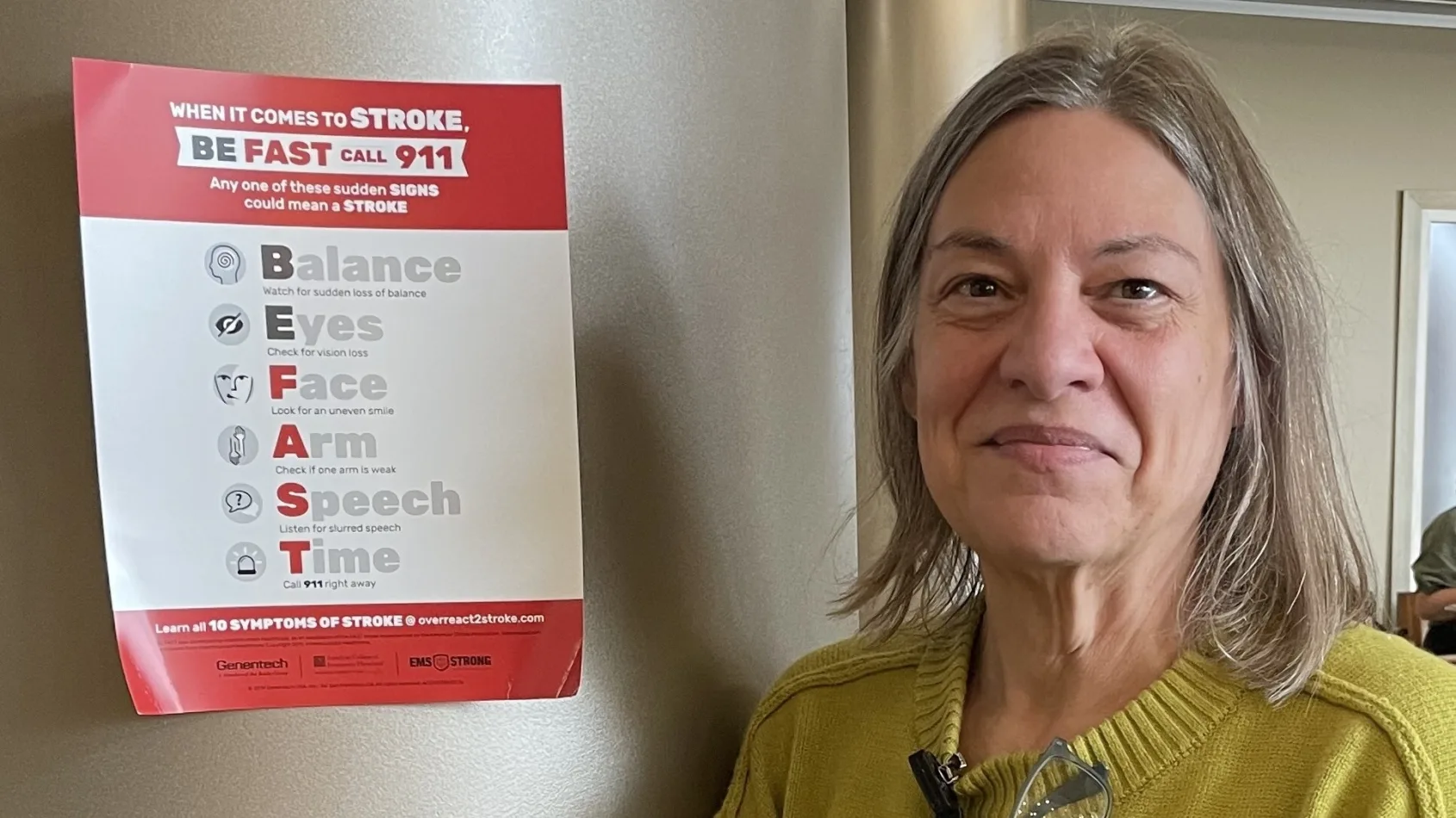
To help people recognize stroke symptoms quickly, Holdcraft teaches the acronym BE FAST.
- B – Balance
- E – Eyes
- F – Face
- A – Arms (and legs)
- S – Speech
- T – Time
A career built on purpose
Nursing may be Holdcraft’s second career, but it’s one grounded in purpose and shaped by personal experience.
What began as a response to loss has grown into a career focused on improving care for others during some of their most vulnerable moments.
Whether she’s working with patients, analyzing care timelines or educating the community, her goal remains the same: to make healthcare better both for patients and for the people who love them.
