February 24, 2026
Right place, right time, right care: Fishers cardiac rehab patient thanks team for life-saving actions
IU Health Fishers
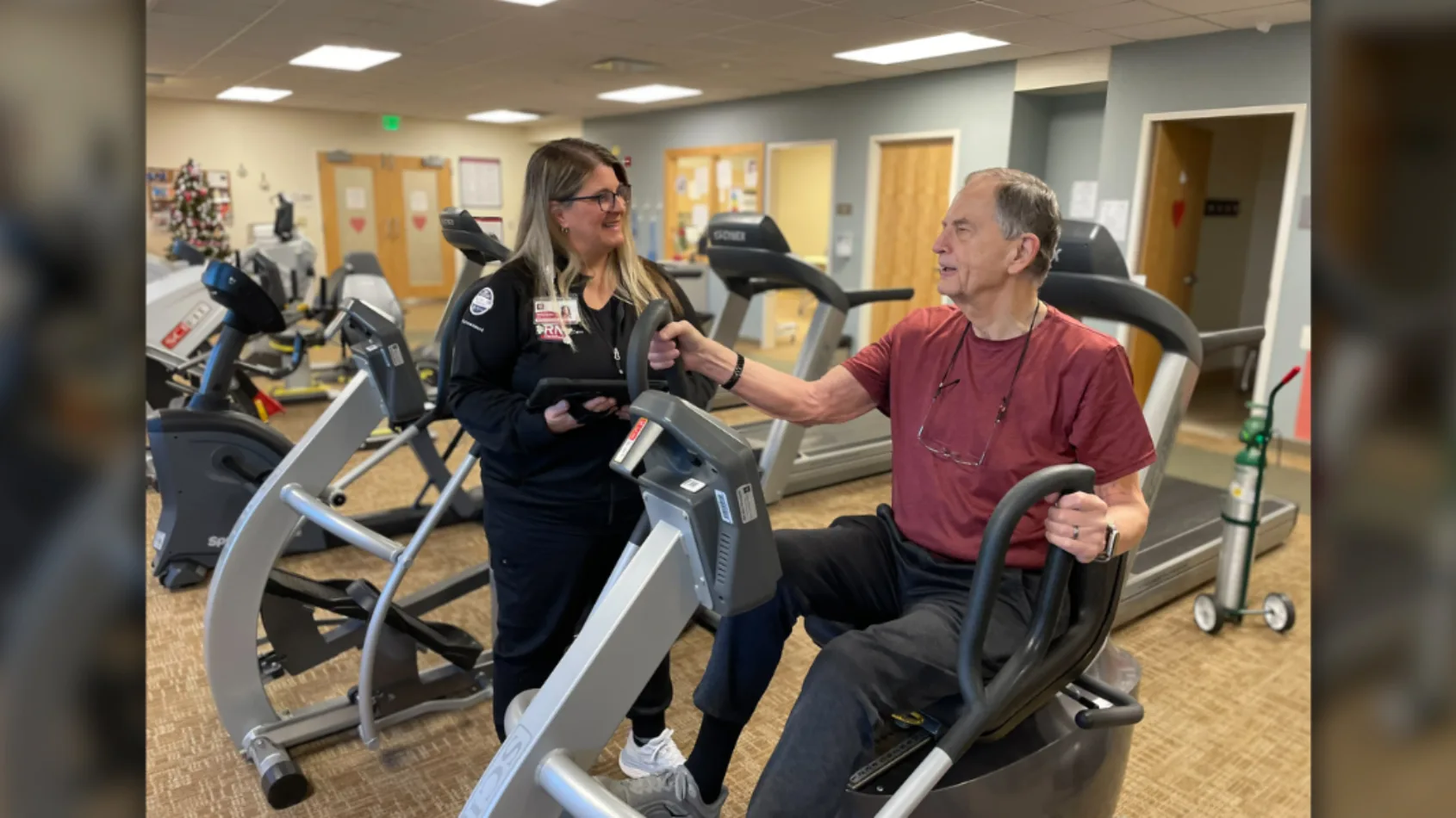
After attending cardiac rehabilitation at IU Health Fishers for several years, Tom Fitzsimmons had created a strong bond with his care team. In 2024, the unthinkable happened as he went into cardiac arrest at an appointment. Thanks to the team’s quick actions, Fitzsimmons survived and is thriving.
Written by Charlotte Stefanski, cstefanski@iuhealth.org, writer for IU Health's Metro Region
In 2019, Tom Fitzsimmons picked up his granddaughter from the airport. As he went to get the car, the escalator wasn’t running, so the then-74-year-old walked up the stairs.
“By the time I got to the top, I was absolutely winded,” Fitzsimmons recalls. “That was strange for me.”
A similar incident happened the next day, so he called his primary care physician and scheduled an appointment at IU Health Fishers.
While Fitzsimmons suspected it was his asthma, his physician performed an electrocardiogram (EKG) to see his heart’s electrical activity. His doctor immediately sent him to the Emergency department.
Dr. Ali Iqtidar, MD, was the cardiologist on call. He determined Fitzsimmons was in danger of having a blockage of his left anterior descending artery, which would cause a major heart attack.
Following the weekend, Fitzsimmons came back to the hospital for a procedure in the cardiac catheterization lab, where three stents were placed.
This was his introduction to heart health, and since then, he’s had a continuum of care with Iqtidar and the Cardiac Rehabilitation team.
Finding community in cardiac rehab
After Fitzsimmons’ initial procedure, he enrolled in IU Health Fishers’ Cardiac Rehabilitation program.
Michelle Wolf, a registered nurse for more than 30 years, has worked at the hospital since it opened. While she now works in cardiac rehab team full time, she spent the bulk of her career working in critical care units.
Cardiac rehab is a voluntary step for patients to take, typically for those who experienced a heart event or procedures like stent placement, open heart surgery, heart transplant and more.
“It's a supervised exercise environment, so it creates a safe space for patients to exercise, with the hopes of regaining stamina after post-surgical fatigue, improving their overall cardiovascular health and minimizing risk factors for future events,” Wolf explains.
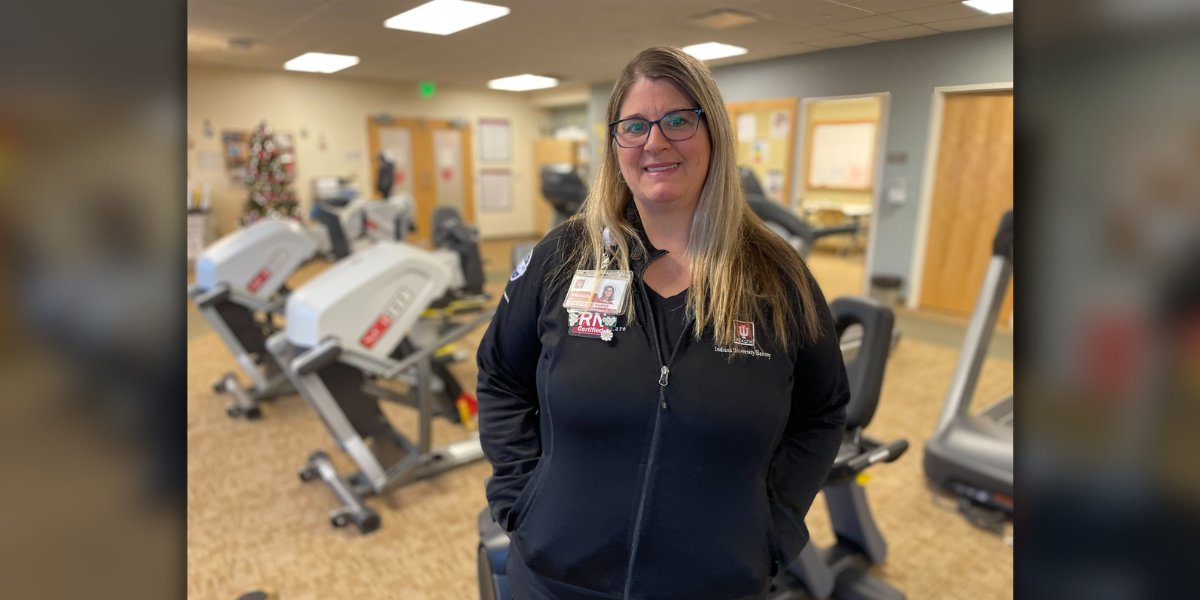
After his procedure, Fitzsimmons completed 12 sessions of cardiac rehab. During that time, he became friends with other patients and discovered there was a “maintenance program,” where he could continue to exercise with the team.
“My wife and I only live a mile or so from the hospital,” Fitzsimmons says. “It’s a great place to exercise, plus we've got all these people right there—all the staff is just phenomenal.”
During Fitzsimmons’ check-up appointments with Iqtidar, his tests showed a steady improvement in his heart health
“That was very encouraging to me, because each time we were making bits of improvement and getting better and better,” he says.
Quick actions saved his life
Five years later on Friday, Sept. 13, 2024, Fitzsimmons was at a cardiac rehab appointment. He finished up on an elliptical and noticed an open treadmill.
“I was feeling fine, just like I always do,” he says.
After four minutes, an intense dizziness came over him.
“The last thing I remember thinking was, ‘I’ve got to get off this thing,’” he recalls.
Wolf remembers watching Fitzsimmons fall off the treadmill. She rushed over and began CPR immediately. The rest of the team cleared the other patients from the room. A cardiologist and advanced practice provider from across the hall arrived and guided resuscitation efforts.
While it felt like a long time for the team, Fitzsimmons was awake and breathing within a few minutes. Something like this had never happened in the Cardiac Rehab suite.
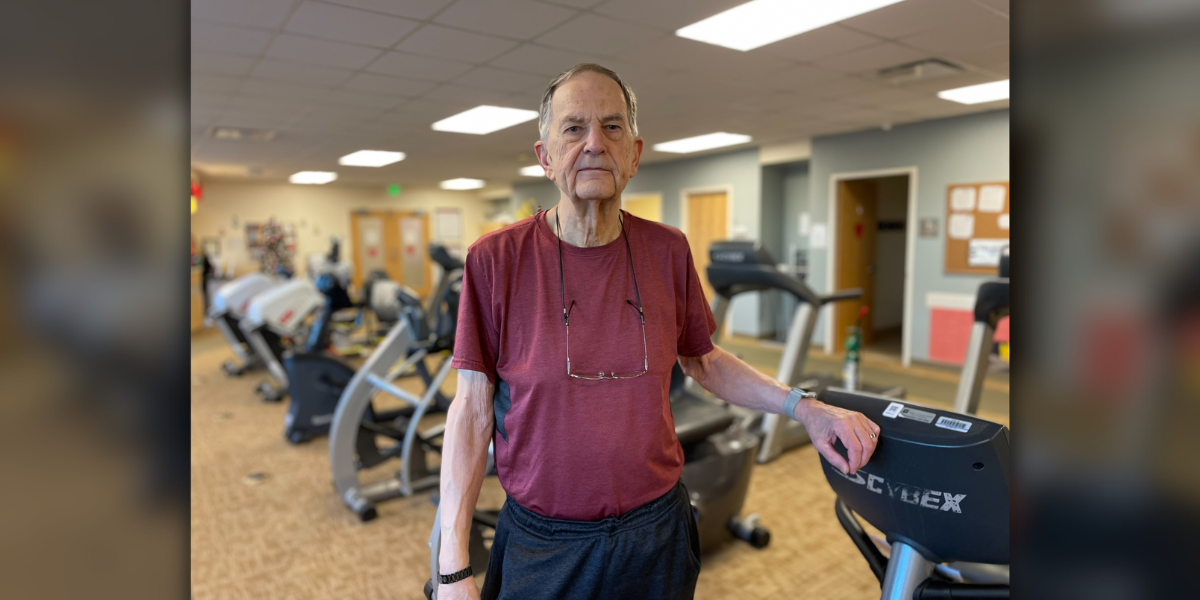
“It was by far the scariest thing that's ever happened to this department. It was heavy on our team. We've built a relationship with him, and we care about all our patients,” Wolf says. “It quickly reaffirmed this is an environment where patients can expect that level of care and that our team knows how to respond in emergencies.”
“They got me on a gurney, rolled me down to the Emergency department and that’s where I woke up,” Fitzsimmons says. “Friends of mine that were there said when came out of cardiac rehab and went through the waiting room, I raised my hand, waved and told everyone I was ok. I guess I didn't want anyone to worry about it.”
Fitzsimmons was transferred to IU Health Methodist to have a defibrillator implanted. Because of the team’s quick resuscitation efforts, there was no damage to his heart.
“Tom could not have had this happen in a better location. As a result of early high-quality CPR, Tom walked away without any neurologic damage and had a full recovery,” Iqtidar says. “Delayed CPR risks being unsuccessful in reviving the patient and carries an increased risk of permanent brain damage. Fortunately, he avoided that by rapid and early intervention.”
Keep heart health in mind
Both Iqtidar and Wolf encourage everyone to listen to their bodies. If you experience a sudden loss of consciousness, unexplained fainting or episodes of rapid or irregular heartbeats, consult your primary care provider promptly. Early evaluation can identify potential heart problems and, in some cases, prevent life-threatening events.
“Make an appointment with your doctor to assess your risk factors or have a heart scan, which are simple first steps” Wolf says. “If you're already a heart patient, acknowledge there could be something going on, and take the next steps so that you don't end up having a major event.”
Fitzsimmons thinks back to being out of breath at the airport and what might have happened if he never scheduled an appointment. He encourages everyone to be proactive about their health.
“When you have a symptom that you don't understand, don't try to diagnose it yourself—get help,” he says. “If you’re already a heart patient, use cardiac rehab as a way of getting better. That whole program, the way it's run, and the help it gives you is just phenomenal.”
“It’s a bunch of miracles”
After recovering, Fitzsimmons returned to cardiac rehab. He had to start slow, with the team ensuring he took it easy. He’s tried to stay positive and find humor in the experience.
“Going back into cardiac rehab did not bother me a bit,” Fitzsimmons says. “The only mental block I had was about that particular treadmill. There it was. It was like, ‘Are you ready for me?’”
“We work very hard to validate where patients are at emotionally on their journey, because it's a huge piece of the recovery,” Wolf adds. “Everyone is in a different place of healing emotionally from that event and we help them overcome those obstacles.”
Five months away from being 80, Fitzsimmons now sees Iqtidar annually and attends cardiac rehab five days a week. Currently, he’s working to build strength in his legs.
“At follow ups, we ensure that his defibrillator device is working correctly. We make sure that he is tolerating medications and review any symptoms,” Iqtidar says. “In addition to managing risk factors, we also keep an eye on his heart function through non-invasive testing, like echocardiography. We talk about a heart-healthy lifestyle and address any cardiac concerns.”
Fitzsimmons thanks everyone not only for the life-saving care he received that day, but for the care he’s continued to receive.
“That's my story. It's a bunch of miracles, from beginning to end,” Fitzsimmons says. “I thank God for that, because it's obvious, he was there making sure everybody was there that needed to be there and had the skills to take care of me.”
To learn more about IU Health's Cardiac Rehabilitation program, click here.