


March 25, 2026
Social workers support Methodist Hospital around the clock
IU Health Methodist Hospital
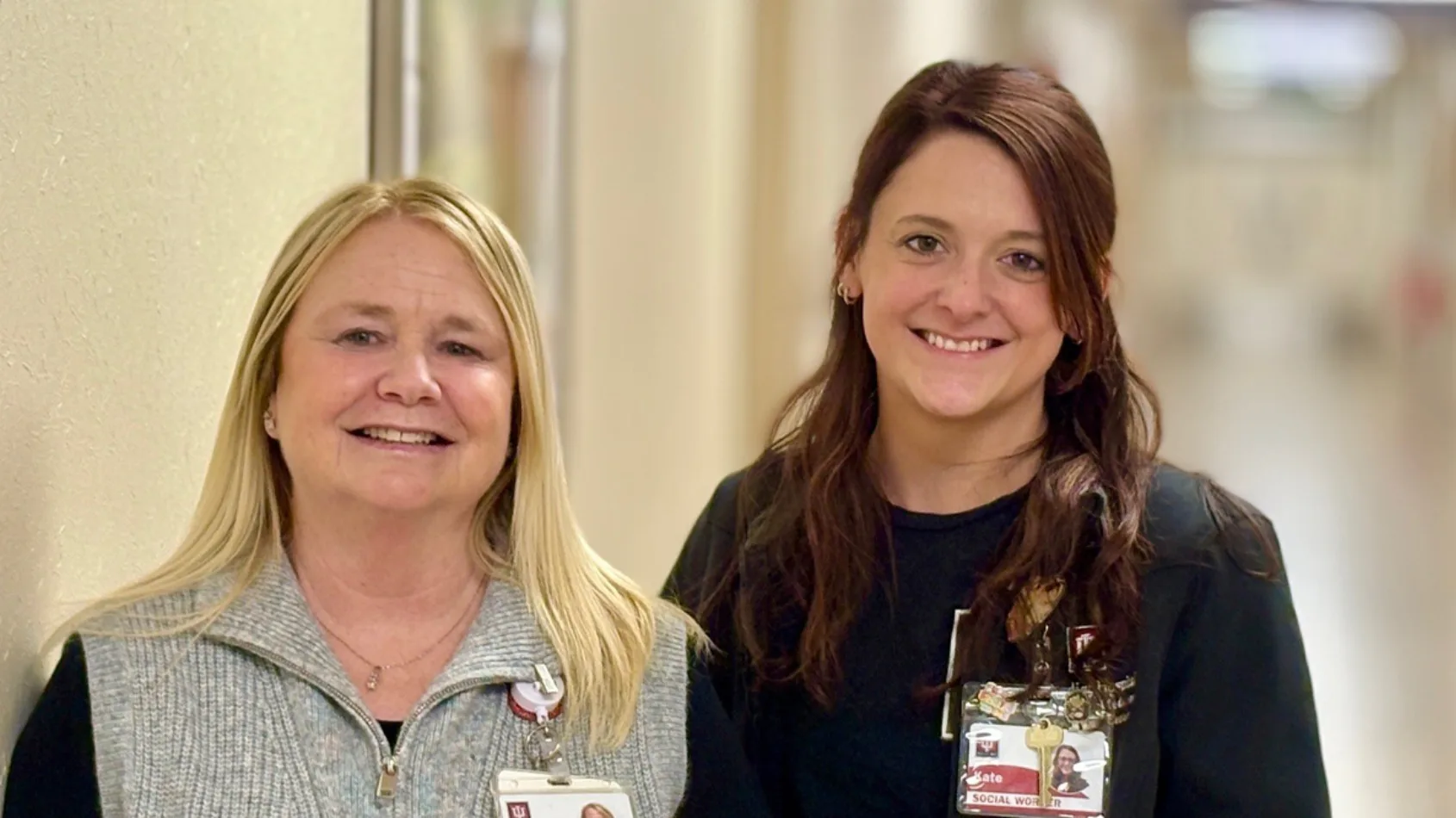
The Emergency department and mid-shift social workers at Methodist spend early mornings, late nights and weekends supporting patients and families during their hardest moments.
When patients arrive at IU Health Methodist Hospital to receive medical care, they may also be struggling with a variety of other challenges in their life— such as substance use, homelessness, domestic violence, mental illness, financial instability and more. This is when the hospital’s team of highly-skilled social workers steps in to help.
The role of a social worker at Methodist
Social workers recognize that you cannot truly understand a person without understanding their context and environment. These master's degree-prepared clinicians complete psychosocial assessments to understand patient situations, provide community resources, offer emotional support, de-escalate aggressive patients and navigate challenging family dynamics.
And while team members may be familiar with the social workers assigned to each inpatient unit at Methodist Hospital, there is another team of social workers with a constant presence in the hospital: Emergency department and mid-shift social workers.
Serving patients and families in the ED
Emergency department (ED) social workers help with a wide spectrum of patient situations—from identifying family members of critically ill trauma patients to helping patients navigate homelessness resources and ensuring patients receive safe transportation home after discharge. The Social Work team provides 24/7 coverage in the ED.
“We are navigators. We're a supportive presence as patients navigate not only healthcare, but other resources and care they need in the community,” says Kate Carlson, LCSW, ED night-shift social worker (pictured on the right in the photo above). “And also, many people don’t realize that we’re licensed counselors. We are clinically licensed and trained in providing therapeutic services, not just community resources and discharge planning.... We can provide that support and apply those skills for patients we see.”
Those therapeutic skills are especially impactful for patients who experience loss, traumatic events and crises. “One of the important things we do is connecting with patients and their families when they are going through a crisis,” says Brook Greicar, LCSW, (pictured on the left, above). “That includes small things like being there for them, listening to them and helping them navigate next steps. It also includes finding family members [for patients who are incapacitated] and collaborating with different agencies and law enforcement."
Carlson and Greicar find the Emergency department rewarding because of the wide variety of patients they can interact with and the supportive team they work alongside. “I enjoy working alongside the other disciplines— doctors, nurses, physical therapy, environmental services (EVS)— I feel lucky to work on a strong team," says Greicar.
Supporting the entire hospital on evenings and weekends
On the inpatient side, there is another social work role that supports patients hospital-wide through the evenings and weekends, once the regular unit social workers have left for the day. This is the mid-shift social worker.
“The role of the mid-shifter is to support the unit social worker,” says Rhonda Clair, LCSW, one of the mid-shift social workers at Methodist. “On the weekends, we handle the more urgent needs, and we facilitate discharges so patients can leave when they are ready and don’t get delayed.”
Clair’s role allows her to work on every unit of the hospital, see a wide variety of patients and apply a wide range of knowledge, skills and expertise.
Through every patient interaction, she seeks to advocate for patients, make them feel heard and recognize their strengths. “I think we help providers see the strengths of our patients, and the strengths of their systems and families,” she says. “And when we can connect people with community resources that make their lives better, that can make a huge difference.”
