What is Barrett’s esophagus—and how can it be prevented from becoming esophageal cancer?
IU Health Bloomington Hospital

Barrett’s esophagus is a precancerous condition that can lead to cancer in the esophagus. According to the American Cancer Society, when the cancer develops, it has a five-year survival rate of 49% when detected at a localized stage and 5% once it has spread to distant parts of the body.
Jeff Williams, a former carpenter and pastor in Greene County pictured above with his wife, admits he was never one to frequent the doctor. After a heart attack in 2007, he began seeing a primary care physician, who eventually referred him to IU Health gastroenterologist Bret Spier, MD, for concerns related to Barrett’s and a noticeable bump in his esophagus.
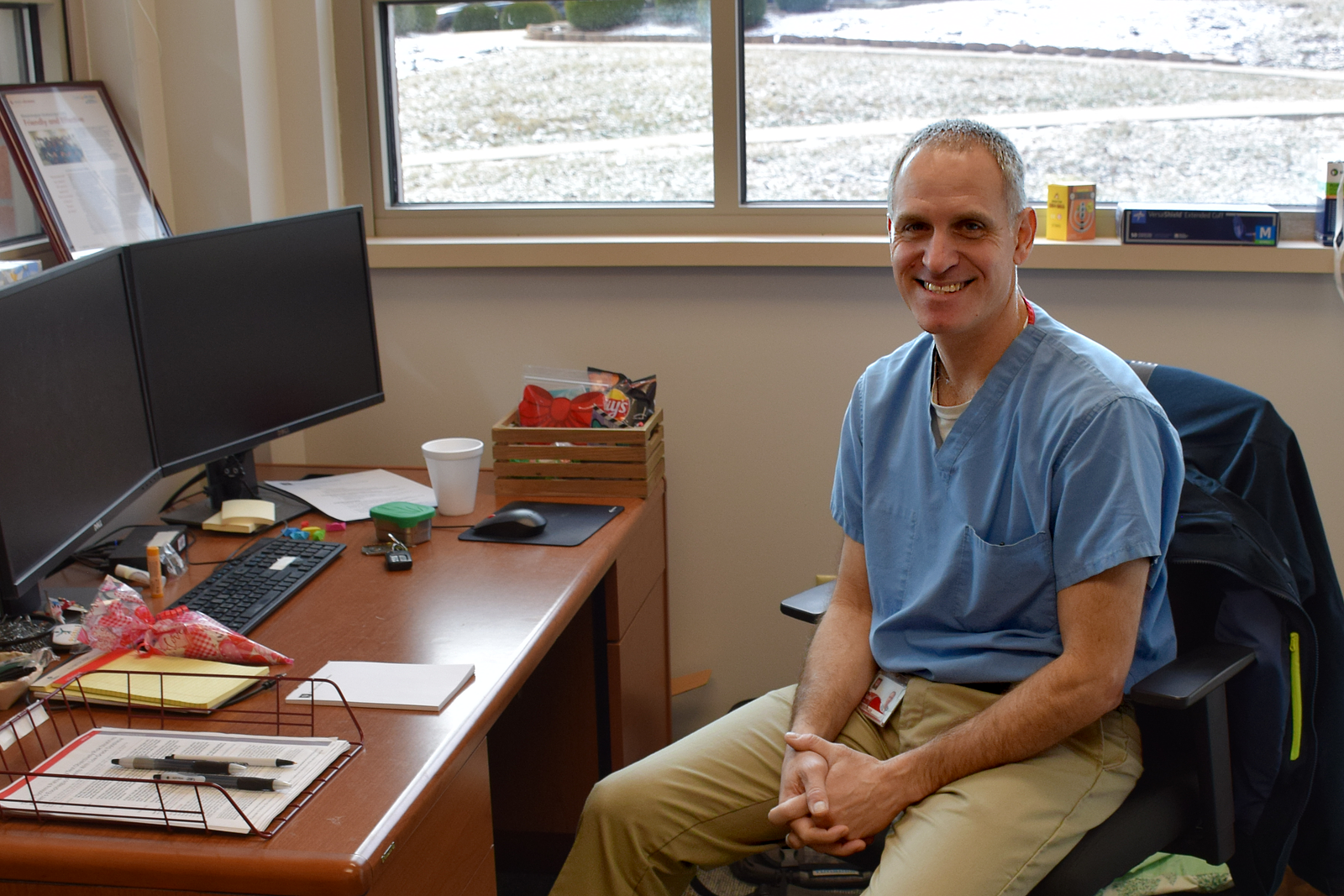
During their first appointment, Dr. Spier further evaluated Williams’ condition. He found high-grade dysplasia, which are abnormal cells that have the potential to be cancerous, but haven’t spread yet to different parts of the body.
Williams shared, “He explained how dangerous it was and that it needed to be treated.”
Dr. Spier’s next step was to address the bump.
“We initially performed an endoscopic ultrasound to ensure the bump wasn’t actually a larger mass beneath the lining of the esophagus,” said Dr. Spier.
The imaging revealed no deeper mass and during the same procedure, Dr. Spier removed the lesion using endoscopic mucosal resection, or EMR.
“It’s like when a bad golfer creates a hole, or divot, in the grass with their swing,” he explained. “The divot is what we remove.”
In Williams’ case, the results were encouraging.
“There was no cancer—just Barrett’s esophagus with high-grade dysplasia,” said Dr. Spier. “Once the bump was removed, only flat Barrett’s remained.”
That remaining tissue was treated with radiofrequency ablation, a procedure that burns precancerous cells to prevent their growth. This treatment is typically performed in larger cities and is less common in rural areas.
“We’re very blessed to have Dr. Spier in Bloomington,” shared Williams. “Every time I see him, I thank him for what he’s done for me. It could have been so much worse, but he got it. He got everything.”
While endoscopy is the “gold-standard” screening tool for detecting Barrett’s esophagus, which often has no symptoms, Dr. Spier’s team is working to introduce less invasive options to help improve the screening process for patients.
Individuals with risk factors—including gastroesophageal reflux disease (GERD), being overweight and having difficulty swallowing—are encouraged to discuss them with their primary care provider.