February 05, 2026
Bloomington cardiologist talks about heart attacks
IU Health Bloomington Hospital
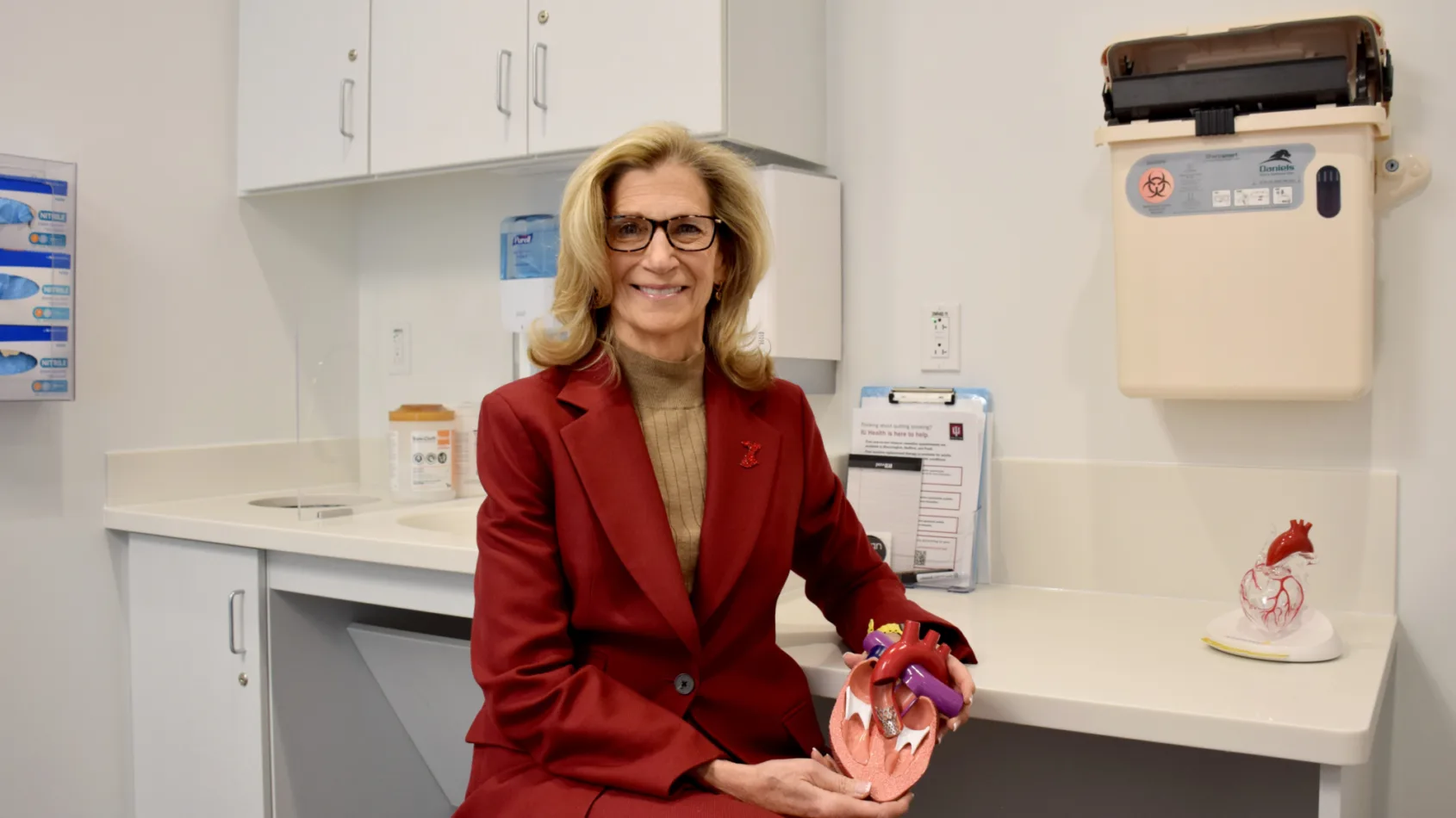
The phrase “as serious as a heart attack” is both catchy and very literal.
“Time is muscle,” says IU Health Bloomington Cardiologist Joan Crawford, DO. “If you even think you’re having a heart attack, present to the emergency room immediately.”
Recognize and react
Recognizing heart attacks is more than checking off common symptoms of chest pain, nausea, paleness, a hand over the chest and aching left arm.
Knowing the less common symptoms is especially important for women, as they’re less likely to experience the more widely known signs.
“The average wife or partner probably takes about one minute to call 911 for their male partner,” shares Dr. Crawford. “While more and more male spouses can look at their wife and recognize things aren't right, the average woman has more heart failure and more problems from heart attacks because an average female often takes up to 12 hours to decide to go to the hospital.”
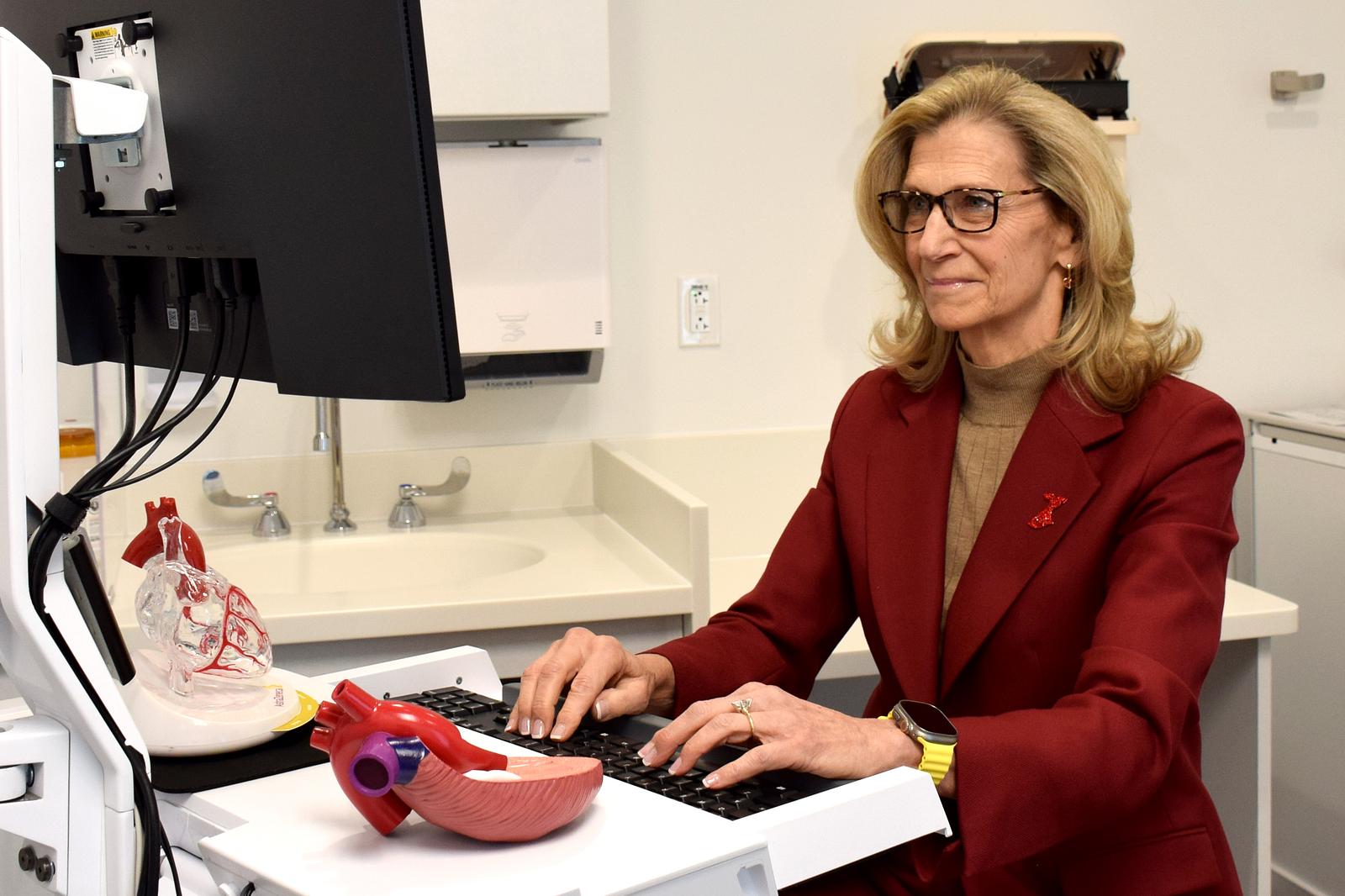
Their symptoms are more likely to include, but aren’t limited to:
- Fatigue
- Pain or discomfort between their lower rib cage and belly button
- Shortness of breath
- Pain where a bra strap would go, in the neck or in the right shoulder
- Palpitations
“Shortness of breath, palpitations, exhaustion, napping more, not being able to do what you could do the previous season, just feeling out of sorts and maybe not being able to multitask are signs something could be wrong,” explains Dr. Crawford. “It’s not necessarily an eight out of 10 on a pain scale—it’s typically more subtle for women, like you just know something’s wrong.”
The cardiologist credits the American Heart Association with educating the public so these additional symptoms are becoming more known, but cautions women to pay attention and be their own advocates when it comes to heart concerns.
Calling 911 or going to the nearest emergency department as soon as possible for a heart attack can ensure prompt treatment that can help save heart muscle, restore blood flow, decrease risk of permanent damage and improve survival rates.
Reduce your risk factors
“We can never stop emphasizing risk factor modification,” emphasizes Dr. Crawford. “It really makes a difference.”
That means:
- Exercising 150 minutes a week
- Taking time to reflect
- Walking outside in fresh air
- Eating less than 40 fat grams a day
- Consuming less than 2000 mg of sodium daily
- Rarely eating red meat or processed food
- Reading labels
- Eating 3 – 4 servings of fruits and vegetables daily
- Sleeping 7 hours a night
- Addressing snoring or sleep apnea
- Addressing nicotine of any kind
- Addressing alcohol overuse
Maintaining healthy relationships, nurturing yourself, having fun and surrounding yourself with like-minded people are also important for your health.
“We're talking about life as a whole long odyssey,” Dr. Crawford shares. “You may have an occasional bad couple of months or maybe even a bad year, but I'm looking at your whole life. It’s many decades of trying to eat healthy, walk more, not drink too much and stop smoking.”
Talk to your primary care provider about heart-healthy steps you can take.