


February 04, 2026
He was a patient at Methodist for 137 days - Now he’s a nurse
IU Health Methodist Hospital
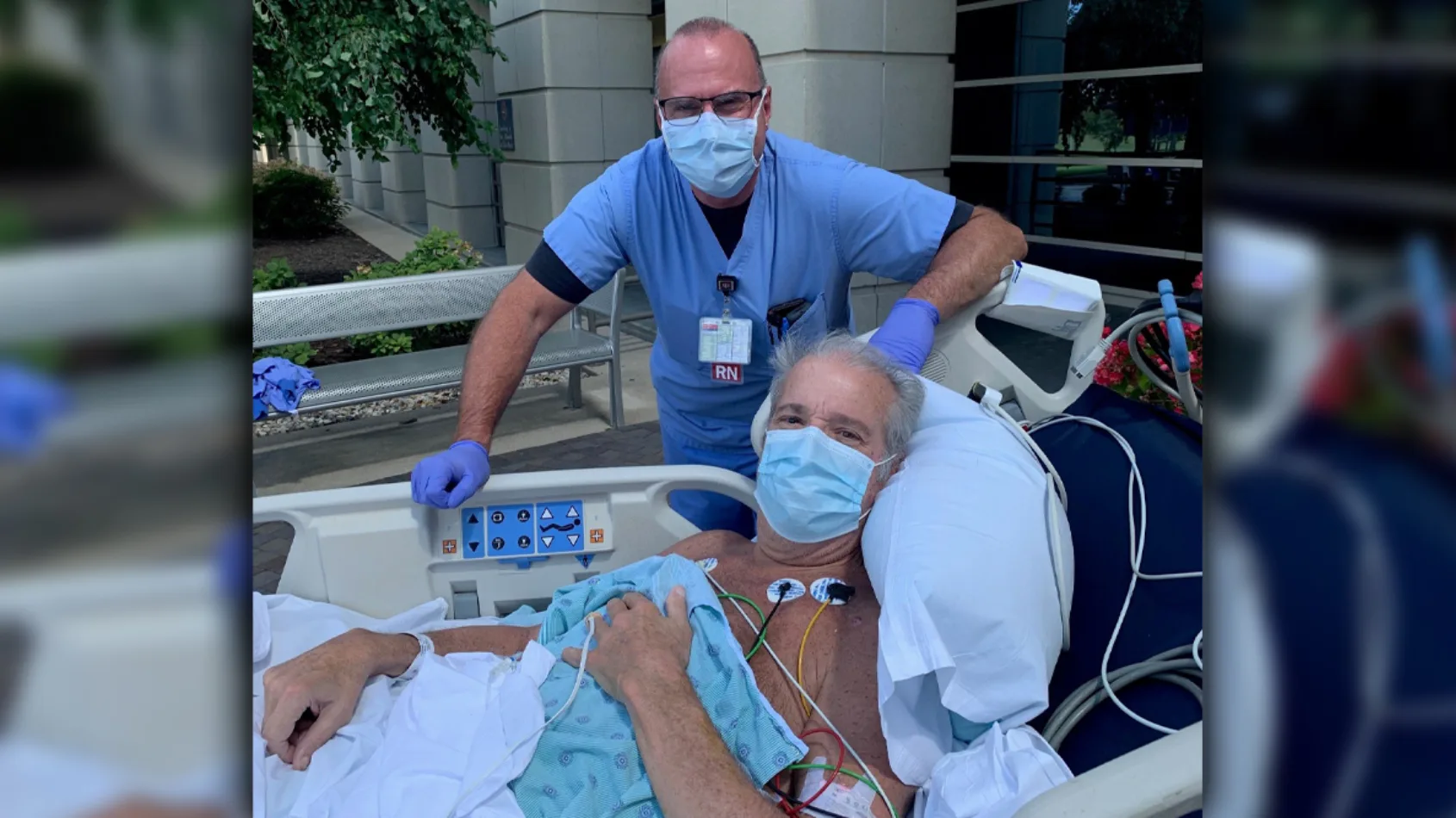
Todd Zortman recently joined the AAHC team as a wound nurse. But he’s already spent lots of time within the hospital walls as a heart transplant patient.
Todd Zortman, a wound care certified (WCC) nurse, spent most of his nursing career working at the Rehabilitation Hospital of Indiana. He worked there for 28 years, providing care for individuals recovering from life-altering injuries or illnesses—often, after they’d left IU Health Methodist or University hospitals.
Zortman’s life changed when he had a heart attack in 2020, and it became clear that he would eventually need a heart transplant. During the COVID-19 pandemic he became acutely ill and was admitted to IU Health Methodist Hospital while he awaited a transplant. He remained there for 137 days. During that time, he received ICU-level care and dealt with the visitor restrictions and safety protocols made necessary by the COVID-19 pandemic—making his admission even more challenging.
His experience was made bearable by the support of his wife, Nancy, who is a nurse of 30+ years and was Zortman’s main inspiration for getting better. He was also motivated by the team members who took care of him, treated him like a human being and showed him unwavering compassion. From his cardiologist Roopa Roa, MD, to his ECMO nurse Tim Smith, and his physical therapist Sara Mitchell, Zortman feels grateful for the care team that stood by him through his long hospital admission.
One memory in particular stands out. “I hadn’t been outside in like 3 months,” Zortman says. “I needed sunshine. Two of the team members took me outside—took the whole bed, and the balloon pump and everything outside.” Zortman took a photo to document this with his nurse Tim Smith, pictured above. These team members helping him get outside provided a meaningful moment of comfort and relief.
A heart transplant begins a new chapter
Zortman received a heart transplant at Methodist Hospital in October of 2021, and fully committed himself to regaining his strength. He completed rehabilitation at IU Health’s Center of Life for Thoracic Transplant (COLTT) center, and afterwards diligently went to the gym every single day to continue building his strength. Eventually, he was able to return to his job at RHI as a nurse before retiring a few years later.
Retirement did not last long for Zortman. He found himself seeking a new challenge, and he decided to return to nursing. This time, he wanted to work “at the place where it all started”— IU Health.
Zortman has been working on the inpatient wound care team at the IU Health adult academic health center for five months. He has enjoyed his experience so far, and reports feeling fortunate to have a supportive team while caring for patients with some very complex wounds. The role is especially rewarding because of his personal experience. When he walks into patient rooms, he remembers his own experience as a patient.
Sharing his story, inspiring patients
Zortman's personal experience as a transplant patient has also given him new insight into what patients may be thinking or feeling. “When you see patients struggling to understand what’s going on, that’s something I try to help with,” he says. “[As nurses, we need to] understand the fear factor that patients have. The fear of the unknown. When surgical teams and doctors walk out of that room, and you’re left with your patient who is bombing you with questions— they’re scared. Remember that.”
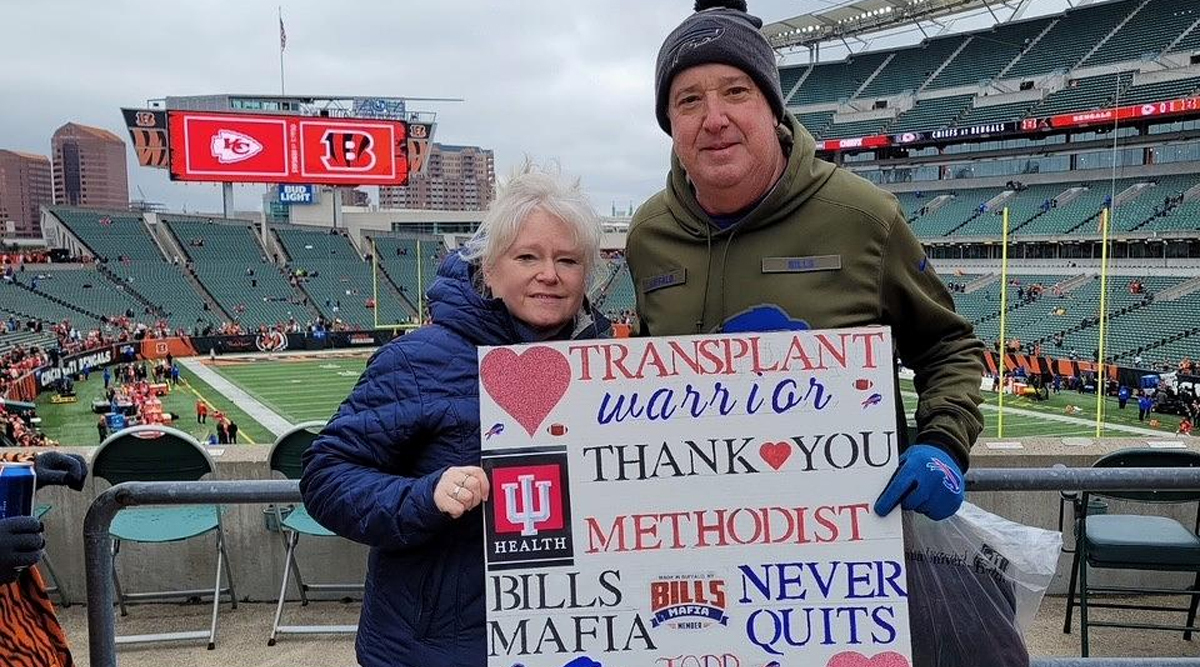
When he’s not working as a wound nurse, Zortman also volunteers with transplant patients at Methodist Hospital. He works closely with transplant coordinators to set up visits with patients who are waiting for heart transplants, to share his story. “When they are waiting for a heart, and they’ve been sick for a long time, they don’t think they can ever go back to work or do anything. They’ve just been sick for so long,” he says.
In the face of so much uncertainty, his story, and the stories of transplant patients like him, can offer hope. “I’ve seen the results,” he says. Even beyond his personal experience, Zortman has seen many patients through his previous role at RHI who recovered after receiving transplants at IU Health and went onto live full lives. “I want them to know it’s possible.”

