


October 28, 2026
Routine mammogram leads to early breast cancer diagnosis
IU Health North Hospital
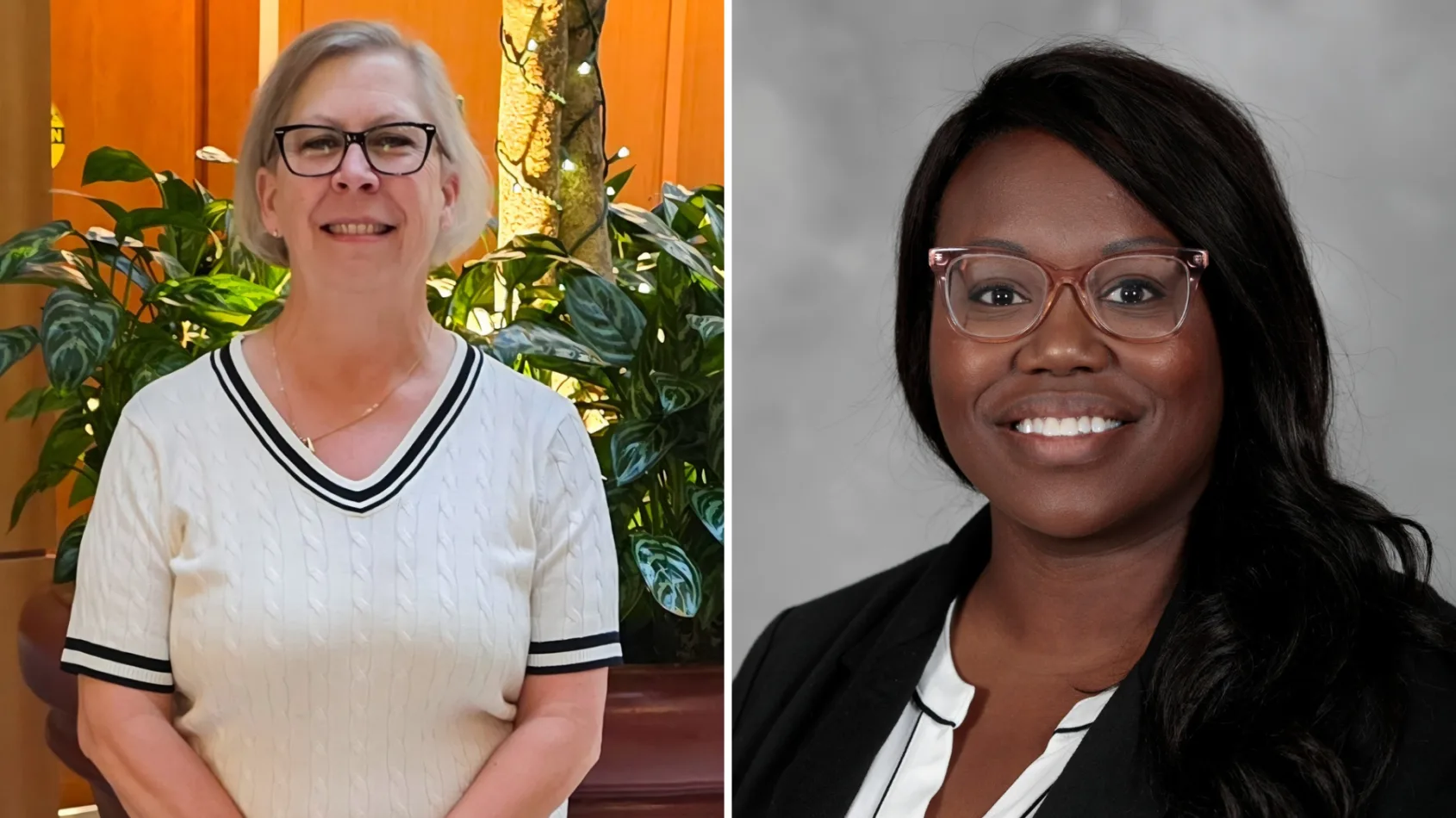
By Emma Avila, Writer for IU Health's Metro Region
Lisa Sutton is encouraging women to prioritize annual mammograms after a routine screening led to the early detection and treatment of her breast cancer at the IU Health Joe & Shelly Schwarz Cancer Center.
Lisa Sutton never skipped her annual mammogram. This year, that routine habit led to an early breast cancer diagnosis and, she believes, made all the difference in her treatment.
Sutton went in for her annual mammogram in February, just as she had many times before. This time, however, additional imaging led to a biopsy in March.
“I was a little bit in shock, but I was also familiar with the procedure,” Sutton says.
Having previously worked for a company that manufactured mammography and biopsy equipment, Sutton understood the process. Still, receiving the diagnosis she feared was a shock: stage 0, noninvasive breast cancer in her left breast. She had no known predisposition or family history of breast cancer.
“It was a shock. As much as I know about breast cancer, I still had a sense that family history played a bigger role,” she says.
Finding the right treatment
Within days, Sutton met with Dr. Folasade Imeokparia, a breast surgeon at the IU Health Joe & Shelly Schwarz Cancer Center in Carmel, to discuss her options. Sutton chose a lumpectomy, an approach that allowed her to balance treatment with a demanding career.
“She’s got a very warm personality. You can tell she has command of her field of expertise. I immediately felt at ease,” Sutton says.
Her first surgery took place April 15. When testing showed additional tissue needed to be removed to achieve clear margins, Dr. Imeokparia performed a second surgery April 24.
“Lisa benefitted from early detection at stage 0 and complete resection of the disease,” Dr. Imeokparia says. “She needed no chemotherapy, which was great.”
After about five weeks of recovery, Sutton completed six radiation treatments. She then began the next phase of treatment with medication and continues to have follow-up appointments every six months.
Turning her experience into a message for others
Now, Sutton has become an enthusiastic advocate for routine mammograms.
“Every female friend and relative, I’m encouraging them to get in for their annual mammograms,” she says. “This was found for me and dealt with so quickly because of my habit of going and getting that done.”
Dr. Imeokparia echoes that message.
“We know mammograms are incredible detection images for early stage of the disease,” she says. “Early-stage detection allows for the best outcomes.”
Sutton hopes sharing her experience encourages other women not to put off their screenings.
“I hope this is a call to action for others. I personally talk to every female that I know.”
For more information or to schedule a mammogram, visit iuhealth.org/mammo.

